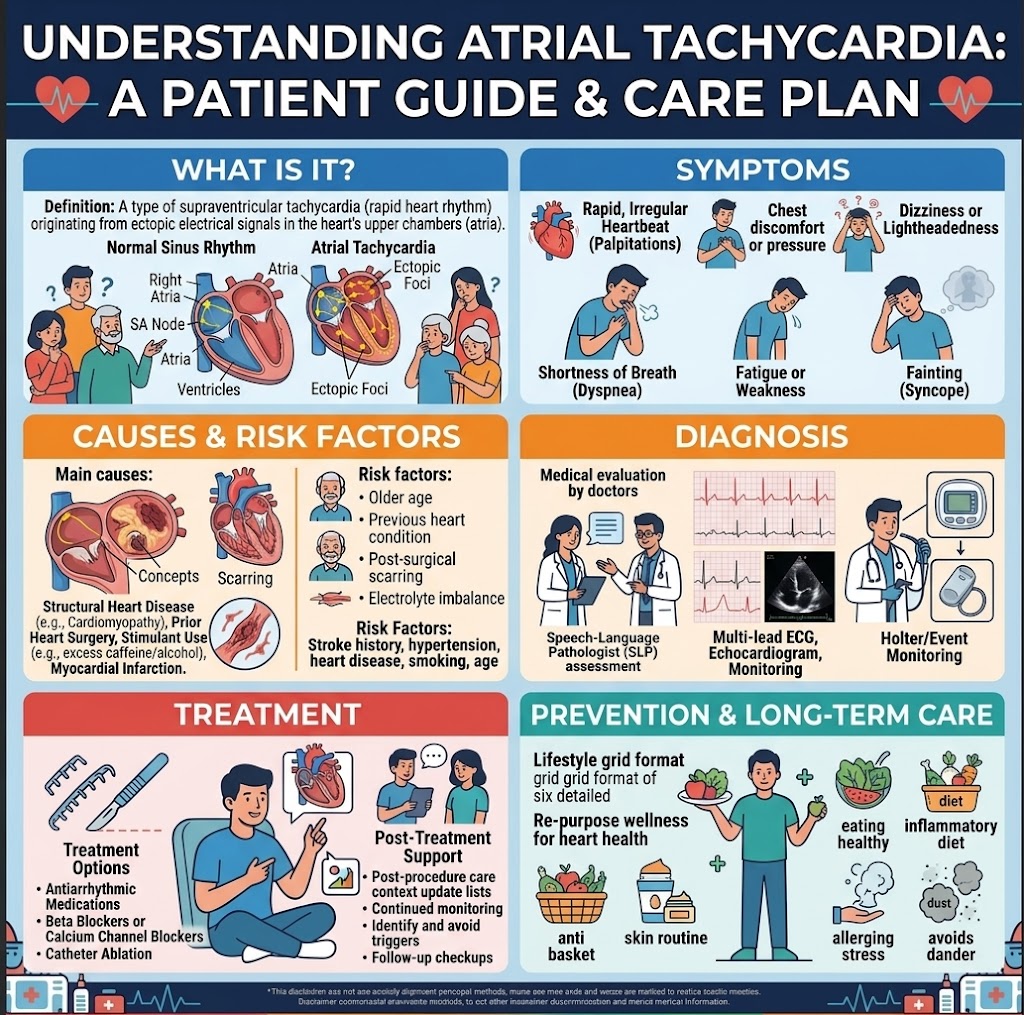
Atrial tachycardia is a common type of irregular heartbeat, or arrhythmia, where the heart's upper chambers beat too fast, often over 100 beats per minute. Episodes can start suddenly or gradually, causing a racing heart sensation, lightheadedness, or fainting. While usually not life-threatening, prolonged episodes can weaken the heart, especially with existing heart conditions. Triggers include surgery, pregnancy, infections, certain medications, and alcohol.
Understanding the Condition
Understanding Atrial Tachycardia: Symptoms, Causes, and Management
Understanding the Condition
Common Symptoms
Very Fast Heartbeat: Typically 150-200 beats per minute, which may start and stop abruptly or be continuous.
Palpitations: Pounding, fluttering, or skipping sensations in the chest or neck.
Chest Pain: Discomfort or pressure.
Fainting or Lightheadedness: Temporary loss of consciousness or dizziness.
Shortness of Breath: Difficulty breathing.
Weakness/Tiredness: Unusual fatigue.
Asymptomatic Cases: Some individuals experience no symptoms, and symptoms can be hard to detect in young children.
Consultation Guide
Which Specialist to Meet
Before your visit, prepare a symptom diary (when, duration, triggers), a complete list of all medications (prescription, OTC, supplements), and your medical and family history. Write down questions for your doctor.
Book a doctor visit near me
Small electrodes attach to your chest, connected to a compact recorder. You wear it during daily routines, often keeping a symptom diary of your activities.
An ultrasound of the heart that uses sound waves to create moving images. It assesses the heart's structure, pumping function, and overall health.
Symptom Vigilance: Be aware of your symptoms and report any changes or new concerns to your healthcare provider promptly.
Emergency Awareness: Understand when to seek immediate medical attention for severe or prolonged symptoms, and know your emergency contacts.
Diagnostic Procedures
For atrial tachycardia, you should consult a cardiologist for heart conditions. An electrophysiologist, a cardiologist specializing in heart rhythm disorders, is ideal for atrial tachycardia diagnosis and treatment.
Preparations Before Your Visit
Electrocardiogram (ECG or EKG)
Records your heart's electrical signals to detect rhythm irregularities and how fast your heart is beating.
What to Expect
Electrodes are placed on your chest and limbs, connected to a machine. You lie still for a few minutes while signals are recorded. The test is painless.
Holter Monitor or Event Monitor
Portable devices that record your heart's electrical activity over an extended period. A Holter monitor records continuously for 24-48 hours. An event monitor is worn for weeks and records when you activate it or when it detects an abnormal rhythm.
What to Expect
What to Expect
Gel is applied to your chest, and a handheld transducer is moved over the skin. You may feel slight pressure. Images appear on a screen. The procedure usually takes 30-60 minutes.
Electrophysiology (EP) Study
An invasive test that precisely maps the heart's electrical system to pinpoint the exact location and mechanism of the irregular heartbeat, often guiding treatments like catheter ablation.
What to Expect
Performed in a hospital, usually under mild sedation. After numbing an area (typically in the groin), thin wires (catheters) are inserted into a blood vessel and guided to your heart using X-ray imaging. Electrical signals are recorded, and the arrhythmia may be intentionally induced for study. The procedure can take several hours.
Treatment Options
Atrial tachycardia is a common type of irregular heartbeat, or arrhythmia, where the heart's upper chambers beat too fast, often over 100 beats per minute. Episodes can start suddenly or gradually, causing a racing heart sensation, lightheadedness, or fainting. While usually not life-threatening, prolonged episodes can weaken the heart, especially with existing heart conditions. Triggers include surgery, pregnancy, infections, certain medications, and alcohol.
Avoiding Triggers: Identify and avoid substances that can provoke episodes, such as excessive caffeine, alcohol, nicotine, and stimulant medications. (Duration: Ongoing)
Stress Management: Practice relaxation techniques like deep breathing, meditation, or yoga to reduce stress. (Duration: Ongoing)
Medications
Rate Control Medications: These medicines slow down the heart rate during an episode, making the heart beat more regularly (e.g., beta-blockers, calcium channel blockers). (Duration: Long-term, as prescribed)
Rhythm Control Medications: These medicines help maintain a normal heart rhythm and prevent future episodes of atrial tachycardia (antiarrhythmic drugs). (Duration: Long-term, as prescribed)
Electrical Cardioversion: A controlled electrical shock is delivered to the chest to reset the heart's rhythm back to normal. This is typically done under sedation. (Duration: Single procedure, may be repeated if necessary)
Catheter Ablation (SVT Ablation): This procedure uses heat or cold energy to create tiny scars in the heart tissue at the precise location where faulty electrical signals originate. These scars block the abnormal signals, restoring a normal heart rhythm. It's often recommended when medications are ineffective or not tolerated. (Duration: Typically a single procedure, lasting several hours)
Pacemaker Implantation: A small, battery-powered device surgically placed under the skin near the collarbone. It monitors the heart's rhythm and delivers electrical impulses to prevent the heart from beating too slowly or to help regulate a fast rhythm, ensuring a consistent heartbeat. (Duration: Surgical procedure; device typically lasts 5-15 years, then replaced)
Regular Medical Follow-ups: Maintain regular visits with your cardiologist to monitor your heart health and adjust treatment as needed.
Manage Co-existing Conditions: Ensure conditions like high blood pressure, diabetes, thyroid disease, or sleep apnea are well-controlled, as they can impact heart rhythm.
Treatment Adherence: Take all prescribed medications as directed and strictly follow your doctor's recommendations for lifestyle changes.
Prevention & Long-Term Wellbeing
Lifestyle Modifications
Heart-Healthy Habits: Maintain a balanced diet, engage in regular doctor-approved physical activity, achieve a healthy weight, and manage conditions like sleep apnea or thyroid disorders. (Duration: Ongoing)
Prevention
Identify Personal Triggers: Pay close attention to what might trigger your episodes, such as certain foods, drinks, stress, or lack of sleep, and modify your habits accordingly.
Adopt Heart-Healthy Lifestyle: Maintain a balanced diet, engage in moderate exercise regularly (as approved by your doctor), achieve a healthy weight, and limit alcohol and caffeine intake.
Long-Term Monitoring
Tags & Topics
Notice an error or need an update?
Help us keep medical information accurate. Report incorrect info or suggest an edit.

