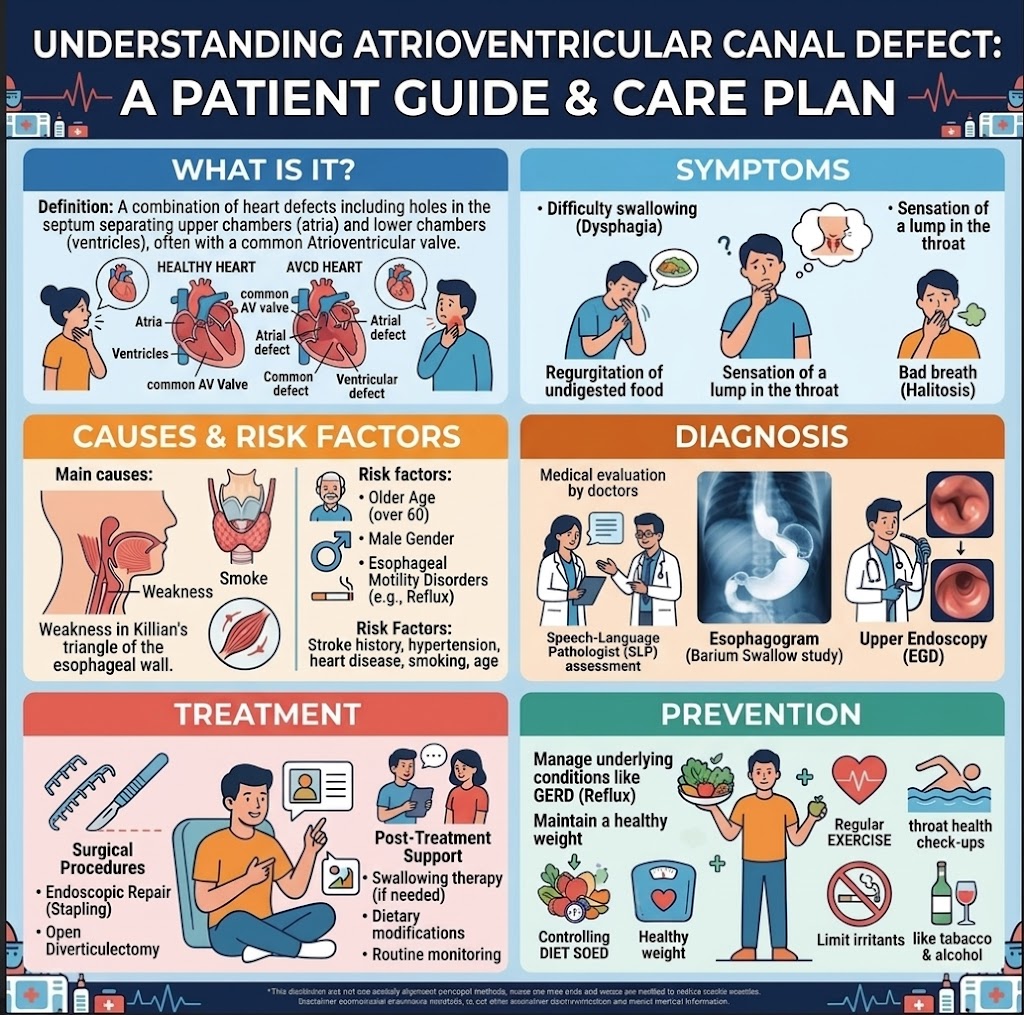
Atrioventricular canal defect (AVCD), also known as atrioventricular septal defect, is a complex heart condition present at birth. It involves problems in the center of the heart where the upper and lower chambers meet. Specifically, there is a hole in the wall separating the heart's chambers and issues with the valves that regulate blood flow. This defect causes extra blood to flow to the lungs, making the heart work harder and potentially enlarging the heart muscle. If left untreated, AVCD can lead to serious complications like heart failure and high blood pressure in the lungs. Treatment typically involves surgery, often performed within the first year of life, to close the hole and repair the valves.
Understanding the Condition
Atrioventricular Canal Defect: Understanding a Congenital Heart Condition
Understanding the Condition
Common Symptoms
Symptoms of Complete Atrioventricular Canal Defect (often appear in first weeks of life): These symptoms are generally similar to those of heart failure in infants and may include: a bluish tint to the skin or lips (cyanosis), poor weight gain, difficulty breathing, tiring easily during feeding, and swelling in the legs, ankles, or feet.
Symptoms of Partial Atrioventricular Canal Defect (may not appear until early adulthood): Symptoms for partial defects may emerge later in life due to complications like heart valve problems, high blood pressure in the lungs, or heart failure. They can include: shortness of breath, a fluttering or pounding sensation in the chest (heart palpitations), tiring easily, swelling in the legs, ankles, or feet, general weakness, dizziness, and fainting spells.
Consultation Guide
Which Specialist to Meet
If you or your child are experiencing symptoms of a heart condition, it is important to consult a healthcare professional. For children, a Pediatric Cardiologist (a heart specialist for children) is recommended. Adults with congenital heart defects should see an Adult Congenital Heart Specialist. A Cardiac Surgeon may also be part of the care team.
Preparations Before Your Visit
Before your visit, it's helpful to write down all symptoms, your complete medical history, including any medications you are taking, and a list of questions you have for the doctor. Discuss your family's medical history, especially any instances of heart conditions or Down syndrome. Be prepared to describe when symptoms started and what makes them better or worse.
Book a doctor visit near me
Surgical Repair: This is the primary treatment for atrioventricular canal defects. It involves closing the hole(s) between the heart chambers and repairing or reconstructing the heart valves to ensure proper blood flow. For complete defects, surgery is typically performed within the first year of life. For partial defects, it may be done later, depending on symptoms and complications. (Duration: The hospital stay after surgery typically ranges from a few days to a couple of weeks, followed by several weeks of recovery at home. Lifelong follow-up with a heart specialist is necessary.)
Heart Support Medications: Certain medications may be prescribed to manage symptoms of heart failure or high blood pressure in the lungs, especially before surgery or for long-term management. These can include medications to help the heart pump more efficiently, reduce fluid buildup, or relax blood vessels. (Duration: Usage may be short-term (prior to surgery) or long-term, potentially lifelong, depending on the severity of symptoms and the presence of complications.)
Oxygen Therapy: For individuals with significant breathing difficulties or high blood pressure in the lungs, supplemental oxygen may be administered to ease the burden on the heart and lungs. (Duration: As needed; can be intermittent, short-term, or long-term depending on the individual's condition.)
Medication Adherence: If medications are prescribed to manage symptoms or complications, it is crucial to take them exactly as directed by your healthcare provider.
Consultation Guide
Atrioventricular canal defect (AVCD), also known as atrioventricular septal defect, is a complex heart condition present at birth. It involves problems in the center of the heart where the upper and lower chambers meet. Specifically, there is a hole in the wall separating the heart's chambers and issues with the valves that regulate blood flow. This defect causes extra blood to flow to the lungs, making the heart work harder and potentially enlarging the heart muscle. If left untreated, AVCD can lead to serious complications like heart failure and high blood pressure in the lungs. Treatment typically involves surgery, often performed within the first year of life, to close the hole and repair the valves.
Diagnostic Procedures
An echocardiogram is a common and non-invasive test that uses sound waves to create live images of the heart. It provides detailed pictures of the heart's chambers, valves, and blood flow patterns. This test helps diagnose heart conditions by showing how well the heart is pumping and if there are any structural issues or abnormalities in blood flow.
What to Expect
During an echocardiogram, you will lie on an examination table. A healthcare professional will apply a special gel to your chest. Then, a small handheld device called a transducer will be moved across your chest. This device emits sound waves that bounce off your heart and create images on a monitor. The test is generally painless and takes about 30 to 60 minutes. You may be asked to hold your breath briefly or change positions. In some cases, an echocardiogram may be performed during exercise or under light sedation, especially for young children.
Cardiac Catheterization
Cardiac catheterization is an invasive procedure that uses a thin, flexible tube called a catheter to access the heart. This test provides detailed information about the heart muscle, valves, and blood vessels. It can be used to measure pressures within the heart chambers, detect holes, assess valve function, and sometimes even perform minor repairs or interventions.
What to Expect
You will be given a local anesthetic to numb the area where the catheter will be inserted, usually in the groin or arm, and you might receive a mild sedative to help you relax. A small incision is made, and the catheter is gently guided through a blood vessel to your heart using X-ray guidance. You might feel some pressure at the insertion site, but generally no pain during the procedure. Dye may be injected to visualize blood flow and heart structures. The procedure can last from 30 minutes to several hours, depending on its complexity. After the procedure, you will need to lie flat for several hours to prevent bleeding from the insertion site.
Treatment Options
Surgical Procedures
Medications
Prenatal Care and Risk Management: While specific prevention for AVCD is not known, good prenatal care is crucial. Pregnant individuals should avoid certain medications, alcohol, and tobacco. Managing existing medical conditions like diabetes before and during pregnancy can help reduce the general risk of congenital anomalies. Genetic counseling may be considered for families with a history of Down syndrome or other congenital conditions.
Regular Follow-up Care: Individuals with AVCD, even after successful surgery, require lifelong monitoring by a cardiologist specializing in congenital heart disease. These regular check-ups are vital to detect and manage any potential complications such as heart valve issues, arrhythmias, or high blood pressure in the lungs.
Infection Prevention: Some individuals with congenital heart defects may be at increased risk of heart infections (endocarditis). Your doctor may recommend preventive antibiotics before certain dental procedures or surgeries.
Prevention & Long-Term Wellbeing
Prevention
Long-Term Monitoring and Lifestyle
Healthy Lifestyle: Adopting a heart-healthy lifestyle, including a balanced diet rich in fruits and vegetables, regular physical activity (as advised by your doctor), maintaining a healthy weight, and avoiding smoking, is important for overall heart health.
Pregnancy Planning: Women with AVCD who are considering pregnancy should consult with their heart specialist and an obstetrician experienced in high-risk pregnancies to ensure proper monitoring and management throughout the pregnancy.
Tags & Topics
Notice an error or need an update?
Help us keep medical information accurate. Report incorrect info or suggest an edit.

