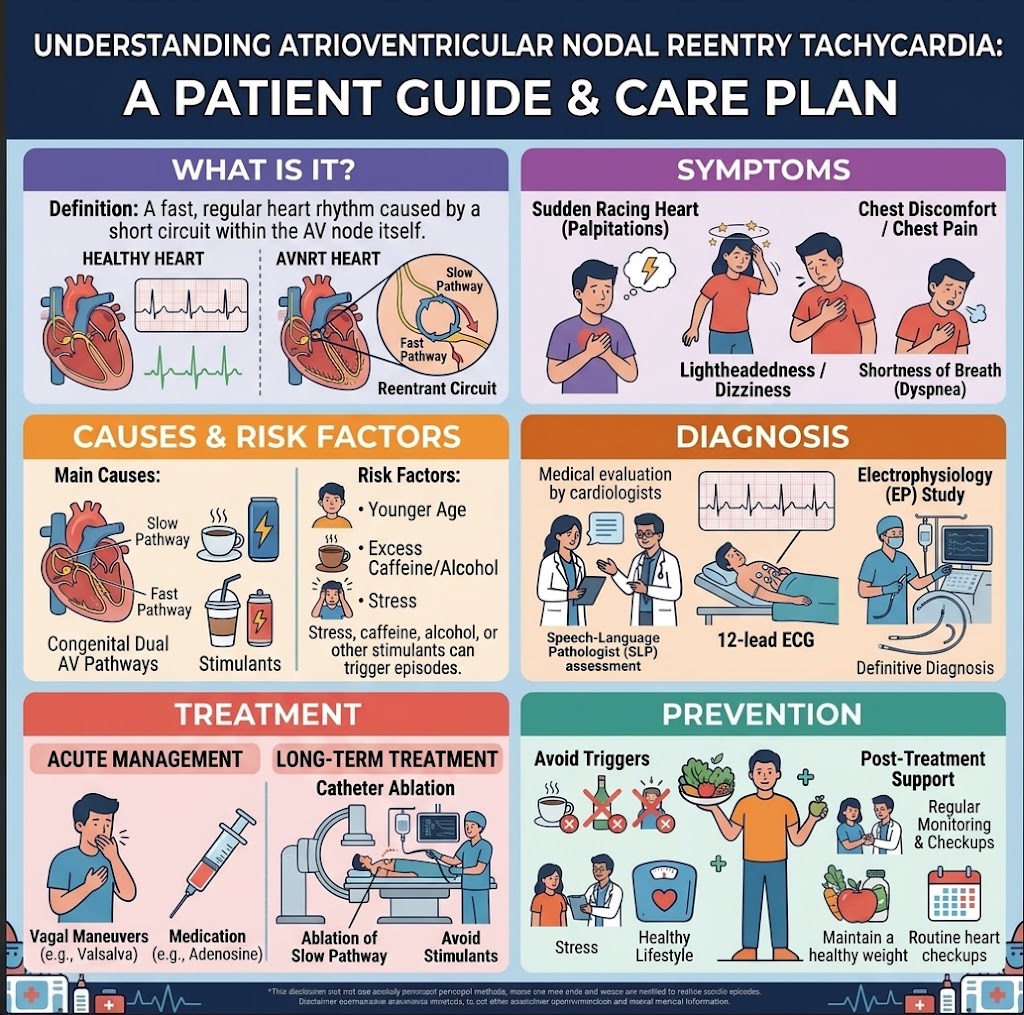
Atrioventricular Nodal Reentrant Tachycardia (AVNRT) is a common type of abnormally fast heartbeat (arrhythmia) originating in the upper chambers of the heart. In a normal heart, electrical signals travel along a single pathway to trigger contractions. In people with AVNRT, an extra electrical pathway exists near the heart's central junction box (the AV node). This creates a 'short circuit' or electrical loop, causing the heart to suddenly beat extremely fast—often between 120 and 280 times per minute. While it can occur in anyone at any age, it is most frequently diagnosed in young, otherwise healthy women. Though generally not life-threatening, it can cause uncomfortable episodes that start and stop without warning.
Understanding the Condition
Understanding Atrioventricular Nodal Reentrant Tachycardia (AVNRT)
Understanding the Condition
Common Symptoms
Rapid or Fluttering Heartbeat: Also known as palpitations, this is a sudden sensation of your heart racing, pounding, or fluttering rapidly in your chest.
Pediatric Symptoms: In infants and young children, symptoms may be subtle and include unexplained sweating, poor feeding, fussiness, or pale skin.
Consultation Guide
Which Specialist to Meet
You should consult a general Cardiologist or a Cardiac Electrophysiologist, who is a cardiologist specializing exclusively in heart rhythm disorders.
Preparations Before Your Visit
To prepare for your visit, keep a detailed log of your episodes including when they occur, how long they last, what you were doing when they started, and any symptoms you felt. Bring a complete list of your current medications, supplements, and doses. Note any family history of heart disease, and write down your questions in advance.
Book a doctor visit near me
Small sticky sensors will be attached to your chest and connected to a lightweight recording device you can clip to a belt, or you will wear a single adhesive patch monitor. You will wear this for 24 hours to several days, keeping a diary of any symptoms you feel.
A portable ECG device designed to be worn for up to 30 days, which only records your heart rhythm when you activate it or when it detects an unusually fast heart rate.
Consultation Guide
Atrioventricular Nodal Reentrant Tachycardia (AVNRT) is a common type of abnormally fast heartbeat (arrhythmia) originating in the upper chambers of the heart. In a normal heart, electrical signals travel along a single pathway to trigger contractions. In people with AVNRT, an extra electrical pathway exists near the heart's central junction box (the AV node). This creates a 'short circuit' or electrical loop, causing the heart to suddenly beat extremely fast—often between 120 and 280 times per minute. While it can occur in anyone at any age, it is most frequently diagnosed in young, otherwise healthy women. Though generally not life-threatening, it can cause uncomfortable episodes that start and stop without warning.
Throbbing in the Neck: A distinct, rhythmic pounding or pulsing sensation felt in the neck veins, caused by the heart's upper and lower chambers contracting at the exact same time.
Dizziness and Lightheadedness: Feeling unsteady, dizzy, or like you might pass out due to a temporary drop in blood pressure during a rapid heart episode.
Chest Discomfort: A feeling of tightness, pressure, or mild pain in the chest area while the heart is beating abnormally fast.
Shortness of Breath: Difficulty catching your breath or feeling winded, even while resting, during a rapid heart rate episode.
Fatigue and Weakness: An overwhelming feeling of exhaustion or physical weakness during or immediately following an episode.
Diagnostic Procedures
Electrocardiogram (ECG or EKG)
A non-invasive test that records the electrical signals of your heart to detect rhythm abnormalities.
What to Expect
You will lie flat while a technician places small, sticky patches (electrodes) on your chest, arms, and legs. These patches are connected to a machine that records your heart's electrical activity for a few minutes. The test is completely painless and quiet.
Holter Monitor or Patch Monitor
A portable, continuous ECG device worn during your normal daily activities to capture irregular heart rhythms that happen outside the doctor's office.
What to Expect
What to Expect
Similar to a Holter monitor, you wear the device throughout the day. When you feel a racing heart or palpitations, you press a button on the device to record and save the heart's electrical activity during that specific moment.
An ultrasound scan of your heart that uses sound waves to create live, detailed images of its chambers, valves, and overall pumping structure.
What to Expect
You will lie on an exam table while a technician applies warm gel to your chest. They will press a wand-like device (transducer) firmly against your skin, moving it around to capture images. This test takes about 30 to 45 minutes and is painless.
Electrophysiology (EP) Study
An invasive, highly detailed test used to map the heart's electrical pathways and pinpoint the exact location of the abnormal short circuit.
What to Expect
Treatment Options
This procedure is performed in a specialized hospital laboratory. You will receive medication to help you relax. The doctor will numb an area in your groin, insert thin, flexible tubes (catheters) into a blood vessel, and guide them to your heart to measure electrical signals and safely attempt to trigger your fast heart rhythm.
Home Remedies and Physical Techniques
Vagal Maneuvers: Physical actions such as bearing down (like having a bowel movement), coughing, or putting ice-cold water on your face to stimulate the vagus nerve, which naturally slows down the heart rate. (Duration: Performed immediately at the onset of an episode for a few seconds to a minute; provides instant relief if successful.)
Medications
Daily Rhythm-Controlling Medications: Daily prescription pills that help control the electrical signals in your heart and prevent the extra pathway from triggering rapid episodes. (Duration: Taken continuously as a long-term, daily preventative measure.)
As-Needed Pill-In-The-Pocket: A fast-acting dose of medication taken only at the very beginning of a fast heart rate episode to quickly stop the short circuit. (Duration: Taken only when an episode occurs; typically restores normal rhythm within 30 to 60 minutes.)
Surgical and Minimally Invasive Procedures
Electrical Cardioversion: An emergency treatment where a brief, synchronized electrical shock is delivered to the chest to instantly reset the heart's electrical system to a normal rhythm. (Duration: Performed instantly in emergency situations under heavy sedation; the delivery of the shock takes only a fraction of a second.)
Regular Cardiology Checkups: Schedule annual or bi-annual visits with your heart specialist to monitor your heart health, assess the effectiveness of your treatment plan, and adjust therapies as needed.
Utilize Wearable Health Monitors: Use consumer smartwatches or portable ECG devices that can record your heart rate and rhythm during a sudden episode, allowing you to easily share the data with your doctor.
Prevention & Long-Term Wellbeing
Catheter Ablation (SVT Ablation): A highly successful, minimally invasive procedure where a specialist guides catheters through blood vessels to the heart and uses heat (radiofrequency energy) or cold (cryoablation) to create tiny scars on the extra pathway, permanently blocking the abnormal signals. (Duration: A one-time hospital procedure lasting 2 to 4 hours, requiring a few days of recovery. It offers a permanent cure in over 95% of cases.)
Prevention Strategies
Identify and Avoid Triggers: Keep a food and activity diary to determine if substances like caffeine, alcohol, tobacco, or specific over-the-counter cold and allergy medicines prompt your rapid heart episodes.
Manage Daily Stress: Incorporate stress-reducing habits such as meditation, deep-breathing exercises, regular light exercise, or yoga to prevent surges in adrenaline that can trigger the extra heart pathway.
Long-Term Monitoring
Tags & Topics
Notice an error or need an update?
Help us keep medical information accurate. Report incorrect info or suggest an edit.

