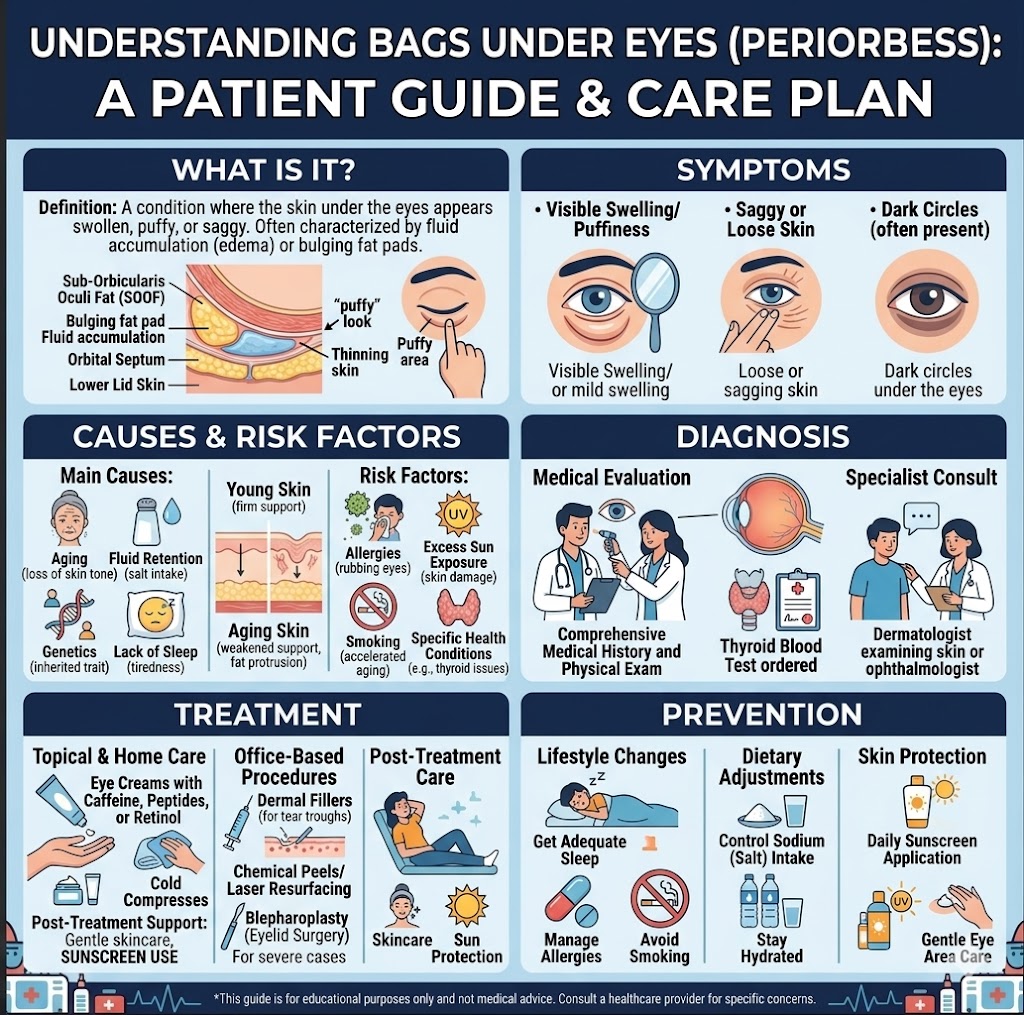
Bags under eyes refer to mild swelling or puffiness that appears beneath the eyes. This common condition often develops with age as the delicate tissues and muscles supporting the eyelids weaken. Fat that normally helps cushion the eyes can shift into the lower eyelids, creating a puffy appearance. Additionally, fluid may accumulate in this area, contributing to the swelling. While usually a cosmetic concern and rarely a sign of a serious health issue, various at-home remedies and medical treatments are available to improve their appearance.
Understanding the Condition
Bags Under Eyes: Causes, Symptoms, and Treatment Options
Understanding the Condition
Common Symptoms
Slight Swelling or Puffiness: Noticeable mild enlargement or fullness of the skin directly beneath the eyes.
Loose or Sagging Skin: The skin around the lower eyelids may appear stretched, thin, or droopy.
Dark Shadows: A darkened appearance under the eyes, which can be due to shadowing from the puffiness or changes in skin pigmentation.
Consultation Guide
Which Specialist to Meet
You should initially consult your general healthcare provider. They can assess your symptoms and help determine if there's an underlying medical condition contributing to the bags under your eyes. If medical treatment or cosmetic procedures are considered, your provider may refer you to a specialist. This could include an ophthalmologist (an eye medical and surgical specialist), a plastic surgeon, or an oculoplastic surgeon (a plastic surgeon specializing in the eyes and surrounding structures). These specialists can offer advanced diagnostic insights and treatment options.
Preparations Before Your Visit
Before your visit, be prepared to discuss your medical history, any other symptoms you're experiencing, and how long you've had bags under your eyes. Note any factors that seem to worsen or improve their appearance, such as sleep patterns, diet, or allergies. Also, compile a list of any medications, supplements, or herbal remedies you are currently taking. Your doctor may ask about family history of similar conditions. It's helpful to write down any questions you have regarding your condition or potential treatments.
Book a doctor visit near me
During the examination, your doctor will visually inspect the puffiness, skin texture, and any discoloration around your eyes. They will ask about when the bags first appeared, if they fluctuate, and any associated symptoms like vision changes, irritation, or headaches. You'll discuss your sleep quality, diet (especially salt intake), allergies, and any family history of under-eye bags or related conditions. This helps the doctor understand if the bags are a normal part of aging or if another factor might be at play.
Depending on the suspected cause, you might undergo blood tests. A healthcare professional will draw a small sample of blood, usually from a vein in your arm, which will then be sent to a lab for analysis. This can check for markers related to thyroid function or inflammation. If allergies are suspected, allergy testing might involve skin pricks or blood tests to identify specific allergens. These tests are generally quick, with minimal discomfort, and help to ensure that the under-eye bags are not a symptom of a more serious, treatable condition.
Monitor for Changes: If under-eye bags worsen significantly, become painful, or are accompanied by new symptoms like vision changes or skin rash, seek medical advice promptly to rule out underlying health issues.
Consultation Guide
Blepharoplasty (Eyelid Surgery): A surgical procedure to remove excess skin, muscle, and fat from the eyelids. For bags under eyes, the surgeon makes small cuts, typically along the natural creases or inside the eyelid, to remove or redistribute fat and trim sagging skin. This can significantly reduce puffiness and improve appearance, and in some cases, can address vision problems caused by severely sagging skin. (Duration: The surgery typically takes 1-3 hours. Recovery usually involves several weeks of swelling and bruising, with full results becoming apparent over several months. Results are often long-lasting, sometimes permanent, but do not stop the natural aging process.)
Diagnostic Procedures
Clinical Examination and Medical History Review
The primary diagnostic step involves a thorough physical examination of your eyes and the surrounding facial area, along with a detailed discussion of your medical history and lifestyle habits.
What to Expect
Ruling Out Underlying Medical Conditions (e.g., Blood Tests, Allergy Testing)
If your doctor suspects an underlying medical issue is contributing to the under-eye bags, further diagnostic tests may be recommended to identify or rule out conditions like thyroid disease, infections, connective tissue diseases, or allergies.
What to Expect
Treatment Options
Bags under eyes refer to mild swelling or puffiness that appears beneath the eyes. This common condition often develops with age as the delicate tissues and muscles supporting the eyelids weaken. Fat that normally helps cushion the eyes can shift into the lower eyelids, creating a puffy appearance. Additionally, fluid may accumulate in this area, contributing to the swelling. While usually a cosmetic concern and rarely a sign of a serious health issue, various at-home remedies and medical treatments are available to improve their appearance.
Laser Resurfacing: This procedure uses focused light energy to improve skin texture and tone, reducing fine lines, age spots, and uneven skin color. It can be ablative (removes top layers) or non-ablative (heats underlying tissue). Fractional lasers create microscopic columns of treated tissue, reducing recovery time. (Duration: Often requires multiple treatment sessions (weeks apart). Recovery time ranges from a few days to several weeks. Results can last for several years, but the aging process continues.)
Surgical Procedures
Address Allergies: If you have allergies, managing them with appropriate treatments can reduce inflammation and swelling around the eyes.
Regular Skin Care: Maintain a gentle skincare routine that includes moisturizing and using products with ingredients like retinoids or peptides, which can support skin elasticity over time (consult a professional before use).
Prevention & Long-Term Wellbeing
Home Remedies and Lifestyle Changes
Cool Compresses: Applying a cool, damp cloth or chilled tea bags to your closed eyes can help reduce swelling by constricting blood vessels. (Duration: Apply for 5-10 minutes, as needed.)
Elevate Your Head During Sleep: Using an extra pillow can prevent fluid from pooling around your eyes overnight. (Duration: Ongoing.)
Reduce Fluid Retention: Limit your intake of salty foods and drink plenty of water to help flush excess sodium from your system. Avoiding alcohol can also help. (Duration: Ongoing.)
Ensure Adequate Sleep: Getting 7-9 hours of quality sleep per night can significantly improve the appearance of under-eye bags. (Duration: Ongoing.)
Chemical Peel: A chemical solution is applied to the skin to remove the top layers, revealing smoother, regenerated skin. Different depths (light, medium, deep) address varying concerns. (Duration: Light/medium peels may require multiple sessions (weeks apart); recovery from days (light) to weeks (medium/deep). Results vary depending on depth and can last for several months to a year, or longer for deeper peels.)
Prevention
Manage Fluid Retention: Reduce your intake of salty foods and avoid excessive alcohol consumption to minimize fluid accumulation, especially before bedtime.
Prioritize Sleep Quality: Aim for consistent, adequate sleep (7-9 hours per night) and consider sleeping with your head slightly elevated to prevent fluid pooling.
Protect Skin from Sun Damage: Use sunscreen and wear sunglasses to protect the delicate skin around your eyes from UV radiation, which can accelerate skin aging and laxity.
Tags & Topics
Notice an error or need an update?
Help us keep medical information accurate. Report incorrect info or suggest an edit.


