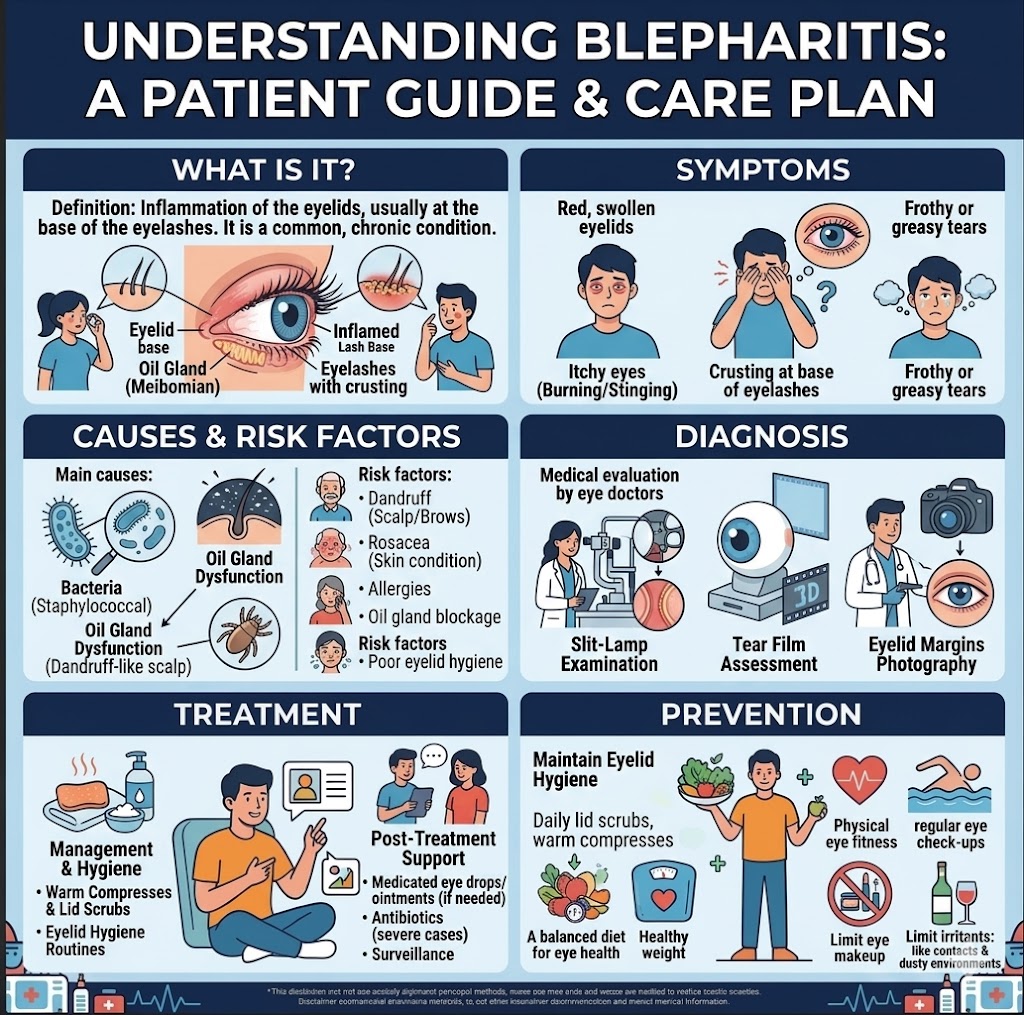
Blepharitis is a common condition causing inflammation, itching, and irritation of the eyelids, typically affecting both eyes along the lash lines. It often results from an overgrowth of harmless bacteria or clogged oil glands on the eyelids. While not curable, symptoms can be effectively controlled with daily care and treatments. It's uncomfortable but rarely causes permanent vision damage and is not contagious.
Understanding the Condition
Blepharitis: Understanding and Managing Eyelid Inflammation
Understanding the Condition
Blepharitis is a common condition causing inflammation, itching, and irritation of the eyelids, typically affecting both eyes along the lash lines. It often results from an overgrowth of harmless bacteria or clogged oil glands on the eyelids. While not curable, symptoms can be effectively controlled with daily care and treatments. It's uncomfortable but rarely causes permanent vision damage and is not contagious.
Common Symptoms
Before your visit, make a list of your symptoms, including when they started and what makes them better or worse. Note any current medications, allergies, and your complete medical history. Also, be prepared to describe your daily eyelid hygiene routine.
Book a doctor visit near me
Medical History and Symptom Review
The doctor will ask about your symptoms, their duration, severity, and any factors that seem to trigger or relieve them. They will also inquire about your general health and any other medical conditions.
Artificial Tears: Over-the-counter eye drops to relieve dry eye symptoms often associated with blepharitis. (Duration: As needed for comfort, ongoing.)
Eyelid Debridement and Microblepharoexfoliation: A professional procedure performed by an eye care specialist to thoroughly clean and exfoliate the eyelid margins, removing stubborn scales, crusts, and biofilm. (Duration: A single session, potentially repeated every few months as needed.)
Thermal Pulsation or Automated Gland Expression: Techniques used to apply controlled heat and pressure to the eyelids to melt and express clogged oil from the Meibomian glands. (Duration: A single session, typically repeated every 6-12 months for ongoing management.)
Maintain Consistent Eyelid Hygiene: Regular, gentle cleaning of the eyelids and lash line, even when symptoms are not present, is crucial to prevent flare-ups.
Avoid Eye Irritants: Limit the use of eye makeup, especially eyeliner applied to the inner lid, and ensure any products used are hypoallergenic. Avoid rubbing your eyes, which can worsen irritation.
Manage Underlying Conditions: Address any associated skin conditions like rosacea or seborrheic dermatitis, as these can contribute to blepharitis.
Protect Eyes from Environmental Factors: Wear sunglasses to protect eyes from wind, dust, and pollen, which can exacerbate symptoms.
Regular Eye Examinations: Schedule routine check-ups with your eye care specialist to monitor your condition and adjust your management plan as needed.
Adhere to Treatment Plans: Continue with prescribed medications and daily care routines even if symptoms improve, to prevent recurrence and maintain control.
Recognize Flare-Up Triggers: Pay attention to factors that might worsen your symptoms (e.g., specific foods, environments, lack of sleep) and try to avoid them.
Consultation Guide
Watery Eyes: Excessive tearing, often without a clear cause.
Red Eyes: Noticeable redness in or around the eyes.
Gritty or Sandy Feeling: A sensation as if something is in your eye.
Burning Sensation: A discomforting burning feeling in the eyes.
Greasy Eyelids: Eyelids appear oily or shiny.
Scales or Crusts on Eyelashes: Flakes or sticky deposits forming around the lash base, especially noticeable in the morning.
Itching Eyelids: A persistent urge to scratch the eyelids.
Red and Swollen Eyelids: Visible swelling and redness of the eyelid tissue.
Sticky Eyelids: Eyelids sticking together, particularly upon waking.
Frequent Blinking: An increased rate of blinking.
Sensitivity to Light (Photophobia): Discomfort or pain when exposed to light.
Misdirected Eyelashes: Eyelashes growing in an abnormal direction.
Loss of Eyelashes: Eyelashes falling out.
Consultation Guide
Which Specialist to Meet
You will answer questions about your eye health, general medical history, and lifestyle habits. This helps the doctor understand the potential causes and contributing factors to your blepharitis.
External Eye Examination
The doctor will visually inspect your eyes, eyelids, and eyelashes using a bright light and possibly magnification. They will look for signs of inflammation, redness, swelling, greasy appearance, crusting, and any issues with your eyelashes.
Diagnostic Procedures
What to Expect
What to Expect
You will be asked to sit comfortably while the doctor examines your eyelids and the front of your eyes using a handheld light or a head-mounted magnifying device. This is a quick and painless part of the exam.
Slit-Lamp Examination
A slit lamp is a specialized microscope that allows the doctor to examine your eyes under high magnification and bright light. This provides a detailed view of your eyelids, lash follicles, oil glands (Meibomian glands), cornea, and conjunctiva to identify the extent and type of blepharitis.
What to Expect
You will rest your chin and forehead on supports on the slit lamp machine. The doctor will shine a bright light into your eyes and look through the microscope. You may be asked to look in different directions. This procedure is painless and takes only a few minutes.
Eyelid Swab or Culture
What to Expect
A sterile cotton swab will be gently rubbed along your eyelid margin or lash line to collect a small sample. This might feel slightly ticklish or strange, but it is not painful. The sample is then sent for analysis.
Treatment Options
You should initially consult with your General Practitioner or a primary care physician. They may then refer you to an eye care specialist, such as an Optometrist (for routine eye care and vision problems) or an Ophthalmologist (a medical doctor specializing in eye and vision care, including surgery).
Preparations Before Your Visit
If an infection is suspected or initial treatments are ineffective, the doctor might take a small sample of the oil or crust from your eyelids. This sample is then sent to a lab to identify specific bacteria or other microorganisms.
Home Remedies and Daily Care
Warm Compresses: Applying a clean, warm, moist cloth to closed eyelids for several minutes to loosen crusts and soften oily debris. (Duration: 5-10 minutes, 2-4 times daily during flare-ups, reducing to once daily for maintenance.)
Eyelid Scrubs: Gently cleaning the base of the eyelashes with a mild cleanser (diluted baby shampoo or an over-the-counter eyelid cleanser) using a clean finger, cotton swab, or pad. (Duration: Once or twice daily, especially after warm compresses.)
Medications
Topical Anti-inflammatory Eye Drops or Ointments: Medications applied directly to the eye or eyelid to reduce swelling and redness. (Duration: As prescribed, typically for a few weeks to several months, depending on severity.)
Topical Antibiotic Eye Drops or Ointments: Used to control bacterial overgrowth on the eyelids, applied directly to the affected area. (Duration: Typically for 1-2 weeks, or as directed by your doctor.)
Oral Antibiotics: Taken by mouth to reduce bacterial levels or to decrease oil gland inflammation for more severe or persistent cases. (Duration: Often several weeks to months, depending on the type and severity.)
Prevention & Long-Term Wellbeing
Prevention
Tags & Topics
Notice an error or need an update?
Help us keep medical information accurate. Report incorrect info or suggest an edit.


