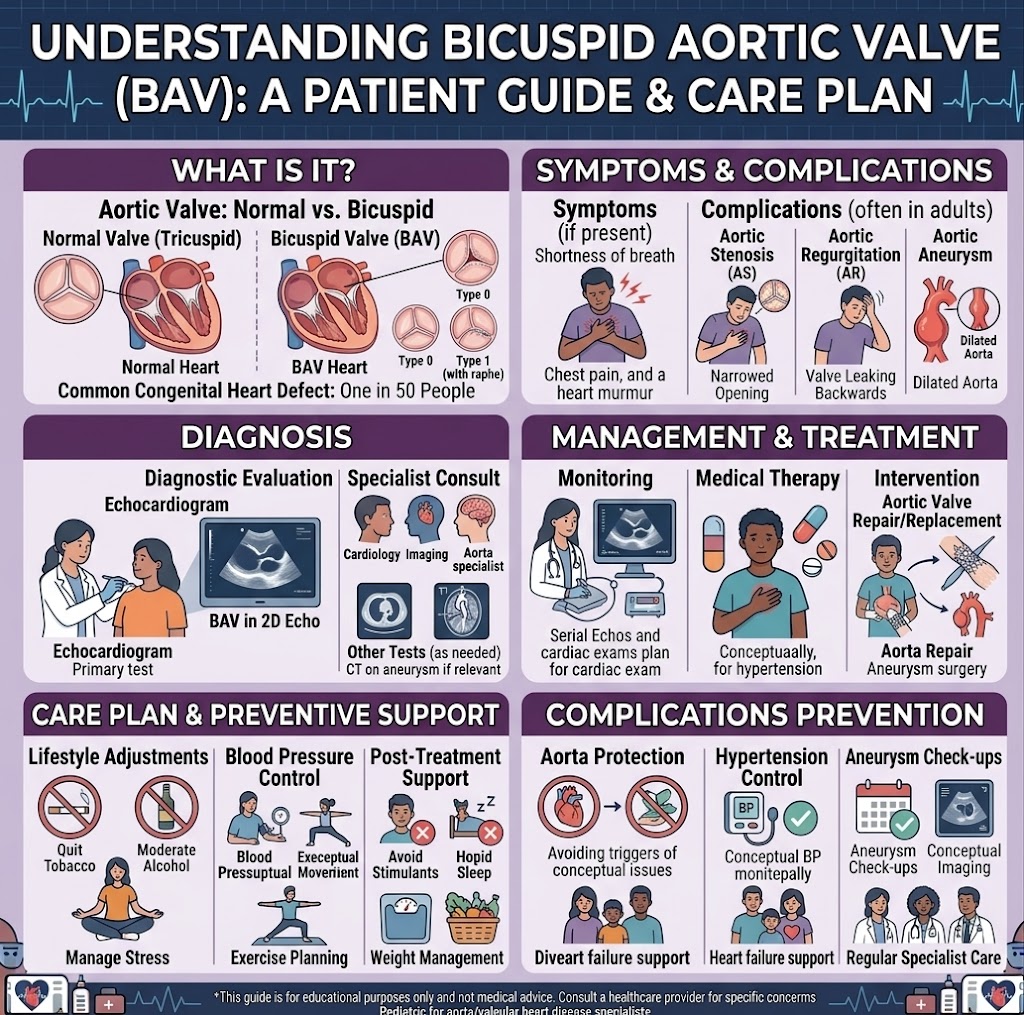
A bicuspid aortic valve (BAV) is a common heart condition present at birth, meaning it's a congenital heart defect. Unlike a healthy aortic valve which has three small flaps (called cusps), a bicuspid valve has only two. This valve is located between the heart's main pumping chamber (left ventricle) and the body's largest artery (aorta), controlling blood flow out to the body. While usually having three cusps, in rare cases, a person might be born with a valve that has one (unicuspid) or four (quadricuspid) cusps. A BAV can cause the valve opening to narrow (aortic stenosis) or leak (aortic regurgitation), forcing the heart to work harder to pump blood. The exact cause of BAV is often unknown, but genetic factors are believed to play a role.
Understanding the Condition
Bicuspid Aortic Valve: Understanding Your Heart Condition
Understanding the Condition
Common Symptoms
Often Asymptomatic in Youth: Most individuals with a bicuspid aortic valve do not experience symptoms until they reach adulthood. However, some infants may develop severe symptoms early in life.
Symptoms of Severe Valve Issues: If the bicuspid valve leads to significant narrowing (stenosis) or leakage (regurgitation), symptoms may include chest pain, shortness of breath, feeling dizzy or fainting, extreme tiredness (fatigue), a rapid or fluttering heartbeat, and swelling in the ankles, feet, or abdomen.
Consultation Guide
Which Specialist to Meet
Before your appointment, gather your medical history, including any existing conditions and all medications or supplements you are currently taking. Make a detailed list of your symptoms, including when they started and how often they occur. Prepare a list of questions for your doctor to ensure all your concerns are addressed.
Book a doctor visit near me
You will receive a local anesthetic to numb the area where the catheter will be inserted. You might feel some pressure as the catheter is guided, but generally no sharp pain. X-ray imaging helps the doctor navigate the catheter. A special dye may be injected to visualize blood flow. The procedure can take from 30 minutes to several hours, depending on what is being done. After the procedure, you will typically need to lie still for several hours to prevent bleeding at the insertion site.
Symptom Management Medications: While there's no medication to correct a bicuspid valve itself, medicines may be prescribed to manage symptoms or complications such as high blood pressure, fluid retention, or irregular heartbeats. These can help reduce strain on the heart. (Duration: As needed, often long-term)
Awareness of Symptoms: Be vigilant for any new or worsening symptoms, such as chest pain, shortness of breath, dizziness, or fatigue. Report these to your doctor promptly, as they could indicate a change in your valve's condition requiring intervention.
Consultation Guide
A bicuspid aortic valve (BAV) is a common heart condition present at birth, meaning it's a congenital heart defect. Unlike a healthy aortic valve which has three small flaps (called cusps), a bicuspid valve has only two. This valve is located between the heart's main pumping chamber (left ventricle) and the body's largest artery (aorta), controlling blood flow out to the body. While usually having three cusps, in rare cases, a person might be born with a valve that has one (unicuspid) or four (quadricuspid) cusps. A BAV can cause the valve opening to narrow (aortic stenosis) or leak (aortic regurgitation), forcing the heart to work harder to pump blood. The exact cause of BAV is often unknown, but genetic factors are believed to play a role.
Heart-Healthy Lifestyle: Adopting a heart-healthy lifestyle, including a balanced diet, regular physical activity as advised by your doctor, maintaining a healthy weight, and avoiding smoking, can help manage risk factors for heart disease and support overall heart health. (Duration: Lifelong)
Diagnostic Procedures
Echocardiogram (Echo)
An echocardiogram uses sound waves to create live, moving images of your heart. This common test visualizes the heart's chambers, valves, and how blood flows through them, helping doctors diagnose heart conditions like a bicuspid aortic valve.
What to Expect
You will lie on an examination table. A gel will be applied to your chest, and a device called a transducer will be gently moved over the area. This device sends and receives sound waves, creating pictures of your heart. You might feel slight pressure from the transducer, but the procedure is generally painless. The test typically takes 30-60 minutes.
Electrocardiogram (ECG or EKG)
An electrocardiogram is a quick, painless test that records the electrical signals of your heart. It shows how fast or slow your heart is beating and helps identify any irregular heart rhythms or signs of heart muscle strain.
What to Expect
You will lie down on an examination table. Small, sticky patches called electrodes will be placed on your chest and sometimes on your arms or legs. Wires connect these patches to a machine that records your heart's electrical activity. The test takes only a few minutes and involves no discomfort.
A chest X-ray uses radiation to produce images of your heart, lungs, blood vessels, airways, and the bones of your chest and spine. It can reveal abnormalities in heart size or lung conditions that might be related to heart issues.
What to Expect
You will typically stand or sit in front of an X-ray plate. You may be asked to take a deep breath and hold it briefly while the image is taken. The process is quick and painless, usually taking less than 15 minutes to complete multiple views.
Cardiac Catheterization
Cardiac catheterization is a procedure that involves guiding a thin, flexible tube (catheter) through a blood vessel, usually in the groin or wrist, to the heart. It provides detailed information about the heart muscle, valves, and blood vessels, and can measure pressures within the heart chambers.
What to Expect
Regular Cardiology Follow-ups: Consistent visits with your cardiologist are essential to track the condition of your bicuspid aortic valve, monitor for potential complications like stenosis or regurgitation, and assess overall heart health. These appointments often include imaging tests like echocardiograms.
Treatment Options
You should consult a cardiologist, a doctor specializing in heart conditions. For children, a pediatric cardiologist is the appropriate specialist. If surgery is considered, you may also meet with a cardiovascular surgeon.
Preparations Before Your Visit
Medications
Procedures and Surgeries
Aortic Valve Repair: In some cases, the faulty bicuspid valve can be surgically repaired to improve its function, rather than being replaced. This may involve reshaping the valve cusps or addressing structural issues. (Duration: Single procedure, long-term benefit)
Aortic Valve Replacement: If the bicuspid valve becomes severely narrowed or leaky, replacement surgery is often necessary. The faulty valve is removed and replaced with either a mechanical valve (requiring lifelong blood thinners) or a biological tissue valve (which may need replacement over time). (Duration: Single procedure, long-term benefit)
Balloon Valvuloplasty: This catheter-based procedure uses a balloon to widen a narrowed aortic valve. While it can improve blood flow, its effects may be temporary, especially in adults, and it is more commonly used in children or as a bridge to surgery. (Duration: Single procedure, variable effectiveness)
Heart Transplant: For individuals with severe heart failure that does not respond to other treatments, a heart transplant may be considered. This involves replacing the failing heart with a healthy donor heart. (Duration: Single procedure, requires lifelong anti-rejection medications)
Prevention & Long-Term Wellbeing
Lifestyle and Monitoring
Regular Monitoring: Routine check-ups with a cardiologist, often including regular echocardiograms, are crucial to monitor the valve's function and identify any changes early. This allows for timely intervention if complications arise. (Duration: Lifelong)
Prevention and Long-Term Care
Maintain a Healthy Lifestyle: Adopt heart-healthy habits such as eating a balanced diet rich in fruits, vegetables, and lean proteins, engaging in regular physical activity (as recommended by your doctor), avoiding smoking, and managing stress. These steps can help reduce the risk of other cardiovascular problems.
Manage Blood Pressure and Cholesterol: Work with your healthcare provider to keep your blood pressure and cholesterol levels within healthy ranges. High blood pressure or cholesterol can place additional strain on a heart with a bicuspid aortic valve.
Tags & Topics
Notice an error or need an update?
Help us keep medical information accurate. Report incorrect info or suggest an edit.

