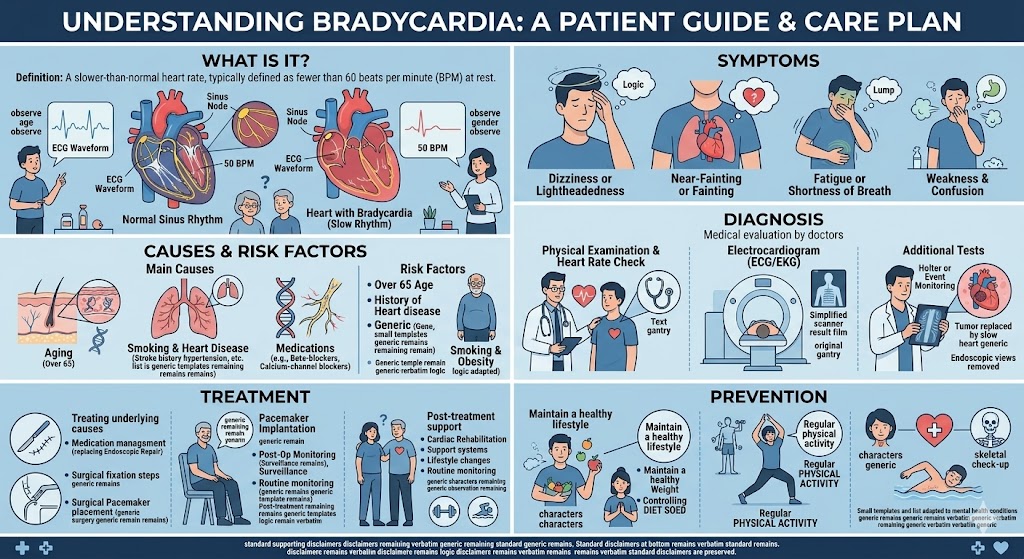
Bradycardia is characterized by a slower-than-normal heart rate, typically falling below 60 beats per minute in resting adults. While a lower heart rate is common and benign for trained athletes or during deep sleep, severe bradycardia can prevent the heart from pumping enough oxygen-rich blood to the body. This lack of oxygenated blood can lead to fatigue, dizziness, or even organ dysfunction, requiring medical evaluation and sometimes treatment.
Understanding the Condition
Understanding Bradycardia: Causes, Symptoms, and Management
Understanding the Condition
Common Symptoms
Dizziness and Lightheadedness: Feeling unsteady or faint, often due to decreased blood flow and oxygen to the brain.
Extreme Fatigue: A constant feeling of exhaustion, particularly noticeable during physical activity or routine daily tasks.
Shortness of Breath: Difficulty breathing or feeling winded, even during mild physical exertion or while resting.
Chest Pain: Discomfort or pain in the chest area, indicating that the heart muscle itself is not receiving sufficient oxygen.
Before your appointment, document all symptoms, their frequency, and any triggers. Create a list of all current medications, vitamins, and supplements. Note your family history of heart disease and compile a list of questions regarding your heart health.
Book a doctor visit near me
A technician attaches electrodes to your chest, which connect to a small recording device worn on a belt or shoulder strap. You will go about your normal routine (excluding showering or swimming) and keep a diary of any symptoms you experience during the monitoring period.
Consultation Guide
Confusion or Memory Problems: Difficulty concentrating, sudden forgetfulness, or mental fog caused by reduced cerebral circulation.
Fainting (Syncope): A temporary loss of consciousness or feeling like you are about to pass out, which requires immediate attention.
Consultation Guide
Which Specialist to Meet
You should consult a primary care physician, who may refer you to a cardiologist (a heart specialist) or an electrophysiologist (a specialist in heart rhythm disorders).
Preparations Before Your Visit
Therapies for Underlying Causes
Diagnostic Procedures
Electrocardiogram (ECG or EKG)
A quick, noninvasive test that measures and records the electrical activity of the heart to identify irregular or slow rhythms.
What to Expect
Small sticky patches (electrodes) are attached to your chest, arms, and legs. You will lie still for a few minutes while a machine displays and prints your heart's electrical signals. The test is completely painless and takes about 5 to 10 minutes.
A portable ECG device worn during daily activities to continuously record your heart's rhythm, typically for 24 to 48 hours, to catch intermittent issues.
What to Expect
An assessment of how your heart functions and responds to physical exertion.
What to Expect
A test used to evaluate how your heart rate and blood pressure react to changes in body position, particularly if you experience unexplained fainting.
What to Expect
You will lie flat on a specialized table and be secured with safety straps. The table is slowly tilted upward to an upright, near-standing position while medical personnel continuously monitor your heart rate and blood pressure for any sudden drops.
Treatment Options
Bradycardia is characterized by a slower-than-normal heart rate, typically falling below 60 beats per minute in resting adults. While a lower heart rate is common and benign for trained athletes or during deep sleep, severe bradycardia can prevent the heart from pumping enough oxygen-rich blood to the body. This lack of oxygenated blood can lead to fatigue, dizziness, or even organ dysfunction, requiring medical evaluation and sometimes treatment.
You will walk on a treadmill or ride a stationary bicycle while hooked up to ECG monitors and a blood pressure cuff. The intensity will gradually increase. If you are unable to exercise, you will receive an intravenous medication to safely simulate the effects of exercise on the heart.
Medication Adjustments
Modifying Existing Prescriptions: If your slow heart rate is a side effect of medications taken for other conditions (such as blood pressure or mental health), your doctor may lower the dose or substitute the medication. (Duration: Adjustments are made immediately, with heart rate monitoring continuing over several weeks.)
Surgical Procedures
Pacemaker Implantation: The surgical placement of a small, battery-operated device under your collarbone. It monitors your heartbeat and sends electrical signals to stimulate the heart to beat at a healthy, consistent rate if it slows down too much. (Duration: The implant surgery takes 1 to 2 hours. The device remains in place indefinitely, though the battery will need replacement every 5 to 15 years.)
Addressing Underlying Medical Conditions: Treating conditions like an underactive thyroid (hypothyroidism) or sleep apnea to resolve the secondary bradycardia. (Duration: Treatment is usually long-term or lifelong, depending on the specific underlying condition.)
Prevention & Long-Term Wellbeing
Adopt a Heart-Healthy Diet: Eat nutrient-dense meals low in sodium and saturated fats, emphasizing vegetables, fruits, lean proteins, and whole grains to protect your blood vessels.
Engage in Regular Physical Activity: Perform moderate exercise regularly, as approved by your doctor, to strengthen your heart muscle and improve systemic circulation.
Maintain a Healthy Weight: Keep your body mass index within a healthy range to reduce the overall workload and stress on your cardiovascular system.
Manage Chronic Conditions: Consistently monitor and control your blood pressure, cholesterol, and blood sugar levels through lifestyle habits and prescribed medical therapies.
Limit Alcohol and Avoid Tobacco: Stop smoking and limit alcohol intake to moderate levels (up to one drink daily for women, two for men) to protect heart tissue from toxic damage.
Practice Stress Reduction: Manage emotional stress through mindfulness, meditation, yoga, or counseling, as intense stress can influence cardiac pacing.
Prioritize Quality Sleep: Aim for 7 to 9 hours of restorative sleep each night on a consistent schedule to lower your risk of cardiovascular complications.
Tags & Topics
Notice an error or need an update?
Help us keep medical information accurate. Report incorrect info or suggest an edit.

