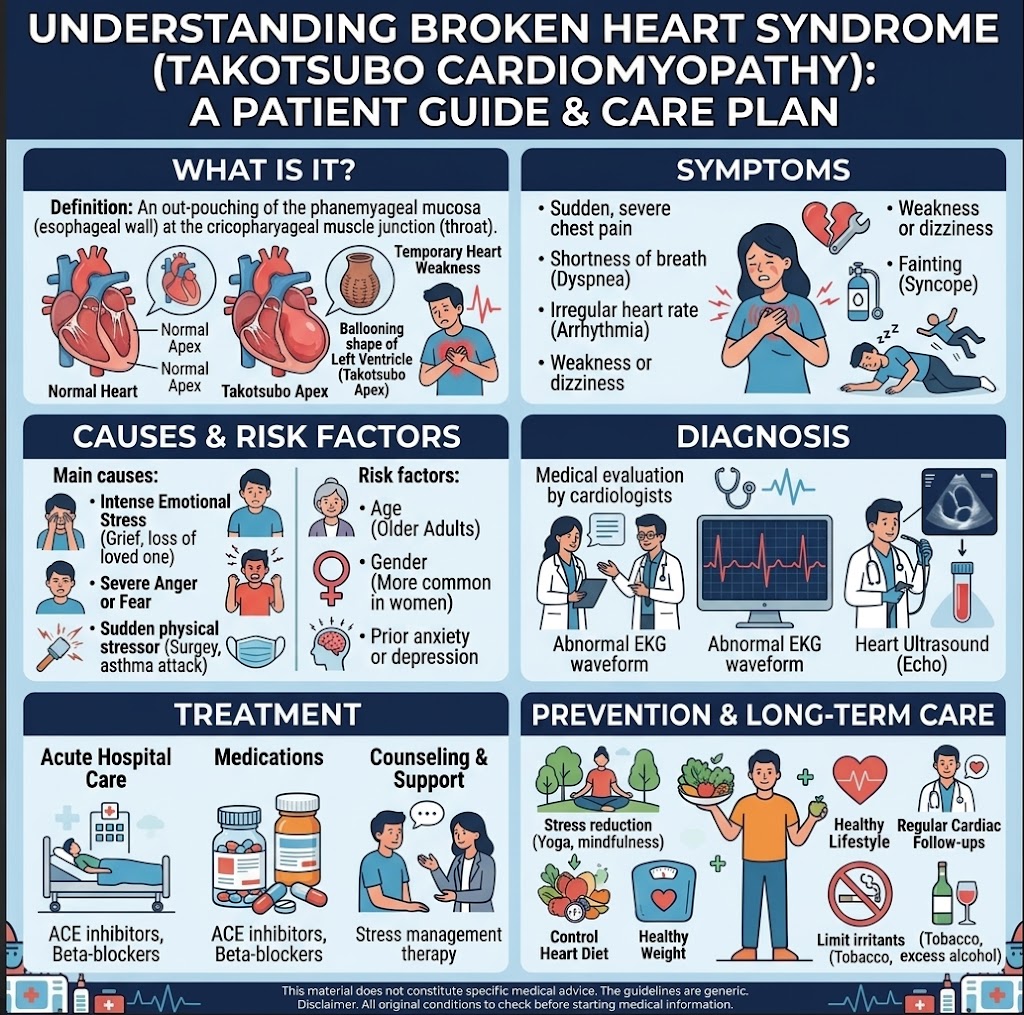
Broken heart syndrome, also known as stress cardiomyopathy or Takotsubo cardiomyopathy, is a temporary heart condition often triggered by extreme stress, intense emotions, or serious physical illness. It mimics a heart attack, causing sudden chest pain and shortness of breath. The condition affects only a portion of the heart, temporarily disrupting its ability to pump blood effectively, while the rest functions normally. Most people recover fully, but some may experience lingering discomfort or a recurrence.
Understanding the Condition
Broken Heart Syndrome: Understanding Stress-Induced Heart Weakness
Understanding the Condition
Broken heart syndrome, also known as stress cardiomyopathy or Takotsubo cardiomyopathy, is a temporary heart condition often triggered by extreme stress, intense emotions, or serious physical illness. It mimics a heart attack, causing sudden chest pain and shortness of breath. The condition affects only a portion of the heart, temporarily disrupting its ability to pump blood effectively, while the rest functions normally. Most people recover fully, but some may experience lingering discomfort or a recurrence.
Common Symptoms
Chest Pain: Sudden discomfort or pressure in the chest, similar to a heart attack.
Shortness of Breath: Difficulty breathing or feeling like you can't get enough air.
Consultation Guide
Which Specialist to Meet
Before your doctor's visit, make a list of your symptoms, including when they started and how severe they are. Be prepared to discuss any recent stressful life events, emotional shocks, or significant physical illnesses or surgeries. Bring a list of all your current medications, including over-the-counter drugs and supplements, and mention any existing medical conditions or mental health concerns like anxiety or depression. Prepare any questions you have for the doctor.
Book a doctor visit near me
Heart Support Medications: Medicines are used to alleviate symptoms and support heart function during the recovery phase. These might include medications to lower blood pressure, reduce fluid retention, or regulate heart rhythm. (Duration: Typically short-term, until heart function returns to normal (usually weeks to a few months).)
Diagnostic Procedures
If you experience new or unexplained chest pain, a very rapid or irregular heartbeat, or severe shortness of breath, seek immediate emergency medical care. After emergency stabilization, a general practitioner can manage your initial care and refer you to a cardiologist (a heart specialist) for further diagnosis, treatment, and long-term management.
Preparations Before Your Visit
Electrocardiogram (ECG or EKG)
An ECG is a quick, non-invasive test that records the electrical signals of your heart. It helps determine if your heart is beating too fast, too slow, or irregularly, and can indicate if you've had a heart attack. It's often one of the first tests performed for chest pain.
What to Expect
You will lie down while a healthcare professional places small, sticky patches (electrodes) on your chest, and sometimes your arms or legs. Wires connect these patches to a machine that records your heart's electrical activity. The test is painless, takes only a few minutes, and you'll be asked to lie still and relax.
A chest X-ray uses a small amount of radiation to create images of your heart, lungs, blood vessels, and bones in the chest. It helps doctors identify problems like fluid in the lungs, a collapsed lung, or an enlarged heart, which can provide clues about your condition.
What to Expect
You will typically stand or sit in front of an X-ray machine. You might be asked to hold your breath for a few seconds while the image is taken. The procedure is quick, painless, and usually takes only a few minutes to complete.
An echocardiogram uses sound waves to create live, moving pictures of your heart. This test shows how blood flows through your heart chambers and valves and allows doctors to assess the heart's pumping function and structure. It's crucial for diagnosing broken heart syndrome by revealing the characteristic changes in heart muscle movement.
What to Expect
You will lie on an examination table, and a healthcare professional will apply a special gel to your chest. They will then use a handheld device called a transducer, pressing it firmly against your chest and moving it around. This device sends and receives sound waves to create images of your heart on a monitor. The procedure is generally painless, though you might feel some pressure from the transducer, and it can take 30-60 minutes.
Treatment Options
Medications
Stress Hormone Blockers: For long-term prevention, some individuals may be prescribed medications that block the effects of stress hormones on the heart, helping to prevent future episodes. (Duration: Long-term, potentially for several years or indefinitely, as advised by a cardiologist.)
Long-Term Medication: Your doctor may recommend long-term use of specific medications that help protect the heart from the harmful effects of stress hormones, especially if you are at higher risk of recurrence.
Chronic Stress Management: Developing effective strategies to cope with and reduce chronic stress is vital. This includes identifying stressors, setting boundaries, and prioritizing self-care.
Mental Health Support: If you have underlying anxiety or depression, managing these conditions through therapy or appropriate medication can significantly lower your risk of broken heart syndrome.
Prevention & Long-Term Wellbeing
Lifestyle and Stress Management
Stress Reduction Techniques: Engaging in activities and practices that help manage emotional stress is crucial for preventing recurrences. This includes mindfulness, meditation, yoga, or deep breathing exercises. (Duration: Ongoing, as part of a healthy lifestyle.)
Regular Physical Activity: Consistent exercise is a powerful tool for stress reduction and overall heart health. Consult your doctor for an appropriate exercise plan. (Duration: Ongoing, as part of a healthy lifestyle.)
Support Groups and Social Connection: Connecting with others, especially through support groups, can help manage emotional burdens and reduce feelings of isolation, which contribute to stress. (Duration: Ongoing, as needed for emotional wellbeing.)
Prevention
Healthy Lifestyle Choices: Maintaining a balanced diet, getting adequate sleep, and avoiding excessive caffeine or stimulants can help support overall heart health and resilience to stress.
Long-Term Monitoring
Regular Cardiology Check-ups: Even after recovery, periodic follow-up appointments with a heart specialist are important to monitor heart function and ensure long-term stability, especially if there's a risk of recurrence.
Tags & Topics
Notice an error or need an update?
Help us keep medical information accurate. Report incorrect info or suggest an edit.

