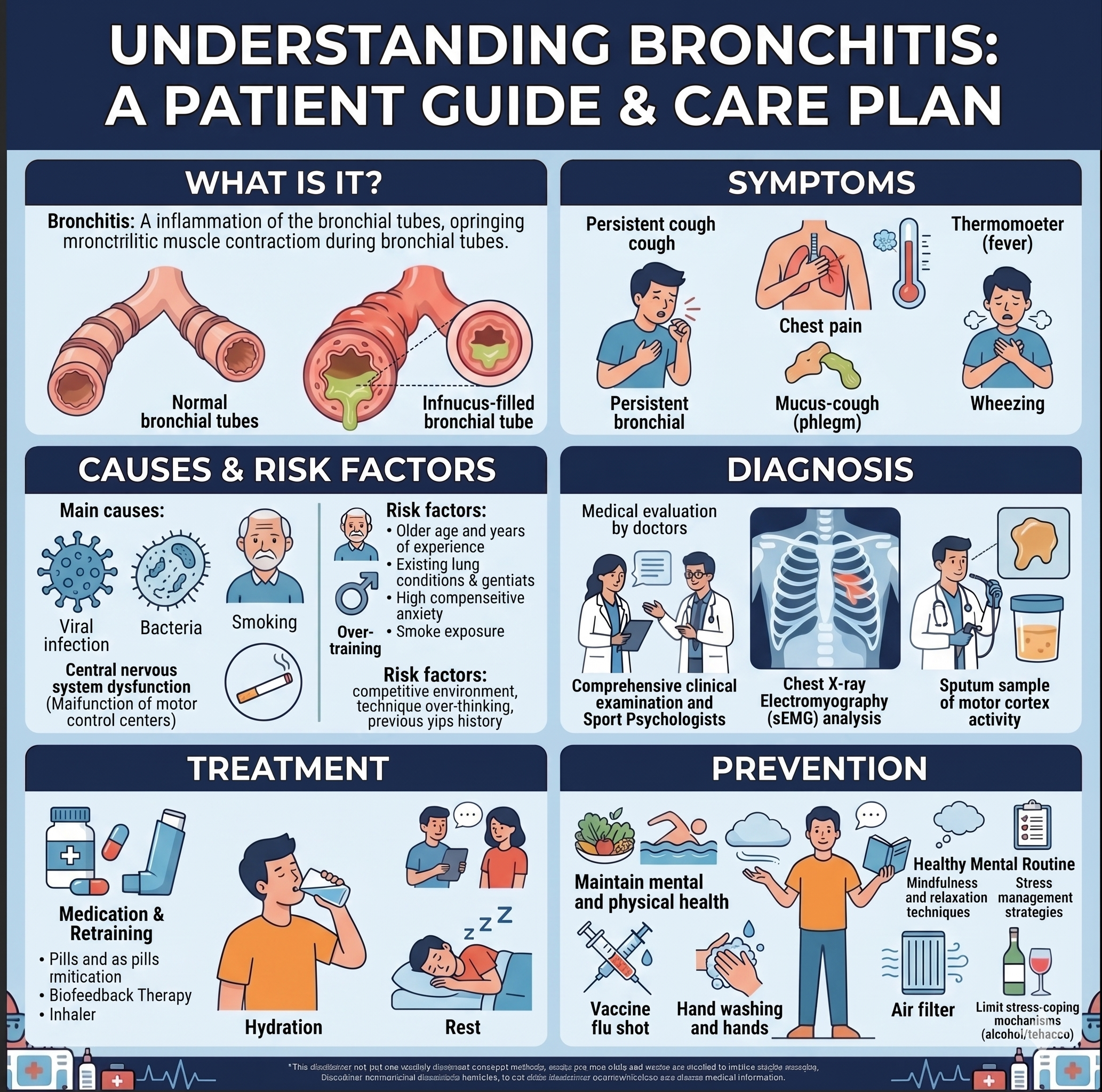
Bronchitis is a condition where the main airways to your lungs, called bronchial tubes, become inflamed or swollen. These tubes are essential for carrying air in and out of your lungs. When you have bronchitis, you often develop a cough that may bring up thick, discolored mucus. Bronchitis can appear suddenly and be temporary (acute), or it can develop slowly and become a long-lasting problem (chronic). Acute bronchitis often develops from common respiratory infections and usually improves within a week to 10 days, though a cough may linger. Chronic bronchitis is a more serious, constant irritation of the bronchial tubes, frequently linked to smoking, and is part of a broader condition called chronic obstructive pulmonary disease (COPD).
Understanding the Condition
Bronchitis: Understanding Acute and Chronic Forms
Understanding the Condition
Bronchitis is a condition where the main airways to your lungs, called bronchial tubes, become inflamed or swollen. These tubes are essential for carrying air in and out of your lungs. When you have bronchitis, you often develop a cough that may bring up thick, discolored mucus. Bronchitis can appear suddenly and be temporary (acute), or it can develop slowly and become a long-lasting problem (chronic). Acute bronchitis often develops from common respiratory infections and usually improves within a week to 10 days, though a cough may linger. Chronic bronchitis is a more serious, constant irritation of the bronchial tubes, frequently linked to smoking, and is part of a broader condition called chronic obstructive pulmonary disease (COPD).
Common Symptoms
Cough: This is the most common symptom, often producing mucus. The mucus can be clear, white, yellowish-gray, or green. Rarely, it may have streaks of blood. For acute bronchitis, the cough can persist for several weeks even after other symptoms have improved.
Chest Discomfort: You might feel a soreness or tightness in your chest, especially when coughing.
Shortness of Breath: Difficulty breathing or feeling winded, particularly during physical activity, and more common with chronic bronchitis.
For sudden (acute) bronchitis, you should typically see your general practitioner or family doctor. If your symptoms are severe, long-lasting, recurring, or if you have chronic bronchitis, a lung specialist (pulmonologist) may be recommended.
Preparations Before Your Visit
Before your visit, make a list of your symptoms, including when they started and how severe they are. Note any recent illnesses, current medications (including over-the-counter drugs and supplements), and your complete medical history. Prepare any questions you have for the doctor to ensure all your concerns are addressed.
Book a doctor visit near me
A chest X-ray is a common imaging test that creates pictures of your heart, lungs, blood vessels, airways, and the bones of your chest and spine. It helps doctors identify issues like pneumonia, fluid around the lungs, a collapsed lung, or other lung conditions that might be causing your symptoms, especially if there's a concern about complications or if symptoms are severe.
Rest: Getting adequate rest helps your body recover and fight off infection. (Duration: As needed for symptoms to subside.)
Humidifier: Using a cool-mist humidifier or taking a steamy shower can help soothe irritated airways and loosen mucus. (Duration: As needed for comfort and symptom relief.)
Pain and Fever Relief: Over-the-counter medications can help manage discomfort, body aches, and fever. (Duration: As needed for symptom relief.)
Cough Relief: Your doctor may recommend cough suppressants or expectorants (medicines to help loosen mucus) to manage your cough, especially if it's severe or prevents sleep. Antibiotics are generally not prescribed for acute bronchitis because it is usually caused by viruses. (Duration: As prescribed, usually short-term for acute symptoms.)
Bronchodilators: If you have wheezing or shortness of breath, medications that help open up your airways might be prescribed. (Duration: As prescribed, for symptomatic relief.)
Regular Check-ups: For chronic bronchitis, regular follow-up appointments with your doctor are crucial to monitor your condition, manage symptoms effectively, and prevent complications.
Avoid Triggers: Identify and consistently avoid environmental triggers such as smoke, air pollution, and occupational irritants to prevent flare-ups and worsening of your condition.
Consultation Guide
Wheezing: A whistling or rattling sound, usually heard when you breathe out, caused by narrowed airways, often seen in acute bronchitis.
Sore Throat: A scratchy or painful sensation in your throat, common with acute bronchitis.
Mild Headache and Body Aches: General aches and pains, similar to those experienced with a cold or flu, often accompanying acute bronchitis.
Slight Fever and Chills: A low-grade fever and feeling cold or shivery, typically seen with acute bronchitis.
Consultation Guide
Which Specialist to Meet
Antivirals: If acute bronchitis is caused by a specific virus like influenza, an antiviral medication may be prescribed to lessen the severity and duration of the illness. (Duration: Typically 5-7 days, as prescribed.)
Pulmonary Rehabilitation: For chronic bronchitis, particularly when it's part of chronic obstructive pulmonary disease (COPD), a structured program involving exercise, education, and breathing techniques can significantly improve lung function and quality of life. (Duration: Ongoing or structured programs lasting weeks to months.)
Vaccinations: Get a yearly flu shot to protect against influenza, a common viral cause of acute bronchitis. Also, ask your doctor about a pneumonia vaccine if it's recommended for you.
Hand Hygiene: Wash your hands frequently and thoroughly with soap and water for at least 20 seconds. If soap and water aren't available, use an alcohol-based hand sanitizer. Avoid touching your eyes, nose, and mouth to prevent germs from entering your body.
Avoid Sick Individuals: Steer clear of close contact with people who have colds, flu, or other respiratory infections to reduce your risk of catching contagious viruses.
Quit Smoking and Avoid Secondhand Smoke: Cigarette smoking is the leading cause of chronic bronchitis. Quitting smoking, and avoiding exposure to secondhand smoke, significantly reduces your risk of both acute and chronic forms of the condition.
Environmental Protection: If your job exposes you to lung irritants like dust, fumes, or chemical gases, wear appropriate protective masks. Wearing a face mask in crowded places can also help reduce exposure to infections.
Diagnostic Procedures
What to Expect
During a chest X-ray, you will stand or sit against a special plate. You may be asked to take a deep breath and hold it briefly while the X-ray is taken. The procedure is quick, generally painless, and usually requires no special preparation other than possibly removing jewelry or clothing with metal fasteners. The doctor will review the images to assess your lung health.
Treatment Options
Home Care and Self-Management
Medications
Anti-inflammatory Agents: In some cases, medications to reduce airway inflammation may be considered, particularly for chronic or severe acute bronchitis. (Duration: As prescribed by your doctor.)
Manage Gastric Reflux: If you experience severe or frequent heartburn, seek treatment, as chronic acid reflux can irritate your throat and contribute to developing bronchitis.
Prevention & Long-Term Wellbeing
Fluids: Drinking plenty of fluids, like water and juice, helps thin mucus and makes it easier to cough up. (Duration: Continuous until full recovery.)
Prevention
Tags & Topics
Notice an error or need an update?
Help us keep medical information accurate. Report incorrect info or suggest an edit.


