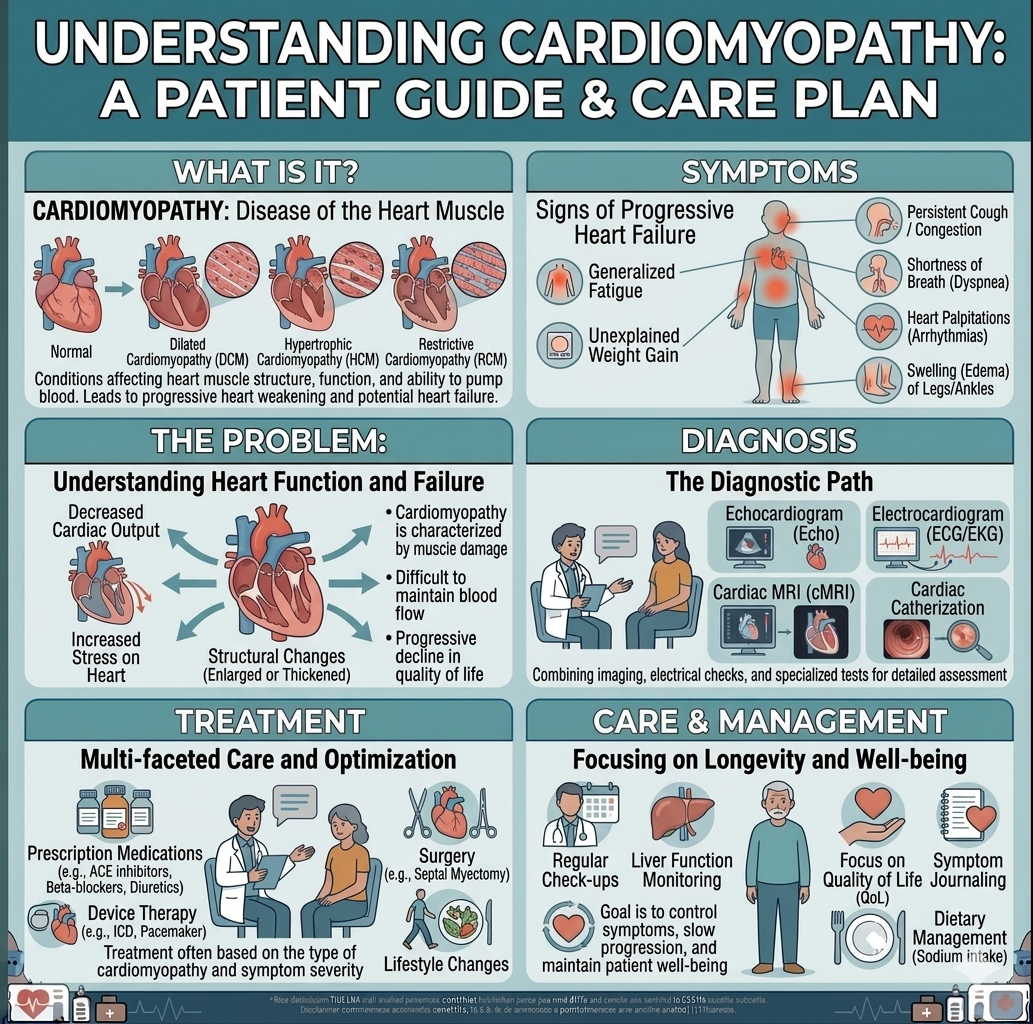
Cardiomyopathy is a disease of the heart muscle that makes it harder for your heart to pump blood efficiently. This can lead to symptoms of heart failure and other serious heart conditions. Types include dilated, hypertrophic, and restrictive. It can be inherited (genetic), acquired from other health issues, or have no known cause. Untreated, it can cause heart failure, blood clots, valve problems, and sudden cardiac arrest. Treatment involves medications, devices, or surgery, with severe cases potentially needing a heart transplant, depending on the type and severity.
Understanding the Condition
Cardiomyopathy: A Guide to Heart Muscle Disease
Understanding the Condition
Cardiomyopathy is a disease of the heart muscle that makes it harder for your heart to pump blood efficiently. This can lead to symptoms of heart failure and other serious heart conditions. Types include dilated, hypertrophic, and restrictive. It can be inherited (genetic), acquired from other health issues, or have no known cause. Untreated, it can cause heart failure, blood clots, valve problems, and sudden cardiac arrest. Treatment involves medications, devices, or surgery, with severe cases potentially needing a heart transplant, depending on the type and severity.
Common Symptoms
Shortness of Breath: Trouble breathing during activity or rest; difficulty lying flat to sleep.
Chest Pain: Discomfort, especially after physical activity or heavy meals.
Irregular Heartbeats: Feeling a rapid, pounding, or fluttering heart.
Swelling: Puffiness in legs, ankles, feet, belly, and neck veins due to fluid.
Bloating: Fullness in the stomach area from fluid buildup.
Cough: Persistent cough when lying down.
Fatigue: Persistent tiredness even after rest.
Consultation Guide
Which Specialist to Meet
Start with your primary care doctor; they may refer you to a cardiologist (heart specialist). For complex cases, a heart surgeon or electrophysiologist (heart rhythm specialist) may be involved.
Preparations Before Your Visit
List all symptoms (start, frequency), medications, and supplements. Prepare your medical and family heart history. Jot down questions for your doctor.
Book a doctor visit near me
Blood Pressure and Heart Rate Regulators: Medicines to lower blood pressure, slow a rapid heart rate, or reduce the heart's workload. These can help improve pumping function and relieve symptoms. (Duration: Long-term, usually for life.)
Regular Medical Check-ups: Attend all scheduled doctor visits and follow-up appointments to monitor your condition, adjust medications, and manage symptoms effectively.
Monitor Symptoms: Be aware of any changes in your symptoms. Report worsening shortness of breath, swelling, chest pain, or increased fatigue to your healthcare provider immediately.
Consultation Guide
Often performed during cardiac catheterization, a myocardial (heart muscle) biopsy involves removing a tiny sample of heart tissue for examination under a microscope. This can help identify the specific cause or type of cardiomyopathy.
Diagnostic Procedures
Electrocardiogram (ECG or EKG)
This quick and painless test records the electrical signals of your heart to identify its rate, rhythm, and any signs of damage.
What to Expect
Small, sticky patches (electrodes) will be placed on your chest (and sometimes limbs) and connected to a machine. You'll lie still for a few minutes while the test is performed. It’s painless and usually takes about 5-10 minutes.
An echocardiogram uses sound waves to create moving pictures of your heart. This allows doctors to see your heart's size, shape, how well it's pumping blood, and how its valves are working.
What to Expect
You'll lie on an exam table. A gel will be applied to your chest, and a handheld device will be moved over your chest. The sound waves create images on a monitor. The test is non-invasive and usually takes 30-60 minutes.
A chest X-ray uses a small amount of radiation to create images of your heart, lungs, blood vessels, and bones in your chest. It can reveal changes in heart size, fluid in or around the lungs, or other issues related to heart failure.
What to Expect
You'll stand or sit against a flat plate, and you'll be asked to hold your breath for a few seconds while the X-ray is taken. It's a quick, painless procedure, typically lasting only a few minutes.
Cardiac Catheterization
This procedure involves inserting a thin, flexible tube (catheter) into a blood vessel, usually in the groin or wrist, and guiding it to your heart. It can measure pressures inside the heart, assess blood flow, or sometimes take a small tissue sample (biopsy).
What to Expect
What to Expect
Treatment Options
You'll receive medication to help you relax or sleep, and the insertion site will be numbed. You may feel some pressure but shouldn't feel pain. X-ray imaging guides the catheter. Recovery time is needed afterward. The procedure can take 30 minutes to several hours.
Needle Biopsy (Myocardial Biopsy)
Medications
Diuretics: Medications to help your body remove excess fluid and salt, reducing swelling and shortness of breath. (Duration: As prescribed, often long-term.)
Blood Thinners: Medications to prevent blood clots, which are a risk with weakened heart pumping. (Duration: As prescribed, often long-term.)
Heart Rhythm Stabilizers: Medicines to help control irregular heart rhythms (arrhythmias). (Duration: As prescribed, often long-term.)
Surgical Procedures & Devices
Implantable Cardioverter-Defibrillator (ICD): A small device surgically placed in the chest to monitor heart rhythm. If it detects a dangerously fast or irregular heartbeat, it delivers a controlled electrical shock to restore a normal rhythm. (Duration: Typically lasts 5-10 years before battery replacement is needed.)
Pacemaker: A small, battery-powered device surgically implanted near the collarbone to send electrical pulses to the heart, preventing it from beating too slowly. (Duration: Typically lasts 5-15 years before battery replacement is needed.)
Ventricular Assist Device (VAD): A mechanical pump implanted in the chest to help the heart's lower chambers (ventricles) pump blood to the rest of the body. Often used as a bridge to transplant or as a long-term solution for severe heart failure. (Duration: Can be temporary or a long-term solution, potentially for life.)
Heart Surgery (e.g., Septal Myectomy): Surgery to remove a small portion of thickened heart muscle that is blocking blood flow. Other surgeries might repair heart valves. (Duration: One-time procedure, with recovery typically lasting several weeks to months.)
Advanced Life Support & Transplant
Extracorporeal Membrane Oxygenation (ECMO): A life-support system that pumps blood outside the body to a heart-lung machine, which adds oxygen and removes carbon dioxide. This allows the heart and lungs to rest and heal in critical situations. (Duration: Temporary support, typically days to weeks, depending on the patient's condition.)
Heart Transplant: A major surgical operation to replace a failing heart with a healthy donor heart. This is reserved for severe cases where other treatments have not been effective. (Duration: One-time procedure, followed by lifelong medication to prevent rejection of the new heart.)
Medication Adherence: Take all prescribed medications exactly as directed by your doctor. Do not stop or change dosages without consulting your healthcare provider.
Prevention & Long-Term Wellbeing
As part of cardiac catheterization, a special biopsy tool is passed through the catheter to collect a small piece of heart tissue. You won't feel the biopsy itself. The sample is then sent to a lab for analysis. Recovery is similar to cardiac catheterization.
Prevention
Manage Underlying Conditions: Control conditions like high blood pressure, diabetes, thyroid issues, and address excess iron buildup as advised by your doctor.
Avoid Harmful Substances: Refrain from excessive alcohol use and illicit drugs like cocaine or amphetamines, as these can directly damage heart muscle.
Healthy Lifestyle Choices: Eat a balanced, heart-healthy diet, engage in regular doctor-approved physical activity, get adequate sleep, and manage stress effectively.
Long-Term Management
Cardiac Rehabilitation: Participate in a supervised exercise and education program to help you recover, improve heart function, and adopt a heart-healthy lifestyle.
Family Screening: If you have an inherited form of cardiomyopathy, discuss with your doctor whether family members should be screened for the condition.
Tags & Topics
Notice an error or need an update?
Help us keep medical information accurate. Report incorrect info or suggest an edit.

