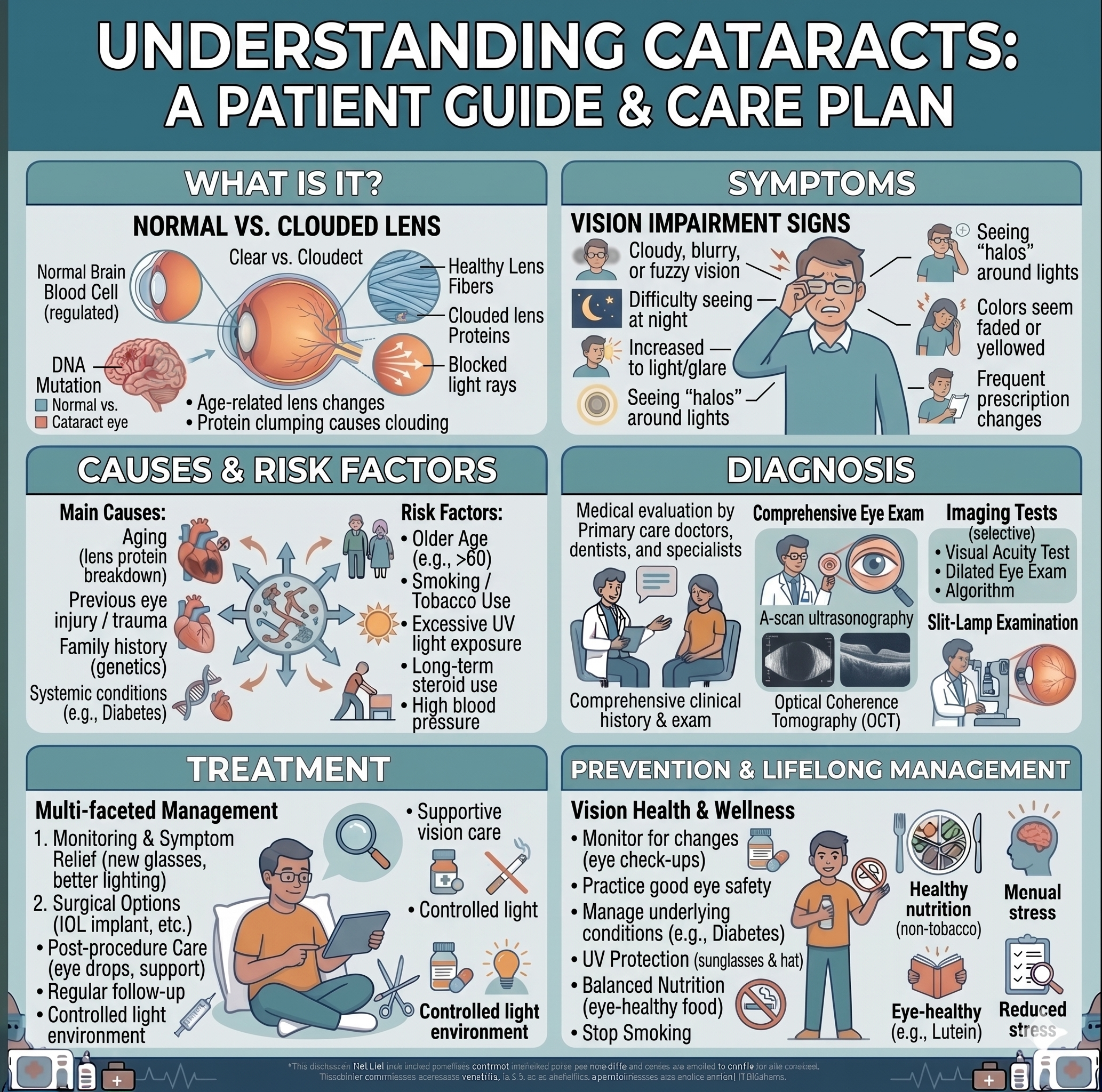
A cataract is a common eye condition where the clear lens of your eye becomes cloudy. Normally, the lens works like a camera lens, focusing light to create sharp images. When a cataract forms, it's like looking through a foggy or frosted window, making vision blurry, dim, and less clear. This clouding can make everyday activities like reading, driving at night, or recognizing faces challenging. Most cataracts develop slowly, often becoming noticeable over time. While initial vision changes might be managed with stronger lighting or new eyeglasses, significant vision impairment often necessitates a safe and effective surgical procedure.
Understanding the Condition
Cataracts: Understanding and Managing Cloudy Vision
Understanding the Condition
A cataract is a common eye condition where the clear lens of your eye becomes cloudy. Normally, the lens works like a camera lens, focusing light to create sharp images. When a cataract forms, it's like looking through a foggy or frosted window, making vision blurry, dim, and less clear. This clouding can make everyday activities like reading, driving at night, or recognizing faces challenging. Most cataracts develop slowly, often becoming noticeable over time. While initial vision changes might be managed with stronger lighting or new eyeglasses, significant vision impairment often necessitates a safe and effective surgical procedure.
Common Symptoms
Cloudy or Blurred Vision: Your vision may appear hazy, foggy, or less sharp than usual.
Difficulty Seeing at Night: You might find it harder to see in dim light or while driving at night, especially due to glare from headlights.
Before your visit, make a list of all your symptoms, including when they started and how they affect your daily life. Bring your current eyeglass or contact lens prescription, a list of all medications you are taking (including over-the-counter drugs and supplements), and any relevant medical history. Be prepared to discuss your diet and lifestyle habits.
Book a doctor visit near me
Consultation Guide
Sensitivity to Light and Glare: Bright lights, sunlight, or car headlights can seem overly intense or cause discomfort.
Need for Brighter Light: You may require significantly more light to read, sew, or perform other close-up tasks.
Seeing Halos Around Lights: Lights, especially at night, might appear to have rings or "halos" around them.
Frequent Changes in Eyeglass or Contact Lens Prescription: Your prescription may need to be updated more often than usual.
Fading or Yellowing of Colors: Colors might seem dull, faded, or have a yellowish tint.
Double Vision in One Eye: You might experience seeing two images with a single eye.
Consultation Guide
Which Specialist to Meet
Wear UV-Protective Sunglasses: Exposure to ultraviolet (UV) light from the sun is a risk factor for cataracts. Always wear sunglasses that block 99-100% of both UVA and UVB rays when you are outdoors.
Limit Alcohol Consumption: Excessive alcohol intake has been linked to an increased risk of cataracts. Reducing your alcohol consumption can contribute to better eye health.
Diagnostic Procedures
To diagnose and manage cataracts, you should see an eye doctor, specifically an ophthalmologist. An ophthalmologist is a medical doctor who specializes in eye and vision care, performing eye exams, diagnosing and treating eye diseases, prescribing medications, and performing eye surgery.
Preparations Before Your Visit
This common test measures how clearly you can see letters on a chart at different distances, one eye at a time.
What to Expect
You will sit or stand and cover one eye, reading lines of letters. This helps your doctor determine if your vision sharpness has decreased.
Slit-Lamp Examination
A slit lamp is a special microscope with a bright light that allows your eye doctor to magnify and examine the front parts of your eye, including the cornea, iris, and lens.
What to Expect
You'll rest your chin on a chin rest and your forehead against a support. The doctor will shine a narrow, intense light into your eye while looking through the microscope for any clouding in the lens. It's quick and painless.
Dilated Eye Exam (Retinal Exam)
Eye drops are used to widen (dilate) your pupils, allowing your doctor to thoroughly view the back of your eye (retina and optic nerve) to assess the cataract and overall eye health.
What to Expect
Eye drops will temporarily blur your vision and increase light sensitivity for several hours. The doctor then uses a special magnifying lens and light to examine the interior of your eye.
Applanation Tonometry
This test measures the pressure inside your eye (intraocular pressure) and is often performed as part of a comprehensive eye exam to check for glaucoma, another eye condition.
What to Expect
Your doctor will apply numbing eye drops. A small, flat-tipped probe will then gently touch the surface of your eye for a brief moment to take the reading. You won't feel any pain due to the numbing drops.
Treatment Options
Cataract Removal and Artificial Lens Implantation: When cataracts significantly interfere with your daily life, surgery is typically recommended. This procedure involves removing the cloudy natural lens of your eye and replacing it with a clear, artificial intraocular lens (IOL). This restores clear vision. It is performed by an ophthalmologist on an outpatient basis, meaning you can usually go home the same day. (Duration: The surgery itself usually takes less than an hour per eye. Full visual recovery and stabilization of vision can take several weeks to a few months.)
Manage Underlying Health Conditions: If you have conditions like diabetes, follow your treatment plan diligently. Poorly controlled diabetes can accelerate cataract formation and other eye complications.
Prevention & Long-Term Wellbeing
Conservative Management (Lifestyle Adjustments and Aids)
Enhanced Lighting and Visual Aids: In the early stages of a cataract, vision can often be improved by simply using brighter lights for reading and other activities, wearing anti-glare sunglasses outdoors, and ensuring your eyeglass or contact lens prescriptions are updated regularly. Magnifying lenses can also help with close-up tasks. (Duration: Ongoing, as long as vision remains adequate for daily activities and until surgical intervention is considered.)
Prevention and Long-Term Eye Health
Regular Comprehensive Eye Exams: Schedule routine eye examinations as recommended by your eye doctor. These exams can detect cataracts and other eye conditions in their earliest stages, allowing for timely management.
Quit Smoking: Smoking significantly increases the risk of cataract development. Quitting smoking can improve your overall health and reduce your risk. Seek support from healthcare professionals if needed.
Eat a Healthy, Antioxidant-Rich Diet: Incorporate plenty of fruits, vegetables, and whole grains into your diet. These foods are rich in vitamins and antioxidants, which are vital for maintaining eye health and may help reduce the risk of cataracts.
Tags & Topics
Notice an error or need an update?
Help us keep medical information accurate. Report incorrect info or suggest an edit.


