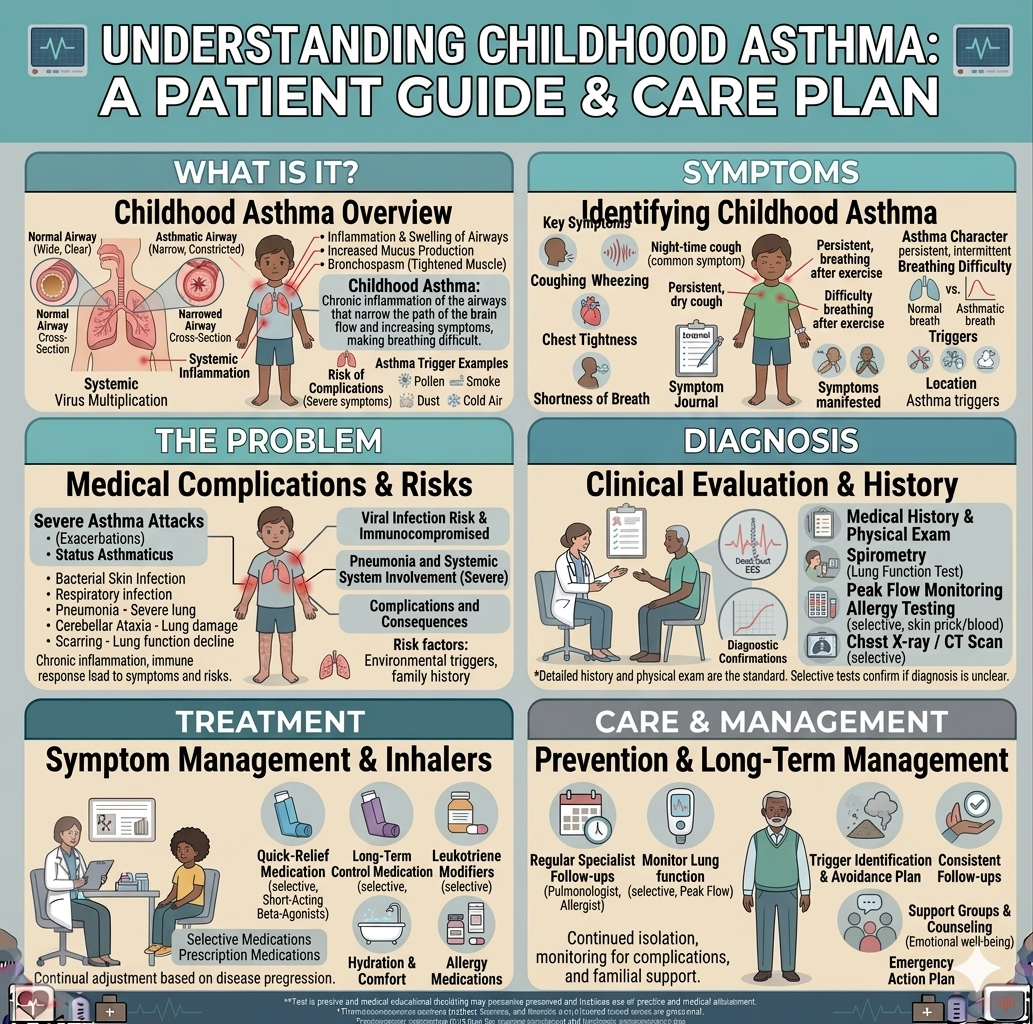
Childhood asthma is a common lung condition where a child's airways become easily inflamed and narrowed when exposed to certain triggers. These triggers can range from common allergens like pollen to respiratory infections such as a cold. While it is the same condition as adult asthma, children face unique challenges due to their developing lungs and active lifestyles. Asthma can lead to irritating daily symptoms that interfere with play, sports, school, and sleep, and if not managed properly, can cause dangerous asthma attacks. Though there is no cure, with the right treatment and management, symptoms can be controlled, preventing damage to a child's growing lungs and allowing them to live a full, active life.
Understanding the Condition
Childhood Asthma: Understanding and Managing Your Child's Breathing
Understanding the Condition
Childhood asthma is a common lung condition where a child's airways become easily inflamed and narrowed when exposed to certain triggers. These triggers can range from common allergens like pollen to respiratory infections such as a cold. While it is the same condition as adult asthma, children face unique challenges due to their developing lungs and active lifestyles. Asthma can lead to irritating daily symptoms that interfere with play, sports, school, and sleep, and if not managed properly, can cause dangerous asthma attacks. Though there is no cure, with the right treatment and management, symptoms can be controlled, preventing damage to a child's growing lungs and allowing them to live a full, active life.
Common Symptoms
Common Symptoms
Emergency Symptoms: Seek immediate medical attention if your child experiences severe shortness of breath, rapid nostril flaring, an indrawing of the skin around the ribs or neck with each breath, bluish lips or fingernails, confusion, or if their severe coughing or wheezing does not improve with quick-relief medication. These are signs of a severe asthma attack that requires urgent care.
Consultation Guide
Which Specialist to Meet
Start by consulting your child's pediatrician. If the diagnosis is unclear or symptoms are difficult to control, your pediatrician may refer you to a pediatric allergist (a doctor specializing in allergies) or a pediatric pulmonologist (a doctor specializing in lung conditions in children). These specialists can help identify triggers and develop a comprehensive management plan.
Preparations Before Your Visit
Before your appointment, make a list of your child's symptoms, including when they occur, how often, and what seems to trigger them. Note any family history of asthma or allergies, and list all current medications your child is taking. Write down any questions you have for the doctor. If possible, bring any previous test results or medical records.
Book a doctor visit near me
The doctor will ask detailed questions about your child's symptoms, family medical history, and exposure to potential triggers. A physical exam will be performed to check your child's breathing and listen to their lungs.
A peak flow meter is a handheld device that measures the fastest speed at which your child can blow air out of their lungs. It can help monitor asthma control and detect worsening symptoms before they become severe.
These tests help identify specific allergens (like pollen, dust mites, pet dander) that might trigger your child's asthma symptoms.
While not directly diagnostic for asthma, a chest X-ray can help rule out other lung conditions or infections that might be causing similar symptoms.
Long-Term Controller Medications: These medications are taken daily to reduce airway inflammation and prevent asthma symptoms and attacks. They work by making the airways less sensitive to triggers over time. (Duration: Daily, long-term, often for months or years, as prescribed by a doctor.)
Quick-Relief (Rescue) Medications: These medications provide rapid relief during an asthma attack by quickly opening up the airways. They are used as needed when symptoms flare up. (Duration: Used as needed for sudden symptoms, effects last for a few hours.)
Allergy Medications: If allergies are a significant trigger for your child's asthma, medications that treat allergic reactions may be prescribed to reduce the body's response to allergens. (Duration: Daily or seasonally, as needed for allergy symptoms.)
Asthma Action Plan: A written plan developed with your child's healthcare team outlines daily management, what to do when symptoms worsen, and how to handle an asthma emergency. (Duration: Created once, reviewed and updated regularly (e.g., annually or with changes in condition/treatment).)
Follow the Asthma Action Plan: Adhere strictly to the personalized asthma action plan developed with your child's doctor. This plan guides daily medication use, symptom monitoring, and steps to take during an asthma attack.
Monitor Symptoms and Peak Flow: Pay close attention to your child's symptoms and, if appropriate for their age, use a peak flow meter regularly to track lung function. Report any significant changes to your doctor.
Ensure Medication Adherence: Administer controller medications exactly as prescribed, even when your child feels well, to prevent symptoms and maintain long-term lung health.
Educate Caregivers: Share the asthma action plan with all caregivers, including school nurses, teachers, and family members, so they know how to respond to your child's asthma.
Consultation Guide
This test involves inhaling increasing doses of methacholine, a substance that can cause airways to narrow in people with asthma. It helps confirm asthma when other tests are inconclusive.
Diagnostic Procedures
Medical History and Physical Exam
What to Expect
Your child will answer questions or you will provide information on their behalf. The doctor will use a stethoscope to listen to your child's chest and assess their general health. This is usually quick and painless.
Spirometry (for children aged 5 and older)
This is a common breathing test that measures how much air your child can exhale and how quickly they can do it. It helps assess lung function and confirm an asthma diagnosis.
What to Expect
Your child will sit comfortably and be asked to take a deep breath, then blow out as hard and fast as possible into a mouthpiece connected to a machine called a spirometer. They may need to repeat this several times. It requires good cooperation, which is why it's typically used for older children.
Peak Flow Monitoring (for children aged 5 and older)
What to Expect
Your child will take a deep breath and blow forcefully into the device. This is often done at home regularly, and the readings are recorded to track changes over time.
Methacholine Challenge Test (less common, usually for older children)
What to Expect
Your child will inhale a fine mist of methacholine, followed by spirometry measurements. If lung function decreases significantly, it suggests asthma. The test is performed under medical supervision, and medication is available to reverse any airway narrowing if needed.
What to Expect
A small amount of different allergens may be pricked onto the skin, usually on the back or forearm, to see if a red, itchy bump develops (skin prick test). Alternatively, a blood sample may be taken to measure immune system responses to various allergens.
Chest X-ray (to rule out other conditions)
What to Expect
Your child will stand or lie still for a few moments while an X-ray image of their chest is taken. It is a quick and painless procedure.
Treatment Options
Medications
Breathing Exercises: Certain breathing techniques can help improve lung function, manage shortness of breath, and potentially reduce the need for quick-relief medications. (Duration: Regular practice, often daily, under guidance from a therapist or doctor.)
Regular Doctor Visits: Schedule routine follow-up appointments with your child's healthcare team to monitor their condition, adjust medications as needed, and ensure the action plan remains effective.
Prevention & Long-Term Wellbeing
Lifestyle and Home Management
Trigger Avoidance: Identifying and minimizing exposure to asthma triggers (e.g., pollen, dust mites, pet dander, tobacco smoke, cold air, strong odors) is a fundamental part of managing childhood asthma. (Duration: Ongoing, continuous effort.)
Prevention
Identify and Avoid Triggers: Work with your doctor to identify specific asthma triggers. Reduce exposure to allergens by keeping the home clean, using allergen-proof covers, and maintaining good air quality. Avoid exposure to tobacco smoke completely.
Get Vaccinations: Ensure your child receives annual flu shots and other recommended vaccinations to prevent respiratory infections that can trigger asthma flare-ups.
Maintain Good Hygiene: Practice frequent handwashing to reduce the spread of colds and other respiratory viruses.
Promote a Healthy Lifestyle: Encourage a balanced diet and regular physical activity to maintain a healthy weight, which can improve lung function and overall health.
Long-Term Monitoring and Management
Tags & Topics
Notice an error or need an update?
Help us keep medical information accurate. Report incorrect info or suggest an edit.


