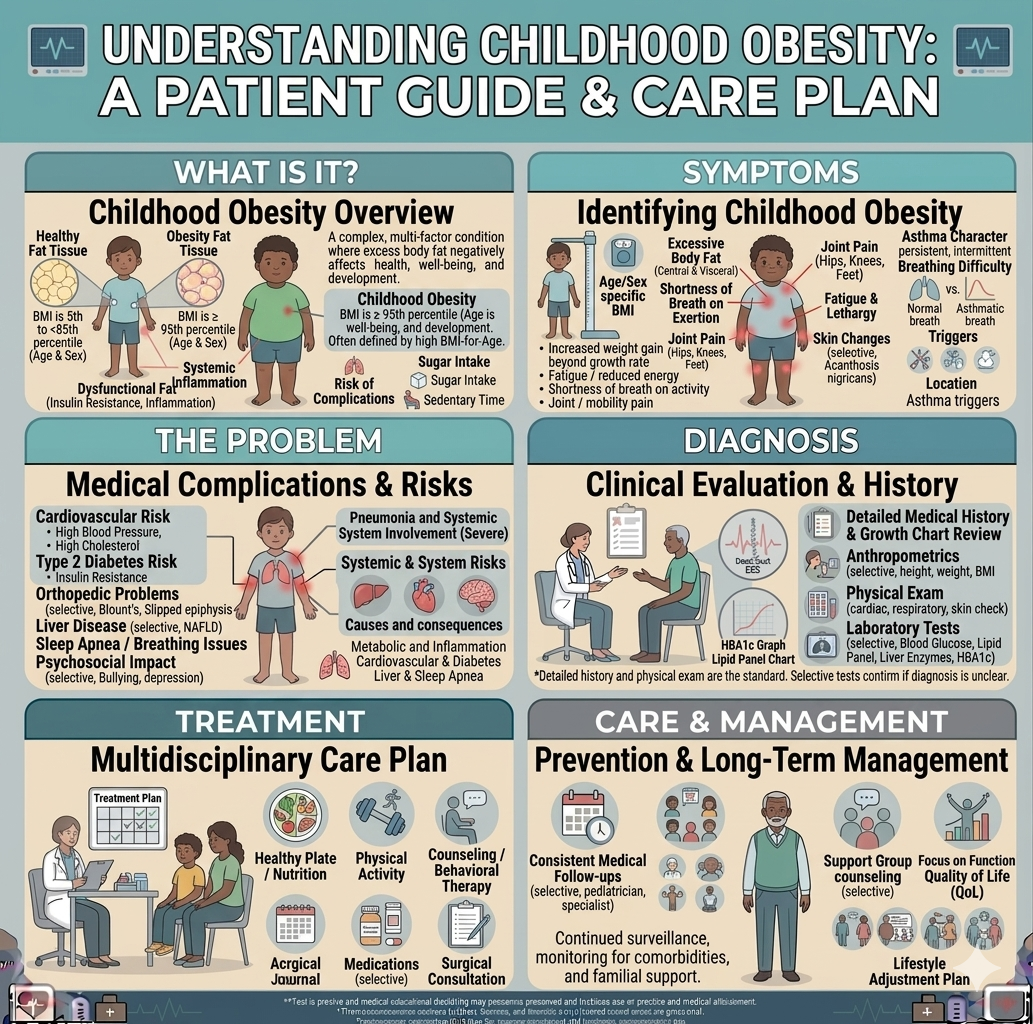
Childhood obesity is a serious health condition characterized by excessive body fat in children. This extra weight can increase a child's risk for various health problems typically seen in adults, such as type 2 diabetes and high blood pressure, and can also affect their emotional well-being, leading to low self-esteem and depression. The causes are complex, involving a mix of genetic, hormonal, social, economic, and lifestyle factors. Families play a crucial role in managing and preventing childhood obesity through healthy eating habits and regular physical activity, protecting a child's health now and in the future.
Understanding the Condition
Common Symptoms
Unclear Appearance: A child's appearance alone may not indicate obesity. Body size varies greatly among children due to development and individual build, so outward signs of weight gain can be misleading without a professional assessment.
Persistent Headaches: Headaches that do not go away for a long time could be a sign of underlying issues related to obesity.
High Blood Pressure: Children with obesity are at a higher risk of developing high blood pressure, a condition that can affect heart health.
Extreme Thirst and Frequent Urination: These symptoms can be indicators of high blood sugar levels, potentially pointing to type 2 diabetes.
Pauses in Breathing During Sleep: Often called obstructive sleep apnea, this is a serious condition where breathing repeatedly stops and starts during sleep. It is more common in children who are overweight.
Poor Growth Compared to Peers: While counterintuitive, poor growth in height or development compared to other children of the same age and sex can sometimes be linked to obesity and related health issues.
Consultation Guide
Which Specialist to Meet
Depending on the child's symptoms and risk factors, the doctor might order other tests. These can include blood tests to check blood sugar levels (to screen for diabetes), liver function tests (to check for fatty liver disease), blood pressure measurements, or a sleep study (to evaluate for sleep apnea).
Consultation Guide
Childhood obesity is a serious health condition characterized by excessive body fat in children. This extra weight can increase a child's risk for various health problems typically seen in adults, such as type 2 diabetes and high blood pressure, and can also affect their emotional well-being, leading to low self-esteem and depression. The causes are complex, involving a mix of genetic, hormonal, social, economic, and lifestyle factors. Families play a crucial role in managing and preventing childhood obesity through healthy eating habits and regular physical activity, protecting a child's health now and in the future.
A healthcare professional will draw a small sample of blood, usually from a vein in the arm. Your child might need to fast (not eat or drink anything other than water) for a certain number of hours before the test; your doctor will provide specific instructions. The test is quick, and any discomfort is usually brief. For children, cholesterol screening is generally recommended once between ages 9 and 11, and again between ages 17 and 21, or earlier if there's a family history of high cholesterol or other risk factors like diabetes or obesity.
Reviewing Existing Medications: If your child is taking medications that are known to cause weight gain, their healthcare professional may review these prescriptions and explore options to adjust the dose or switch to alternative medicines, if safe and appropriate. (Duration: As prescribed by a doctor)
Diagnostic Procedures
Body Mass Index (BMI) Calculation
The Body Mass Index (BMI) is a screening tool that uses a child's weight and height to estimate body fat. This calculation is then plotted on specialized growth charts, comparing your child's BMI to that of other children of the same age and sex to determine if their weight is in a healthy range, overweight, or obese.
What to Expect
During a routine check-up, a healthcare professional will accurately measure your child's height and weight. These measurements are then used to calculate the BMI, which is then compared to age- and sex-specific growth charts. This is a quick and painless part of a standard physical exam.
Cholesterol Test (Lipid Panel)
A cholesterol test, also known as a lipid panel, is a blood test that measures different types of fats (lipids) in the blood, including total cholesterol, 'bad' low-density lipoprotein (LDL) cholesterol, 'good' high-density lipoprotein (HDL) cholesterol, and triglycerides. It helps assess a child's risk for artery blockages and heart conditions later in life.
What to Expect
Additional Diagnostic Tests
What to Expect
These tests vary depending on what the doctor suspects. Blood tests involve a blood draw similar to a cholesterol test. Blood pressure is measured with a cuff on the arm. A sleep study typically involves spending a night at a sleep lab where sensors monitor breathing, heart rate, and brain activity.
Treatment Options
Medication Review and Adjustment
Bariatric Surgery (for select adolescents): For severely obese adolescents with significant weight-related health complications that haven't improved with other treatments, weight-loss surgery may be considered. Two common types are: Roux-en-Y gastric bypass, which reduces stomach size and nutrient absorption, and sleeve gastrectomy, which reduces the stomach to a smaller, tube-like shape. These procedures are major interventions requiring strict lifestyle changes post-surgery. (Duration: One-time procedure, with lifelong follow-up and lifestyle changes)
Prevention & Long-Term Wellbeing
Childhood Obesity: Understanding, Management, and Prevention
- Understanding the Condition
Initially, consult with your child's pediatrician or family doctor. If concerns arise, they may refer you to specialists such as a pediatric endocrinologist (for hormone-related issues), a registered dietitian or nutritionist (for dietary guidance), or a mental health professional (for stress, depression, or body image concerns).
Preparations Before Your Visit
Before the visit, be ready to discuss your child's medical history, eating and physical activity habits, sleep patterns, stress levels, and any family history of obesity or related health conditions. Prepare a list of questions you have for the doctor.
Book a doctor visit near me
Lifestyle and Behavioral Changes
Balanced Eating Habits: Focus on consuming a variety of nutrient-rich foods, including plenty of fruits, vegetables, whole grains, and lean proteins. Limit foods high in added sugar, unhealthy fats, and sodium. (Duration: Ongoing, long-term commitment)
Increased Physical Activity: Children and teenagers should aim for at least 60 minutes of moderate-to-vigorous physical activity most days of the week. (Duration: Ongoing, daily)
Adequate Sleep: Ensure your child gets enough sleep for their age, as insufficient sleep can contribute to weight gain. (Duration: Ongoing, nightly)
Stress Management: Address stress, anxiety, and depression, which can influence eating habits and weight. This may involve counseling or other support. (Duration: As needed, potentially long-term)
Nutritional Counseling: Working with a registered dietitian can help families develop personalized healthy eating plans that are sustainable and meet a child's nutritional needs. (Duration: Short-term to long-term, as needed)
Behavioral Therapy: Therapy can help children and families address emotional eating, develop coping mechanisms for stress, improve body image, and build self-esteem. (Duration: Short-term to long-term, as needed)
Prevention and Healthy Habits
Lead by Example: Make healthy eating and regular physical activity a family-wide effort so everyone benefits and no one feels singled out.
Offer Balanced Meals and Snacks: Prioritize meals where half the plate consists of fruits and vegetables, a quarter whole grains, and a quarter lean protein. Offer nutrient-dense snacks between meals.
Introduce New Foods Repeatedly: Children may need multiple exposures to new foods before accepting them. Keep offering a variety of healthy options.
Foster a Healthy Relationship with Treats: Explain that 'junk foods' can be enjoyed occasionally but don't provide lasting energy. Consider limiting their presence in the home to focus on nutritious alternatives.
Limit Screen Time: Reduce leisure screen time, especially during meals. For children aged 2 and older, aim for no more than two hours per day outside of schoolwork. Avoid screen time for children under 2.
Choose Non-Food Rewards: Instead of using food as a reward for good behavior, offer fun activities like playing a game or a trip to a park.
Ensure Adequate Sleep: Help your child establish a consistent sleep schedule. Children ages 6-12 need 9-12 hours of sleep, and teens 13-18 need 8-10 hours daily.
Consider Breastfeeding: Breastfeeding infants from birth to 6 months old may lower their risk of obesity later in life.
Regular Well-Child Checkups: Ensure your child receives yearly checkups. These visits track growth, assess BMI, and allow healthcare professionals to identify and address any weight concerns early.
Tags & Topics
Notice an error or need an update?
Help us keep medical information accurate. Report incorrect info or suggest an edit.


