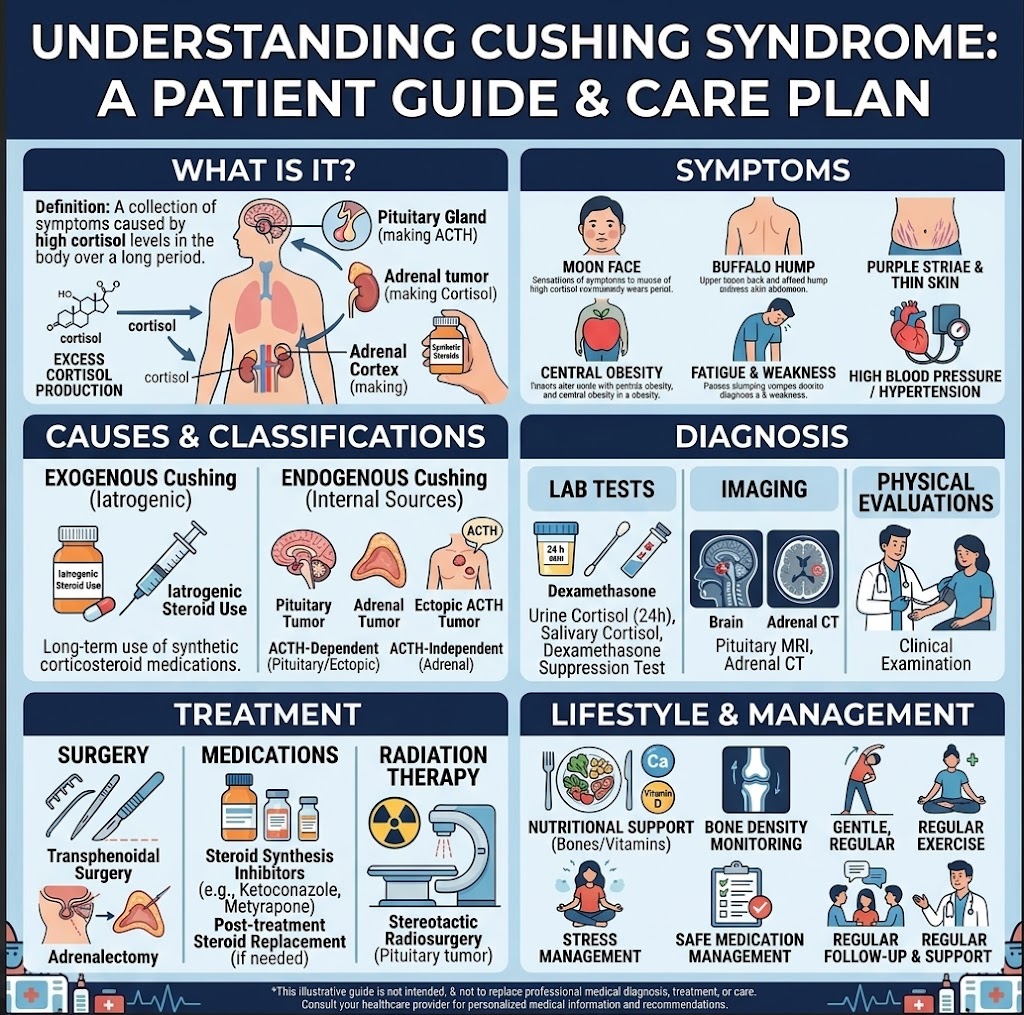
Cushing syndrome is a condition caused by having too much of a hormone called cortisol in the body for a prolonged period. Cortisol is vital for many body functions, including responding to stress, controlling blood pressure and sugar, and reducing inflammation. This excess cortisol can either be due to the body producing too much of it (often from a tumor) or from taking certain medications, like glucocorticoids (steroids), commonly used for inflammatory conditions. Too much cortisol leads to distinct physical changes, such as a rounded face, a fatty hump between the shoulders, and purple stretch marks. It can also lead to serious health issues like high blood pressure, bone loss, and type 2 diabetes. Early diagnosis and treatment are crucial for recovery and to prevent complications.
Understanding the Condition
Understanding Cushing Syndrome: Causes, Symptoms, and Treatment
Understanding the Condition
Common Symptoms
Weight Gain: Especially around the trunk and face (sometimes called 'moon face'), often with thinner arms and legs.
Fatty Hump: A distinct fatty lump that develops between the shoulders (sometimes called a 'buffalo hump').
Skin Changes: Pink or purple stretch marks on the abdomen, hips, thighs, breasts, and underarms. Skin becomes thin and fragile, bruising easily, and wounds heal slowly.
Hair Changes: In women, new or thicker, dark hair growth on the face and body (hirsutism).
Menstrual Irregularities: Periods may become irregular or stop entirely in women.
Sexual Health Concerns: Reduced sex drive and fertility issues in both men and women. Men may experience problems getting an erection.
Other Potential Symptoms: Can include high blood pressure, bone weakness, and new or worsening diabetes.
Consultation Guide
Which Specialist to Meet
Before your visit, be prepared to discuss your symptoms in detail, including when they started and how they've progressed. Bring a complete list of all medications you are currently taking, especially any steroid medications. Be ready to share your medical history and any relevant family history. It's also helpful to write down any questions you have for the doctor.
Book a doctor visit near me
Regular Medical Follow-Up: Even after successful treatment, ongoing follow-up with your endocrinologist is essential to monitor cortisol levels, manage any remaining symptoms, and detect potential recurrence.
Healthy Lifestyle Choices: Maintain a balanced diet, engage in regular physical activity as advised by your doctor, and aim for a healthy weight. These habits support overall health and can help manage symptoms and reduce the risk of complications.
Emotional and Mental Health Support: Dealing with a chronic condition like Cushing syndrome can be challenging. Seek support from family, friends, support groups, or mental health professionals if you experience anxiety, depression, or mood changes.
Consultation Guide
Cushing syndrome is a condition caused by having too much of a hormone called cortisol in the body for a prolonged period. Cortisol is vital for many body functions, including responding to stress, controlling blood pressure and sugar, and reducing inflammation. This excess cortisol can either be due to the body producing too much of it (often from a tumor) or from taking certain medications, like glucocorticoids (steroids), commonly used for inflammatory conditions. Too much cortisol leads to distinct physical changes, such as a rounded face, a fatty hump between the shoulders, and purple stretch marks. It can also lead to serious health issues like high blood pressure, bone loss, and type 2 diabetes. Early diagnosis and treatment are crucial for recovery and to prevent complications.
You should first consult your primary care doctor, who may then refer you to an endocrinologist (a specialist in hormones and glands). Depending on the cause, you might also see a neurosurgeon (for brain/pituitary issues) or an adrenal surgeon (for adrenal gland issues).
Preparations Before Your Visit
A standard blood draw from your arm, a quick procedure that might cause a brief pinch or sting.
You will lie still on a table that slides into a large, tunnel-like scanner. The procedure is painless, though the scanner can be noisy. You may be given an injection of a contrast dye to make certain structures more visible, which might cause a brief warm flush or metallic taste. The scan can take from 30 minutes to an hour or more.
Careful Medication Adjustment: If Cushing syndrome is caused by long-term use of steroid medications (glucocorticoids), treatment involves gradually reducing the dose under strict medical supervision. Abruptly stopping these medications can be dangerous. Your doctor will help you find the lowest effective dose or explore alternative treatments for your underlying condition. (Duration: Gradual reduction over weeks to months, followed by ongoing monitoring.)
Diagnostic Procedures
Blood Cortisol and ACTH Tests
These tests measure blood levels of cortisol and ACTH (a hormone that controls cortisol production). These levels help identify the source of excess cortisol.
What to Expect
24-Hour Urinary Free Cortisol Test
This test collects all urine over a 24-hour period to measure total cortisol excretion. This is a very reliable method to detect high cortisol.
What to Expect
You will collect all urine for 24 hours into a special container, following provided instructions for accurate collection and storage.
Late-Night Salivary Cortisol Test
This test measures cortisol in saliva collected late at night. Cortisol levels should be low in the evening, so consistently elevated levels at this time can indicate Cushing syndrome.
What to Expect
You will collect a small saliva sample at home, typically before bed, using a special kit provided by your doctor.
Imaging Scans (CT or MRI)
These advanced scans create detailed pictures of your body's internal structures. They are used to locate tumors in the pituitary gland (at the base of the brain) and/or adrenal glands (on top of your kidneys) that might be causing excess cortisol.
What to Expect
Mindful Use of Steroid Medications: If you are prescribed steroid medications (glucocorticoids), discuss the lowest effective dose and shortest possible duration with your doctor. Never stop taking these medications abruptly without medical guidance, as it can be dangerous. Regular monitoring by your doctor can help prevent or detect Cushing syndrome early.
Long-Term Monitoring and Management
Treatment Options
Medications
Cortisol-Lowering Medications: These medications reduce the amount of cortisol your body produces or block its effects. They are used when surgery isn't possible, hasn't been fully effective, or as a temporary measure before surgery. (Duration: Ongoing, requiring regular monitoring and adjustment by a specialist.)
Surgical Procedures
Transsphenoidal Surgery: This is a minimally invasive surgery to remove tumors from the pituitary gland, located behind the nose. The surgeon accesses the tumor through the nasal passages, avoiding the need to open the skull. It is a common and effective treatment for pituitary-related Cushing syndrome. (Duration: A one-time procedure, followed by a recovery period of several weeks to months.)
Stereotactic Radiosurgery: This treatment uses highly focused beams of radiation to target and destroy tumor cells, often used for pituitary tumors that cannot be fully removed surgically or if surgery is not an option. It is not traditional surgery and involves no cuts. (Duration: May involve a single high-dose session or several smaller doses over a few days. The full effects on the tumor may take several months to appear.)
Managing Glucocorticoid-Induced Cushing Syndrome
Managing Related Health Conditions: Cushing syndrome can lead to conditions like high blood pressure, type 2 diabetes, and bone loss (osteoporosis). Work with your healthcare team to actively manage these conditions through lifestyle changes, medications, and regular screenings.
Prevention & Long-Term Wellbeing
Adrenalectomy: This surgical procedure involves removing one or both adrenal glands, located on top of the kidneys. It's typically performed when a tumor is found in an adrenal gland or if both glands are overproducing cortisol. If both glands are removed, lifelong hormone replacement therapy will be necessary. (Duration: A one-time procedure, followed by a recovery period of several weeks.)
Prevention
Tags & Topics
Notice an error or need an update?
Help us keep medical information accurate. Report incorrect info or suggest an edit.


