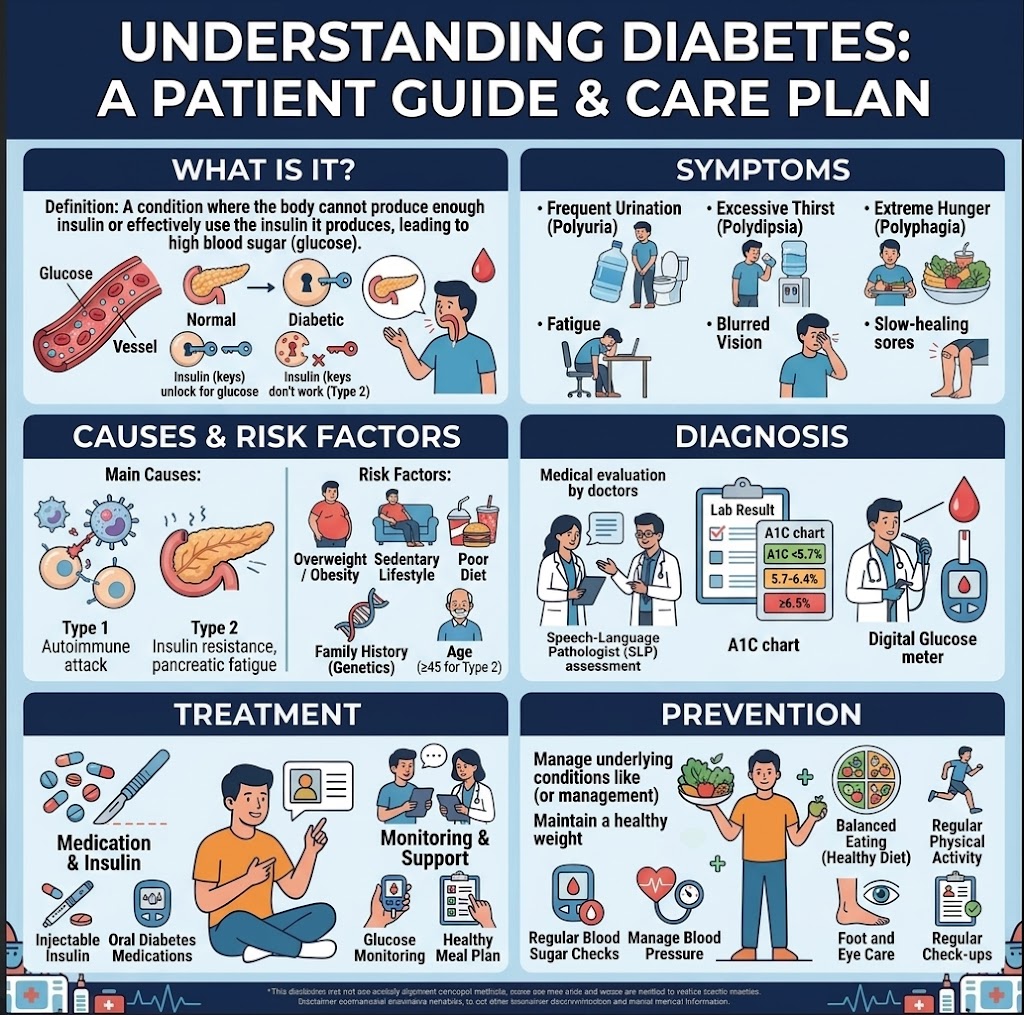
Diabetes mellitus is a group of conditions affecting how your body uses blood sugar, or glucose. Glucose powers your muscles, tissues, and brain. In diabetes, the body either doesn't make enough insulin (a hormone that helps sugar enter cells) or can't use it effectively. This leads to high blood sugar, which can cause serious long-term health problems. Major types include Type 1, Type 2, Prediabetes, and Gestational Diabetes.
Understanding the Condition
Understanding Diabetes: A Guide for Non-Medical Readers
Understanding the Condition
Common Symptoms
Increased Thirst & Frequent Urination: Feeling unusually thirsty and needing to urinate often.
Unexplained Weight Loss: Losing weight without trying.
Ketones in Urine: A sign the body is breaking down fat and muscle for energy.
Fatigue & Weakness: Feeling tired and lacking energy.
Mood Changes: Irritability or other shifts in mood.
Blurred Vision: Difficulty seeing clearly.
Slow-Healing Sores: Wounds that take a long time to heal.
Frequent Infections: More common gum, skin, or vaginal infections.
Consultation Guide
Which Specialist to Meet
Before your visit, list all your symptoms, when they started, and any changes in your health. Bring a list of all medications, vitamins, and supplements you take. Note your family's medical history, especially if diabetes runs in the family. Be ready to discuss your diet, exercise habits, and any major stresses. Write down questions you have to ensure all your concerns are addressed.
Book a doctor visit near me
This test measures your blood sugar at any time, regardless of when you last ate. It's often used when diabetes symptoms are clear and severe.
Address Depression/Anxiety: Be vigilant for symptoms as diabetes increases risk for these conditions.
Seek Support: Talk to your doctor, a mental health professional, or join support groups.
Consultation Guide
Diabetes mellitus is a group of conditions affecting how your body uses blood sugar, or glucose. Glucose powers your muscles, tissues, and brain. In diabetes, the body either doesn't make enough insulin (a hormone that helps sugar enter cells) or can't use it effectively. This leads to high blood sugar, which can cause serious long-term health problems. Major types include Type 1, Type 2, Prediabetes, and Gestational Diabetes.
Diagnostic Procedures
Fasting Plasma Glucose (FPG) Test
This test measures your blood sugar after you haven't eaten or drunk anything (except water) for at least 8 hours. High levels can indicate diabetes.
What to Expect
You will fast overnight. A quick blood draw from your arm.
Oral Glucose Tolerance Test (OGTT)
This test assesses how your body handles sugar. After a fasting blood draw, you drink a sugary liquid, and additional blood samples are taken at specific intervals (e.g., 1 and 2 hours later) to monitor your body's response.
What to Expect
Fast overnight, then undergo multiple blood draws over a few hours at the clinic.
A1C (Glycated Hemoglobin) Test
This blood test provides an average of your blood sugar levels over the past 2-3 months by measuring the percentage of sugar attached to hemoglobin in your red blood cells. A higher A1C indicates less controlled blood sugar.
What to Expect
A small blood sample from your arm or finger. No fasting needed, quick procedure.
Random Plasma Glucose (RPG) Test
What to Expect
A blood sample from your arm without special preparation or fasting.
These blood tests identify specific immune system proteins (autoantibodies) that attack the insulin-producing cells in the pancreas. They are primarily used to diagnose Type 1 diabetes.
What to Expect
A standard blood draw from your arm. No specific preparation.
Kidney Health: Regular urine and blood tests to monitor kidney function.
Cardiovascular Health: Manage blood pressure and cholesterol to reduce heart disease and stroke risk.
Dental Care: Good oral hygiene and regular dental visits are important.
Mental and Emotional Wellbeing
Treatment Options
Medications
Insulin Therapy: Essential for Type 1 diabetes (injections or pump); sometimes needed for Type 2. Various insulin types exist. (Duration: Lifelong for Type 1; potentially lifelong for Type 2)
Oral Medications and Non-Insulin Injectables: For Type 2 diabetes, these help the body produce more insulin, increase insulin sensitivity, slow sugar absorption, or excrete sugar. (Duration: Ongoing, adjusted as needed)
Blood Glucose Monitoring: Regular checks with a home monitor or continuous system to assess treatment effectiveness. (Duration: Ongoing, multiple times daily for some types)
Surgical Procedures
Pancreatic Islet Transplantation: For specific Type 1 cases, this experimental procedure transplants insulin-producing cells. (Duration: Potential lifelong follow-up, variable effectiveness)
Prevention & Long-Term Wellbeing
You should first consult your primary care doctor. They may refer you to an endocrinologist (a doctor specializing in hormones and diabetes), a registered dietitian for meal planning, or a diabetes educator for self-management guidance. Depending on complications, you might also see an ophthalmologist for eye health, a podiatrist for foot care, or a nephrologist for kidney health.
Preparations Before Your Visit
Lifestyle Modifications
Healthy Eating Plan: Work with a dietitian for a balanced diet rich in whole grains, fruits, vegetables, and lean proteins to regulate blood sugar. (Duration: Ongoing)
Regular Physical Activity: Aim for at least 150 minutes of moderate aerobic activity weekly to improve insulin sensitivity and manage weight. (Duration: Ongoing)
Weight Management: Losing excess body weight can significantly improve blood sugar control. (Duration: Ongoing)
Prevention Strategies (for Prediabetes, Type 2, and Gestational Diabetes)
Healthy Diet: Focus on high-fiber foods; reduce processed foods and sugary drinks.
Regular Exercise: Aim for 30 minutes of moderate activity most days to improve insulin sensitivity.
Healthy Weight: Losing excess body fat significantly reduces Type 2 diabetes risk.
Long-Term Management & Monitoring
Regular Medical Check-ups: Consistent appointments to monitor blood sugar, A1C, blood pressure, and cholesterol.
Eye Care: Annual dilated eye exams for diabetic retinopathy.
Foot Care: Daily inspection and regular podiatrist visits to prevent complications.
Tags & Topics
Notice an error or need an update?
Help us keep medical information accurate. Report incorrect info or suggest an edit.


