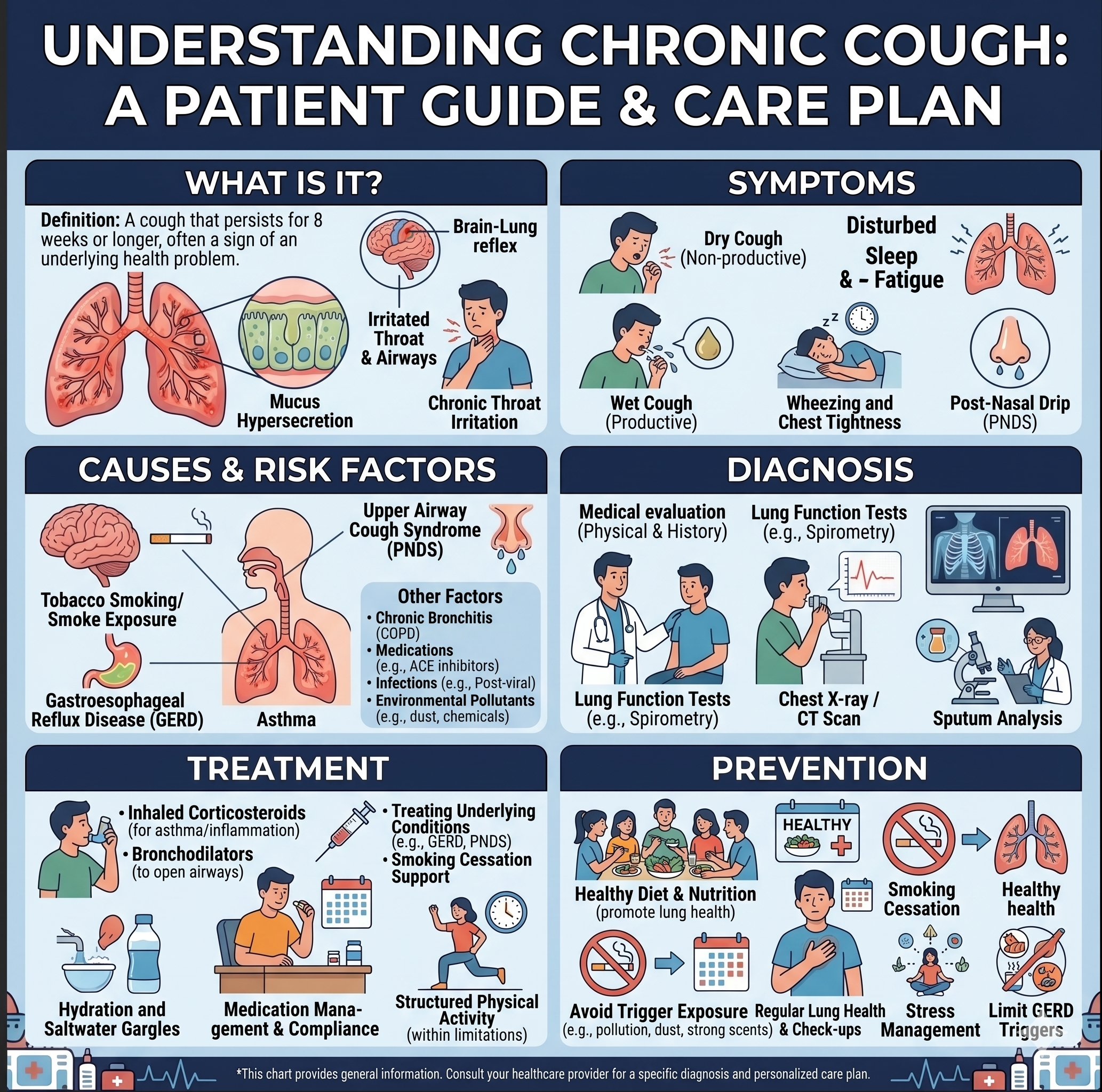
A chronic cough is a persistent cough lasting eight weeks or more in adults, or four weeks or more in children. More than just a nuisance, it can severely disrupt sleep and lead to extreme tiredness. In severe cases, a chronic cough can cause vomiting, lightheadedness, and even result in broken ribs. Common triggers include tobacco use, asthma, mucus dripping down the back of the throat (postnasal drip), and stomach acid flowing back into the food pipe (acid reflux). Fortunately, once the root cause is identified and treated, chronic cough typically improves.
Understanding the Condition
Chronic Cough: Understanding and Managing Persistent Coughs
Understanding the Condition
Common Symptoms
Runny or Stuffy Nose: Nasal congestion or discharge often accompanies a chronic cough.
Postnasal Drip Sensation: A feeling of liquid constantly trickling down the back of your throat.
Frequent Throat Clearing: An urge to clear your throat repeatedly due to irritation or mucus.
Sore Throat: Discomfort or pain in the throat, often from continuous coughing.
Hoarseness: A raspy or strained voice.
Wheezing and Shortness of Breath: A whistling sound during breathing and difficulty catching your breath.
Heartburn or Sour Taste: A burning sensation in the chest or a bitter taste in the mouth, often linked to acid reflux.
Coughing Up Blood (Rare): Though uncommon, this symptom requires immediate medical attention.
Consultation Guide
Which Specialist to Meet
Before your appointment, make a list of your symptoms, including when they started, how long they last, and what makes them better or worse. Note any over-the-counter or prescription medications you are taking, your smoking history, and any existing medical conditions. Be prepared to discuss potential triggers and what you've already tried for relief. Write down any questions you have for the doctor.
Book a doctor visit near me
Postnasal Drip Management: Treatment may involve oral antihistamines, decongestants, nasal corticosteroid sprays, or saline nasal rinses to reduce mucus production and irritation. (Duration: Varies; often until symptoms resolve, or long-term for chronic conditions like allergies.)
Acid Reflux (GERD) Treatment: Lifestyle modifications (such as dietary changes and elevating the head of the bed) combined with medications that reduce stomach acid production or block acid. These may be prescription or over-the-counter. (Duration: Short-term for acute symptoms; long-term for chronic reflux management.)
Hydration: Drinking plenty of fluids like water and warm tea helps thin mucus, making it easier to clear from your throat. (Duration: Ongoing, as needed for symptom relief and general health.)
Humidifiers: Using a cool-mist humidifier in your home, especially in the bedroom, adds moisture to the air and can soothe irritated airways. (Duration: As needed, particularly in dry environments or during cold seasons.)
Honey: A spoonful of honey can temporarily relieve throat irritation and reduce cough severity. (Duration: As needed for temporary symptom relief.)
Avoid Irritants: Steer clear of tobacco smoke (firsthand and secondhand), strong perfumes, chemical fumes, and known allergens that can trigger or worsen your cough. (Duration: Ongoing.)
Consultation Guide
A chronic cough is a persistent cough lasting eight weeks or more in adults, or four weeks or more in children. More than just a nuisance, it can severely disrupt sleep and lead to extreme tiredness. In severe cases, a chronic cough can cause vomiting, lightheadedness, and even result in broken ribs. Common triggers include tobacco use, asthma, mucus dripping down the back of the throat (postnasal drip), and stomach acid flowing back into the food pipe (acid reflux). Fortunately, once the root cause is identified and treated, chronic cough typically improves.
You should first consult your primary care doctor for a persistent cough. Depending on the suspected cause, they may refer you to a specialist such as a pulmonologist (lung specialist), an allergist (for allergy-related causes), a gastroenterologist (for digestive issues like acid reflux), or an otolaryngologist (ear, nose, and throat specialist). Seek medical advice if your cough lasts for weeks, brings up mucus or blood, disrupts your sleep, or affects your daily activities.
Preparations Before Your Visit
Addressing Underlying Causes
Diagnostic Procedures
A quick imaging test that uses a small amount of radiation to create pictures of your heart, lungs, blood vessels, airways, and the bones of your chest and spine. It helps detect issues like infections, fluid around the lungs, a collapsed lung, broken ribs, and certain lung diseases or masses.
What to Expect
You will be asked to remove any metal objects or jewelry and change into a gown. You'll stand or sit against a plate, and a technician will position you correctly. You'll be asked to hold your breath for a few seconds while the X-ray images are taken. The procedure is painless and usually takes only a few minutes.
CT Scan (Computed Tomography Scan)
A more detailed imaging test than a standard X-ray. It uses specialized X-ray equipment and computer processing to create cross-sectional, 'slice-like' images of bones, blood vessels, and soft tissues inside your body. It provides a clearer view for diagnosing complex conditions or injuries, and for planning treatments.
What to Expect
You will lie on a motorized table that slides into a large, donut-shaped machine. You may receive an oral or injected contrast dye to help certain areas show up more clearly. It's important to lie still during the scan, which can take anywhere from 15 minutes to an hour. The machine may make some whirring noises, but the procedure is generally painless.
A common lung function test that measures how much air you can breathe in and out, and how quickly you can exhale. It's used to diagnose conditions affecting breathing, such as asthma and chronic obstructive pulmonary disease (COPD), and to monitor the effectiveness of treatments for existing lung conditions.
What to Expect
You will sit comfortably and breathe into a mouthpiece connected to a machine called a spirometer. You'll be instructed to take a deep breath and then blow out as hard and fast as you can. This maneuver may be repeated several times to ensure accurate results. You might feel slightly lightheaded or short of breath for a moment after the test. Your doctor may advise you to avoid certain inhaled medications before the test.
Treatment Options
Asthma Control: Inhaled medications are used to open airways and reduce inflammation. These can include bronchodilators for quick relief and inhaled corticosteroids for long-term control. (Duration: Long-term, ongoing management for chronic asthma, with adjustments as needed.)
Infection Treatment: Bacterial infections (e.g., whooping cough) are treated with antibiotics. Fungal lung infections require antifungal medications. Viral infections typically run their course, with supportive care. (Duration: Typically 1-2 weeks for bacterial infections; longer, sometimes months, for certain fungal infections.)
COPD Management: Includes bronchodilators to open airways, corticosteroids to reduce inflammation, oxygen therapy for severe cases, and pulmonary rehabilitation to improve lung function. (Duration: Lifelong management, as COPD is a chronic condition.)
Medication Adjustment: If certain blood pressure medications (e.g., ACE inhibitors) are causing the cough, your doctor may recommend switching to an alternative medication. (Duration: Until a suitable alternative medication is found and the cough resolves.)
Home Remedies & Supportive Care
Adhere to Treatment Plans: Consistently follow your doctor's recommendations for managing underlying conditions like asthma, GERD, or COPD to keep your cough under control.
Stay Vaccinated: Keep up-to-date with vaccinations, especially for flu and whooping cough (pertussis), to prevent infections that can lead to chronic cough.
Consider Pulmonary Rehabilitation: For conditions like COPD, structured exercise and educational programs can significantly improve lung function, breathing, and overall quality of life.
Prevention & Long-Term Wellbeing
Prevention & Lifestyle Strategies
Quit Smoking and Avoid Secondhand Smoke: This is the most crucial step for preventing and improving chronic cough, especially if related to lung damage or disease.
Manage Allergies: Identify and avoid known allergens, use air purifiers, and keep your home clean to reduce airborne irritants that can trigger coughing.
Maintain Good Hydration: Consistent fluid intake helps keep your throat moist and thins mucus, making it less irritating and easier to clear.
Dietary Awareness for Reflux: If acid reflux is a factor, avoid trigger foods (e.g., spicy, fatty, acidic foods, caffeine, chocolate), eat smaller meals, and avoid eating close to bedtime.
Environmental Control: Use humidifiers in dry climates, and protect your airways from cold air or heavily polluted environments by covering your mouth and nose.
Long-Term Monitoring & Support
Tags & Topics
Notice an error or need an update?
Help us keep medical information accurate. Report incorrect info or suggest an edit.


