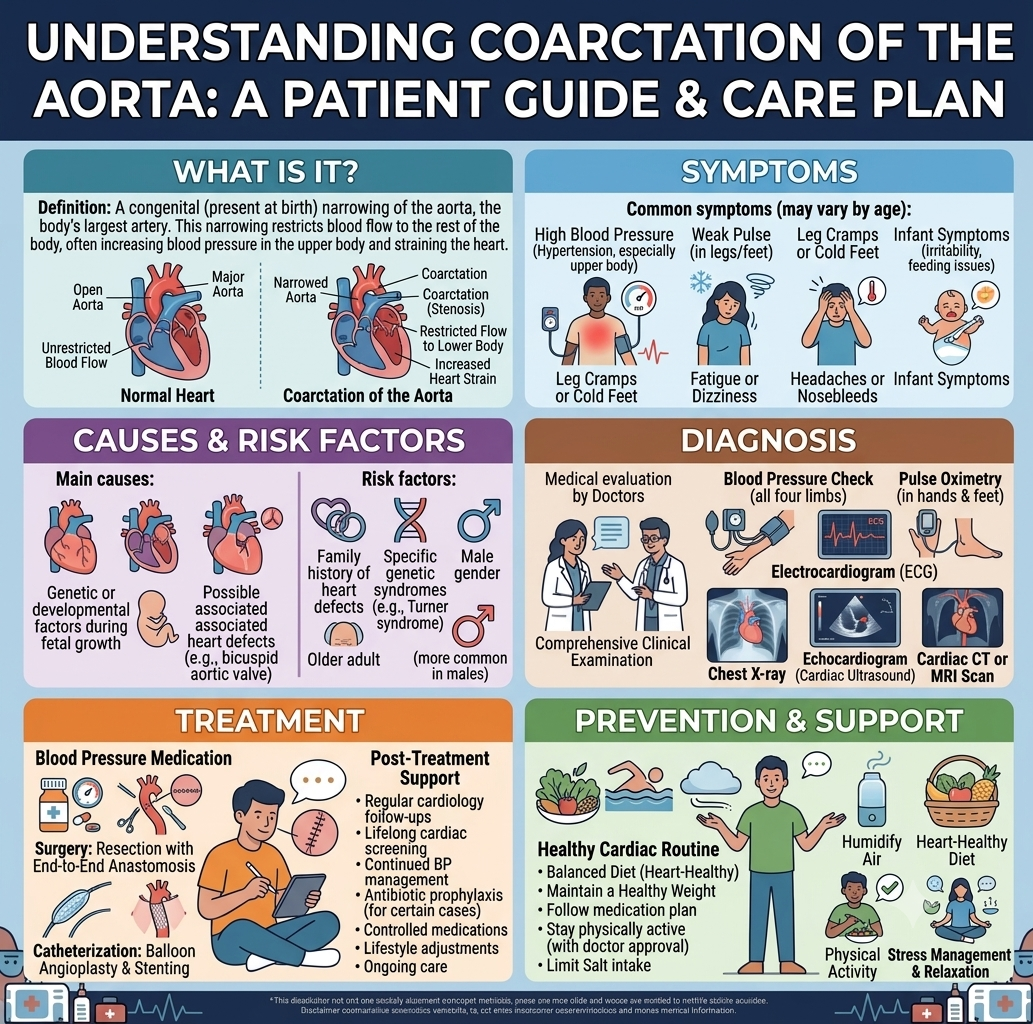
Coarctation of the aorta (ko-ahrk-TAY-shun) is a condition where the body's main artery, called the aorta, has a narrowed section. This narrowing forces the heart to work harder to pump blood to the rest of the body. While usually present at birth (a congenital heart defect), it can sometimes develop later in life. Treatment is typically successful, but lifelong medical check-ups are essential to monitor heart health.
Understanding the Condition
Coarctation of the Aorta: Understanding a Narrowed Artery
Understanding the Condition
Common Symptoms
Often No Symptoms: Many individuals, especially adults and older children with mild narrowing, may not experience any noticeable symptoms.
Severe Narrowing in Infants: Symptoms may be noticed shortly after birth and include difficulty breathing, difficulty feeding, heavy sweating, irritability, and changes in skin color.
Symptoms Later in Life: These can include chest pain, high blood pressure, muscle weakness, leg cramps, and nosebleeds.
Consultation Guide
Which Specialist to Meet
You should first consult your primary care physician, who can then refer you to a cardiologist specializing in heart conditions. For children born with this condition, a pediatric cardiologist is the appropriate specialist. In cases requiring intervention, a cardiac surgeon or interventional cardiologist may be involved.
Preparations Before Your Visit
Before your visit, prepare a list of all your symptoms, including when they started and how severe they are. Bring a list of any medications, vitamins, or supplements you are currently taking. Be ready to discuss your family's medical history, especially any heart conditions present at birth. Write down any questions you have for the doctor.
Book a doctor visit near me
Awareness of Symptoms: Be vigilant for new or worsening symptoms, such as chest pain, shortness of breath, or leg discomfort, and report them to your healthcare team promptly.
Diagnostic Procedures
This test uses sound waves to create moving pictures of your heart. It shows blood flow through heart chambers and valves, helping identify structural issues or abnormal blood flow.
What to Expect
You'll lie on a table. A technician applies gel to your chest and moves a handheld device (transducer) across it. This device sends and receives sound waves to create heart images. The test is painless and typically takes 30-60 minutes.
Electrocardiogram (ECG or EKG)
An ECG records your heart's electrical signals, showing how fast or slow it beats and identifying irregular rhythms or strain.
What to Expect
Small, sticky patches (electrodes) are placed on your chest, and sometimes arms or legs. Wires connect these to a machine that records your heart's electrical activity. It's quick, painless, and takes about 5-10 minutes.
Uses a small amount of radiation to create images of your heart, lungs, blood vessels, and chest bones. It can reveal changes in heart size or shape and lung issues.
What to Expect
You'll stand or sit in front of an X-ray machine. You'll be asked to hold your breath briefly. The quick, painless procedure lasts only a few minutes.
CT Coronary Angiogram
This imaging test uses a powerful X-ray machine and a special contrast dye to create detailed 3D images of your heart and its arteries, including the aorta, to identify narrowing or other abnormalities.
What to Expect
You'll lie on a table that slides into a CT scanner. An IV will deliver contrast dye, possibly causing a warm flush. You may hold your breath briefly. The scan takes 10-20 minutes. Discuss pregnancy/breastfeeding with your doctor.
Cardiac Catheterization
A thin, flexible tube (catheter) is guided through a blood vessel to your heart. It measures pressures, takes detailed images of the aorta with dye, and can sometimes treat narrowing during the same procedure.
What to Expect
No Known Prevention for Development: There is currently no known way to prevent coarctation of the aorta from developing. However, early diagnosis is crucial for better outcomes.
Genetic Counseling: If there's a family history of congenital heart conditions, particularly those linked to coarctation, genetic counseling can provide insights into risks for future pregnancies.
Treatment Options
Coarctation of the aorta (ko-ahrk-TAY-shun) is a condition where the body's main artery, called the aorta, has a narrowed section. This narrowing forces the heart to work harder to pump blood to the rest of the body. While usually present at birth (a congenital heart defect), it can sometimes develop later in life. Treatment is typically successful, but lifelong medical check-ups are essential to monitor heart health.
You'll receive medication to relax. The insertion site (usually groin/wrist) is numbed. You might feel pressure, but no pain. X-rays guide the catheter. After removal, pressure is applied to the site, and you'll need to rest. It can take 30 minutes to several hours.
Medications
Blood Pressure Management: Medications may be prescribed to help control high blood pressure, which is a common complication. These do not fix the narrowed aorta but help manage its effects on the heart and other organs. (Duration: Ongoing as prescribed by your doctor)
Minimally Invasive Procedures
Regular Cardiology Follow-ups: Lifelong follow-up care with a cardiologist is essential, even after successful treatment, to monitor heart health, blood pressure, and detect any potential complications or recurrence.
Blood Pressure Management: Closely monitor and manage blood pressure, as long-term high blood pressure is a common complication. This may involve lifestyle changes and sometimes medication as advised by your doctor.
Prevention & Long-Term Wellbeing
Balloon Angioplasty and Stenting: A catheter with a balloon at its tip is guided to the narrowed part of the aorta. The balloon is inflated to widen the artery, and sometimes a mesh tube (stent) is left in place to keep it open. (Duration: One-time procedure, with hospital stay typically 1-3 days and recovery lasting weeks)
Surgical Repair: Different surgical techniques can be used to remove the narrowed section of the aorta and reconnect the healthy parts, or to widen it using a patch or part of another blood vessel. (Duration: One-time procedure, with hospital stay typically 5-7 days and recovery lasting weeks to months)
Prevention
Healthy Lifestyle Choices: Maintain a heart-healthy diet, engage in regular physical activity as advised by your doctor, and avoid smoking to support overall cardiovascular health.
Tags & Topics
Notice an error or need an update?
Help us keep medical information accurate. Report incorrect info or suggest an edit.

