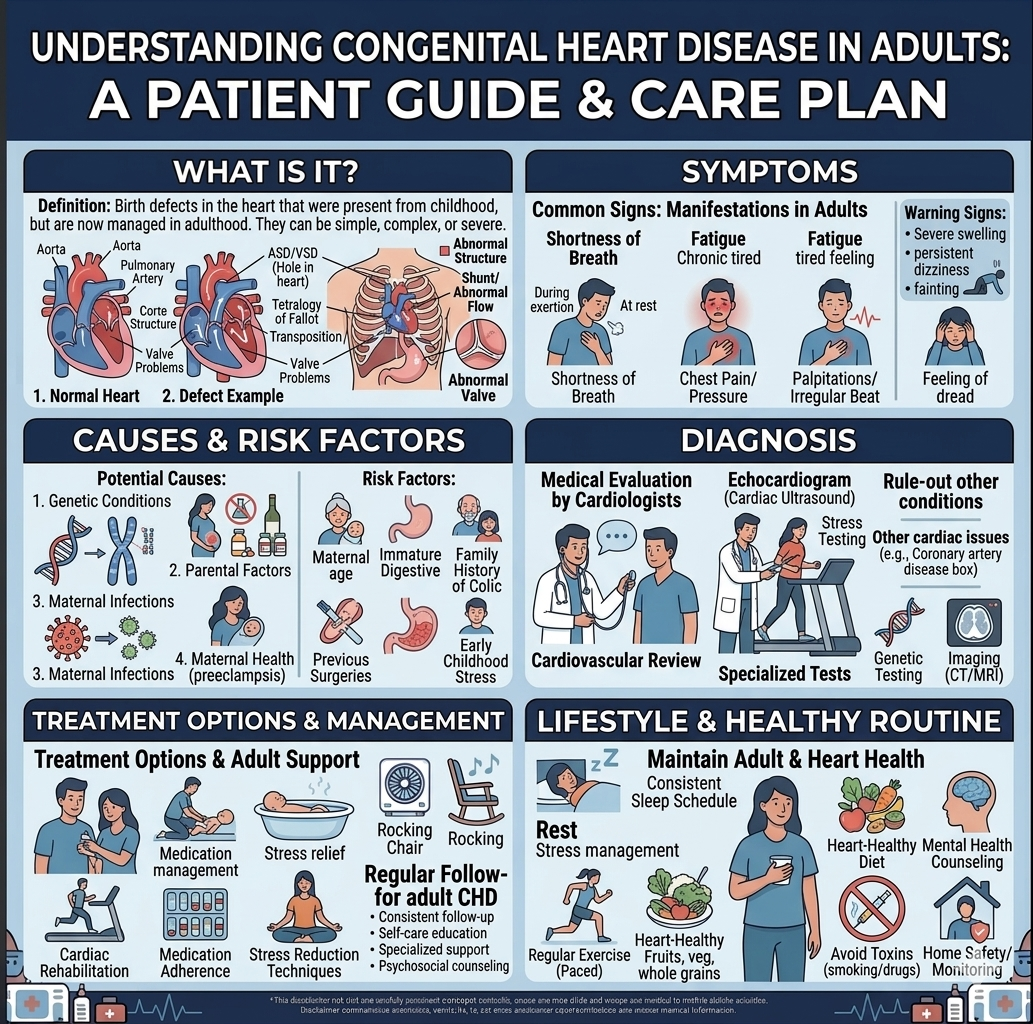
A congenital heart defect (CHD) is a structural problem with a baby's heart that is present at birth. These defects can range from simple issues that may not require treatment to complex conditions needing multiple surgeries over several years. They occur when the heart doesn't form correctly during early pregnancy, affecting how blood flows through the heart and to the rest of the body.
Understanding the Condition
Congenital Heart Defects in Children
Understanding the Condition
Common Symptoms
Serious Defects (often noticed shortly after birth): Lips, tongue, or fingernails may appear gray, pale, or blue due to low oxygen. A baby breathing unusually quickly, often with gasping. Noticeable puffiness in the legs, abdomen, or around the eyes. Shortness of breath during feeding, leading to poor weight gain.
Less-Serious Defects (may not be found until later childhood): Feeling winded quickly during exercise or play. Becoming very fatigued easily during physical activity. Losing consciousness during exercise or active play. Swelling in the hands, ankles, or feet.
Consultation Guide
Which Specialist to Meet
Begin with your pediatrician. They may refer you to a pediatric cardiologist (a heart specialist for children) or, if needed, a cardiovascular surgeon.
Preparations Before Your Visit
Compile a detailed list of your child's symptoms, their onset, and any associated factors. Bring a record of current medications and relevant family medical history. Prepare specific questions for your doctor.
Book a doctor visit near me
Consultation Guide
Review Medications: Always inform your healthcare team about all medicines, including over-the-counter, as some can cause birth defects.
Long-Term Management and Wellbeing
Consistent Medical Follow-ups: Ongoing monitoring by a pediatric cardiologist is essential, often extending into adulthood.
Vigilant for Complications: Watch for signs of heart failure (rapid breathing, poor weight gain), irregular heartbeats, or developmental delays.
Diagnostic Procedures
Cardiac Catheterization
This procedure inserts a thin tube (catheter) into a blood vessel, guided to the heart. It provides detailed info on heart structure, pressures, and blood flow. It can also fix some defects, like opening narrowed arteries.
What to Expect
What to Expect
Your child stands or lies against an X-ray plate, holding their breath briefly. Quick, painless, typically minutes.
A non-invasive 'echo' uses sound waves to create moving pictures of the heart. Shows heart structure, chamber/valve function, and blood flow.
What to Expect
Gel is applied to the chest, and a handheld device (transducer) is moved over it. Painless and inaudible sound waves. Takes 30-60 minutes.
Electrocardiogram (ECG or EKG)
A quick, painless test recording the heart's electrical activity. Identifies heart rate, rhythm, and signs of strain.
What to Expect
Sticky patches (electrodes) on chest/limbs connect to an ECG machine. Takes 5-10 minutes; child just needs to lie still.
Ensure Rubella Immunity: Get tested for rubella immunity before pregnancy; vaccinate if not immune.
Control Diabetes: Strict blood sugar management before and during pregnancy significantly lowers the baby's risk of heart defects.
Manage Chronic Conditions: Work with your doctor to effectively manage any existing health issues.
Limit Harmful Exposures: Avoid strong chemicals and fumes during pregnancy.
Treatment Options
A congenital heart defect (CHD) is a structural problem with a baby's heart that is present at birth. These defects can range from simple issues that may not require treatment to complex conditions needing multiple surgeries over several years. They occur when the heart doesn't form correctly during early pregnancy, affecting how blood flows through the heart and to the rest of the body.
Medications
Heart Support Medications: Help the heart pump, manage blood pressure, or reduce fluid. Often long-term or temporary. (Duration: Varies; can be long-term or temporary)
Antibiotics: May prevent heart lining/valve infections (endocarditis), often for short periods around dental procedures. (Duration: Short-term, as needed for procedures)
Arrhythmia Control Medications: Regulate irregular heartbeats, potentially long-term. (Duration: Varies; can be long-term)
Cardiac Catheterization Interventions: Repair defects like narrowed vessels or valves using catheters, e.g., ballooning blockages or closing holes. (Duration: Single procedure; follow-up may be needed)
Surgical Procedures
Corrective Surgery: Open-heart surgery to repair heart parts, vessels, or valves. Can be one-time or a series over years, followed by lifelong monitoring. (Duration: Varies from single to multiple surgeries over years)
Valve Repair or Replacement: For severely malformed or damaged valves; involves repair or replacement. (Duration: Single surgery, with potential for future re-intervention and lifelong monitoring)
Heart Transplant: For severe, untreatable heart failure. Replaces failing heart with a donor heart. (Duration: Single major surgery, followed by lifelong anti-rejection medication and monitoring)
Prevention & Long-Term Wellbeing
Your child will be sedated. The insertion site (usually groin) is numbed. The catheter is guided using X-rays. Mild pressure may be felt, but generally no pain. The procedure lasts 1-3 hours, followed by several hours of lying still for recovery.
Uses radiation to create images of the heart, lungs, blood vessels, and chest bones. Helps detect an enlarged heart, fluid, or lung issues.
Prevention
Prioritize Prenatal Care: Regular doctor visits during pregnancy are vital for maternal and fetal health.
Take Folic Acid: Daily 400 micrograms of folic acid before and during early pregnancy can lower the risk of certain birth defects.
Avoid Alcohol and Smoking: Abstain from alcohol and smoking (including secondhand smoke) during pregnancy to reduce heart defect risks.
Infection Prevention: Maintain excellent dental hygiene and follow antibiotic guidelines for dental procedures to prevent heart infections.
Support Development: Address slower growth or developmental delays with early intervention therapies as recommended.
Address Mental Health: Provide emotional support and seek professional help for anxiety or stress related to the condition.
Adopt Healthy Lifestyles: Adhere to cardiologist's advice on physical activity and diet to support heart health.
Tags & Topics
Notice an error or need an update?
Help us keep medical information accurate. Report incorrect info or suggest an edit.

