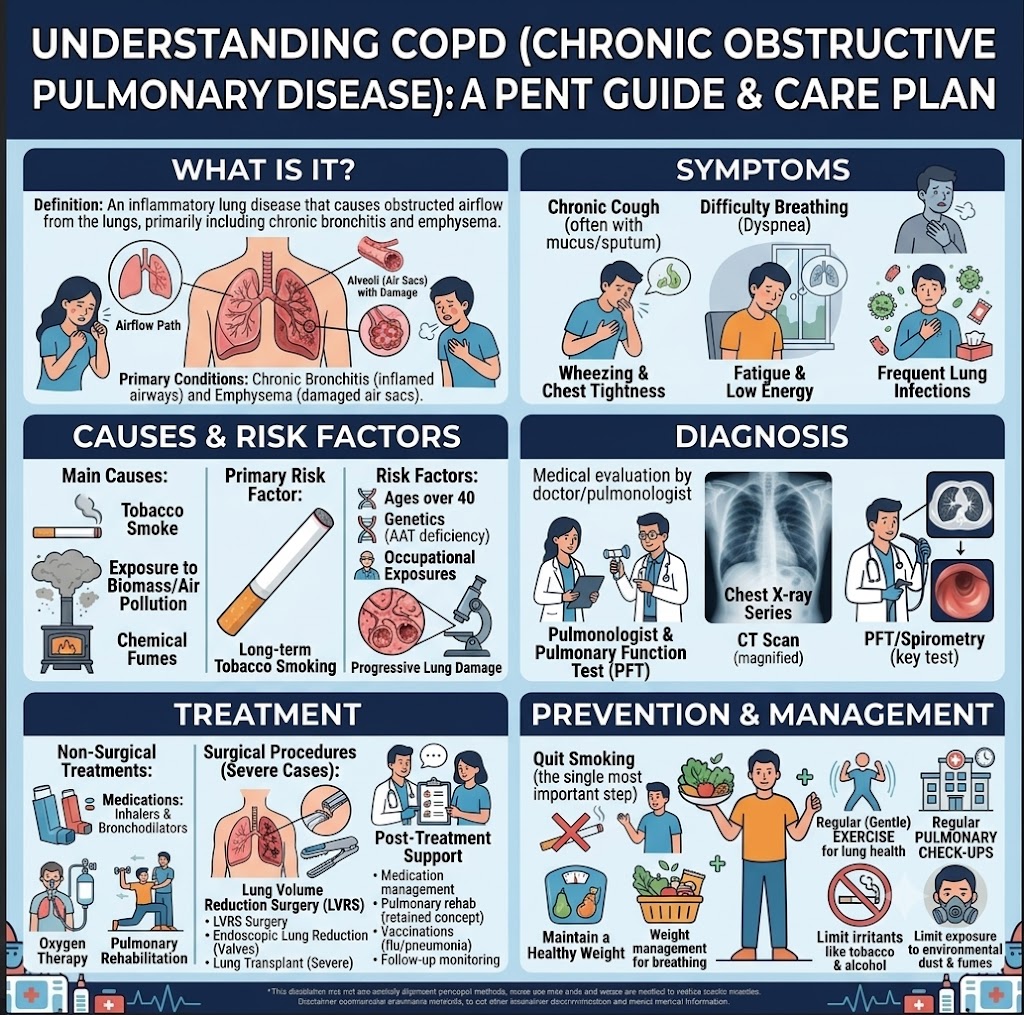
Chronic Obstructive Pulmonary Disease (COPD) is a progressive lung condition characterized by permanent damage to the airways and air sacs, leading to chronic inflammation. This damage obstructs airflow, making breathing difficult. Key symptoms include shortness of breath, a persistent cough with mucus, and wheezing. The primary cause is long-term exposure to lung irritants, most commonly cigarette smoke. COPD encompasses emphysema (damaged air sacs) and chronic bronchitis (inflamed airways with excess mucus). While irreversible, effective management can control symptoms, improve quality of life, and reduce the risk of complications like heart disease and lung cancer.
Understanding the Condition
Chronic Obstructive Pulmonary Disease (COPD)
Understanding the Condition
Chronic Obstructive Pulmonary Disease (COPD) is a progressive lung condition characterized by permanent damage to the airways and air sacs, leading to chronic inflammation. This damage obstructs airflow, making breathing difficult. Key symptoms include shortness of breath, a persistent cough with mucus, and wheezing. The primary cause is long-term exposure to lung irritants, most commonly cigarette smoke. COPD encompasses emphysema (damaged air sacs) and chronic bronchitis (inflamed airways with excess mucus). While irreversible, effective management can control symptoms, improve quality of life, and reduce the risk of complications like heart disease and lung cancer.
Common Symptoms
Trouble Breathing: Difficulty catching your breath, especially during physical activity.
Wheezing: A whistling or squeaky sound heard when breathing.
Persistent Cough: A daily cough that often brings up mucus, which can be clear, white, yellow, or greenish.
Chest Tightness: A feeling of pressure or heaviness in the chest.
Low Energy: Feeling unusually tired or lacking energy.
Frequent Lung Infections: More susceptibility to colds, flu, or pneumonia.
Unexplained Weight Loss: Losing weight without trying, particularly as the condition advances.
Swelling in Extremities: Swelling in the ankles, feet, or legs.
Consultation Guide
Which Specialist to Meet
Begin with your primary care doctor, who may refer you to a pulmonologist (lung specialist) or a respiratory therapist for breathing support and education.
Preparations Before Your Visit
Before your visit, prepare a detailed list of your symptoms, including when they started, how often they occur, and their severity. Gather information about your medical history, any current medications you are taking, and your smoking history or exposure to lung irritants. Also, write down any questions you have for the doctor.
Book a doctor visit near me
Antibiotics: Prescribed to treat bacterial lung infections, which can worsen COPD symptoms. (Duration: Typically a short course, such as 7-14 days, during an infection)
Oxygen Therapy: If blood oxygen levels are low, supplemental oxygen is provided through a mask or nasal prongs. (Duration: Can be used continuously or only during certain activities or sleep, as prescribed)
Pulmonary Rehabilitation: A comprehensive program involving exercise training, disease education, nutrition counseling, and psychological support to improve breathing, endurance, and quality of life. (Duration: Typically lasts several weeks to months, with ongoing maintenance exercises recommended)
Non-Invasive Ventilation: Uses a machine to assist breathing through a mask, often at night or during symptom flare-ups, to reduce the work of breathing. (Duration: As needed, depending on the severity and frequency of breathing difficulties)
Diagnostic Procedures
This is a common and essential breathing test that measures how much air you can breathe in and out, and how quickly you can empty your lungs. It helps diagnose conditions like COPD and monitors how well your lungs are working over time or responding to treatment.
What to Expect
You will be asked to sit down and breathe into a mouthpiece connected to a machine. The technician will instruct you to take a deep breath, then blow out as hard and fast as you can, emptying your lungs completely. This process is usually repeated a few times. You might feel a little lightheaded or short of breath briefly after performing the test.
A chest X-ray uses a small amount of radiation to create images of your heart, lungs, blood vessels, airways, and the bones of your chest and spine. It helps doctors detect problems like fluid around the lungs, collapsed lungs, pneumonia, and certain signs of emphysema or other lung issues.
What to Expect
You will stand or sit in front of an X-ray plate, and a technician will position you correctly. You will be asked to hold your breath for a few seconds while the X-ray image is taken. The procedure is quick, painless, and usually takes only a few minutes.
CT Scan (Computed Tomography Scan)
What to Expect
You will lie on a motorized table that slides into a large, doughnut-shaped machine. The scanner rotates around you, taking images from various angles. You may hear humming or buzzing sounds during the scan, and you might be asked to hold your breath at specific times. The procedure is generally painless but requires you to remain still for several minutes.
Treatment Options
A CT scan uses advanced X-ray technology and computer processing to create detailed cross-sectional images, or "slices," of your body's bones, blood vessels, and soft tissues. These images provide much more detail than standard X-rays, allowing doctors to thoroughly assess lung damage, identify lung nodules, or plan treatments.
Medications
Bronchodilators (Inhaled): These inhaled medicines help relax the muscles around your airways, making them wider and easier to breathe through. (Duration: Used daily, either regularly or as needed, for long-term management)
Corticosteroids (Inhaled/Oral): These inhaled or oral medicines help reduce inflammation in the airways. (Duration: Inhaled forms are typically used daily for long-term control; oral forms may be used for short periods during severe flare-ups)
Combination Inhalers: These devices deliver a combination of bronchodilators and corticosteroids in a single dose. (Duration: Used daily for long-term management)
Lung Volume Reduction Surgery: For some people with severe emphysema, portions of severely damaged lung tissue are removed to allow healthier parts of the lung to expand and function better. (Duration: One-time procedure)
Lung Transplant: In severe cases where other treatments are no longer effective, a diseased lung (or both lungs) may be replaced with healthy donor lungs. (Duration: One-time procedure, followed by lifelong anti-rejection medications and monitoring)
Adhere to Treatment Plan: Consistently follow your doctor's recommendations for medications, therapies, and lifestyle adjustments.
Regular Medical Check-ups: Attend all scheduled appointments to monitor your lung function, adjust treatments, and screen for potential complications.
Manage Related Health Conditions: Work with your doctor to manage other health issues linked to COPD, such as heart disease and high blood pressure.
Prevention & Long-Term Wellbeing
Home Remedies & Lifestyle Changes
Quitting Smoking: The single most important step to slow COPD progression and improve lung health. (Duration: Immediate and long-term benefit)
Avoiding Lung Irritants: Stay away from secondhand smoke, air pollution, chemical fumes, and dust. (Duration: Ongoing)
Regular Physical Activity: Engaging in appropriate exercise can strengthen breathing muscles and improve overall energy. (Duration: Ongoing)
Healthy Diet: Eating nutritious foods supports overall health and helps maintain a healthy weight. (Duration: Ongoing)
Prevention
Never Start Smoking: The most effective way to prevent COPD is to avoid smoking tobacco products.
Quit Smoking Immediately: If you currently smoke, stopping is crucial to slow disease progression and improve lung function. Seek professional support programs for quitting.
Avoid Secondhand Smoke and Air Pollution: Minimize exposure to smoke from others and reduce time in highly polluted environments.
Protect Yourself at Work: If your job involves exposure to chemical fumes, dusts, or vapors, use appropriate protective equipment and follow safety guidelines.
Get Vaccinated: Receive annual flu shots and recommended vaccinations for pneumococcal pneumonia, COVID-19, and RSV to prevent severe respiratory infections that can worsen COPD.
Long-Term Management
Maintain a Healthy Lifestyle: Continue a balanced diet and regular, doctor-approved exercise routine to support overall health and energy levels.
Address Mental Health: Difficulty breathing and living with a chronic condition can lead to anxiety and depression. Talk to your healthcare provider or a mental health professional if you experience feelings of sadness, hopelessness, or excessive worry.
Join Support Groups: Connecting with others who have COPD can provide valuable emotional support, shared experiences, and practical advice.
Tags & Topics
Notice an error or need an update?
Help us keep medical information accurate. Report incorrect info or suggest an edit.


