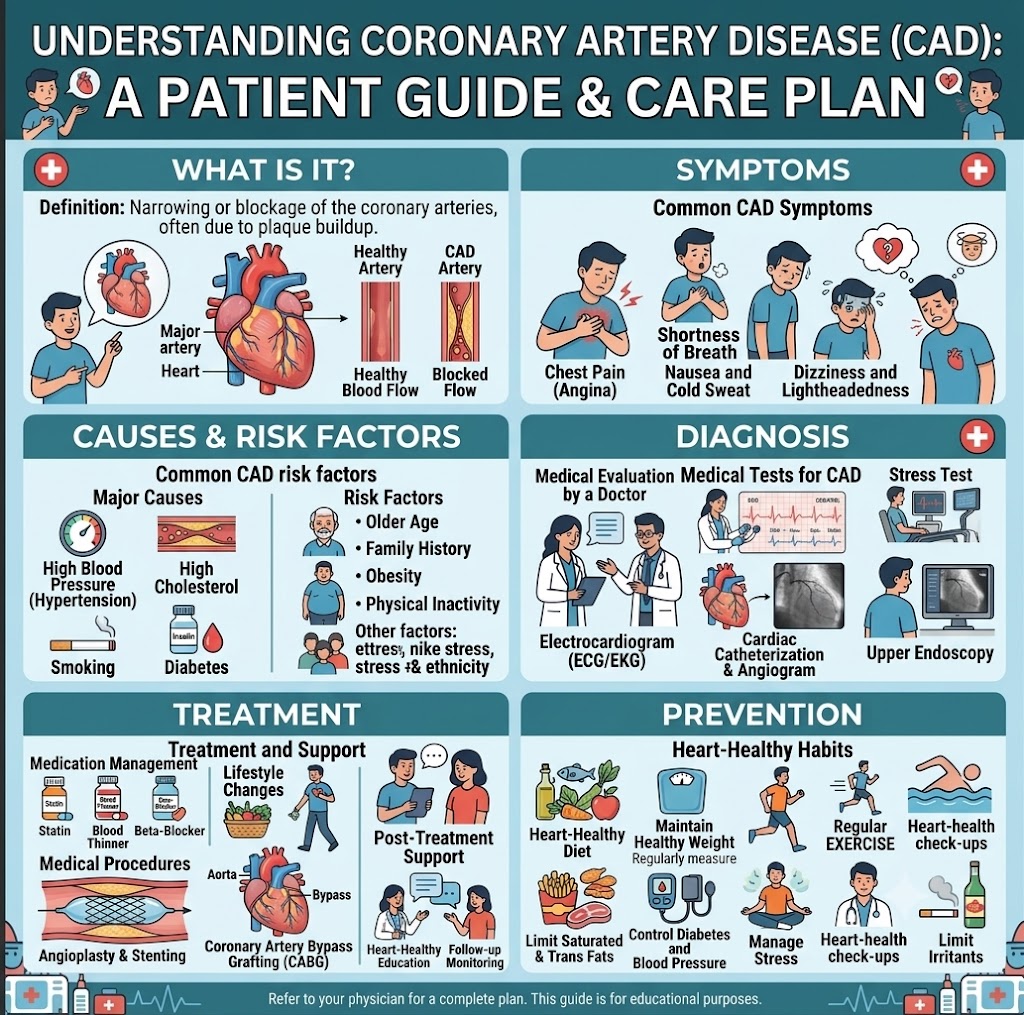
Coronary Artery Disease (CAD) is a common heart condition affecting the main blood vessels (coronary arteries) that supply oxygen-rich blood to the heart muscle. It develops when a sticky substance called plaque, made of fats, cholesterol, and other materials, builds up inside these arteries. This process, known as atherosclerosis, narrows the arteries, reducing blood flow to the heart. CAD often progresses over many years, leading to symptoms like chest pain and shortness of breath. A complete blockage can cause a heart attack. Managing CAD typically involves lifestyle changes, medications, and sometimes medical procedures or surgery. This condition is also known as coronary heart disease.
Understanding the Condition
Coronary Artery Disease: Understanding and Managing Your Heart Health
Understanding the Condition
Coronary Artery Disease (CAD) is a common heart condition affecting the main blood vessels (coronary arteries) that supply oxygen-rich blood to the heart muscle. It develops when a sticky substance called plaque, made of fats, cholesterol, and other materials, builds up inside these arteries. This process, known as atherosclerosis, narrows the arteries, reducing blood flow to the heart. CAD often progresses over many years, leading to symptoms like chest pain and shortness of breath. A complete blockage can cause a heart attack. Managing CAD typically involves lifestyle changes, medications, and sometimes medical procedures or surgery. This condition is also known as coronary heart disease.
Common Symptoms
Chest Pain (Angina): This is a common sign that your heart isn't getting enough oxygen-rich blood. You might feel squeezing, pressure, heaviness, tightness, or a burning sensation in your chest, often described as if someone is standing on it. It usually affects the middle or left side of the chest and can be triggered by physical activity or strong emotions. For some, especially women, the pain may be brief or sharp and felt in the neck, arm, or back.
Shortness of Breath: You may feel like you can't catch your breath, particularly during physical exertion or even at rest as the condition worsens.
Fatigue: If your heart struggles to pump enough blood to meet your body's needs, you might experience unusual or persistent tiredness.
Subtle Onset and Worsening Symptoms: Symptoms may not be immediately noticeable or only occur during intense activity. As the coronary arteries continue to narrow, symptoms can become more severe or frequent.
Heart Attack Warning Signs: A completely blocked coronary artery will cause a heart attack. Common symptoms include severe chest pain (pressure, tightness, squeezing, or aching), pain or discomfort that spreads to the shoulder, arm, back, neck, jaw, teeth, or sometimes the upper belly, cold sweats, shortness of breath, and sudden lightheadedness or dizziness. Seek immediate medical attention if you experience these.
Consultation Guide
Which Specialist to Meet
You should start by discussing your symptoms and concerns with your primary care provider. They can refer you to a cardiologist, a doctor specializing in heart conditions, for further evaluation, diagnosis, and a personalized treatment plan.
Preparations Before Your Visit
Before your appointment, gather a detailed list of your symptoms, including when they started, what makes them better or worse, and how they impact your daily life. Compile a list of all medications, supplements, and vitamins you currently take. Be prepared to discuss your personal and family medical history, as well as your lifestyle habits such as diet, exercise, and smoking status. Writing down any questions you have can also be helpful.
Book a doctor visit near me
This specialized computed tomography (CT) scan of the heart looks for calcium deposits in your coronary arteries. Calcium buildup is a strong indicator of plaque and can reveal early coronary artery disease, even before symptoms appear.
Chest Pain Relief Medications: These medications work to relax blood vessels, reduce heart rate, or lower the heart's workload, thereby alleviating angina symptoms. (Duration: Taken as needed or regularly, as prescribed)
Consultation Guide
Maintain a Healthy Weight: Losing excess weight can significantly reduce the strain on your heart and improve risk factors like high blood pressure and diabetes.
Quit Smoking and Avoid Tobacco: This is one of the most impactful steps to protect your heart. Seek support to quit if you smoke and avoid exposure to secondhand smoke.
Limit Alcohol Consumption: If you drink alcohol, do so in moderation, as heavy use can damage the heart and worsen other risk factors for CAD.
Diagnostic Procedures
Electrocardiogram (ECG or EKG)
This quick, non-invasive test records the electrical signals of your heart to check its rhythm and rate. It helps detect heart attacks, heart damage, or irregular heartbeats.
What to Expect
Small, sticky patches called electrodes will be placed on your chest, and sometimes on your arms or legs. Wires connect these patches to a machine that records your heart's electrical activity. You'll lie still for a few minutes while the test is conducted. It is painless.
This test uses sound waves to create moving pictures of your heart. It allows doctors to visualize your heart's chambers and valves, assess its pumping function, and observe blood flow, helping to identify heart disease or other structural issues.
What to Expect
A technician will apply a special gel to your chest and then press a small device (transducer) against your skin, moving it around to capture images. You might be asked to change positions or hold your breath briefly. The test is painless and typically takes 30-60 minutes.
A stress test shows how your heart works during physical activity. It helps identify blood flow problems that may only become apparent when your heart is working harder.
What to Expect
You'll typically walk on a treadmill or ride a stationary bike while your heartbeat, blood pressure, and breathing are continuously monitored. If you are unable to exercise, a medication may be given to simulate the effects of exercise on your heart. The exercise portion usually lasts 10-15 minutes, with the entire test taking about an hour.
Coronary Calcium Scan (Heart Scan)
What to Expect
You will lie on a table that slides into a large, donut-shaped CT scanner. You may be asked to hold your breath for short periods. The scan is quick, painless, and typically takes less than 10-15 minutes.
Cardiac Catheterization and Coronary Angiogram
This is an invasive procedure where a thin, flexible tube (catheter) is inserted into a blood vessel (usually in the groin or wrist) and guided to your heart. A special dye is then injected through the catheter, and X-ray images (angiogram) are taken to visualize any narrowed or blocked coronary arteries. It can also be used to measure pressures within the heart chambers.
What to Expect
What to Expect
Treatment Options
A contrast dye will be injected through an IV line in your arm. You'll lie on a table that slides into the CT scanner. You may need to hold your breath for short periods to ensure clear images. The scan usually takes about 15-30 minutes. If blockages are identified, a catheter-based angiogram might still be necessary for treatment.
Medications
Cholesterol-Lowering Medications: These medicines reduce 'bad' cholesterol levels in the blood, slowing plaque buildup in the arteries. (Duration: Often long-term, potentially lifelong)
Blood Pressure Medications: These help lower high blood pressure, reducing strain on the arteries and the heart. (Duration: Often long-term, potentially lifelong)
Blood Sugar Control Medications: For individuals with diabetes, these help manage blood sugar levels, which is crucial for preventing further damage to blood vessels. (Duration: Ongoing, as prescribed)
Blood Thinners (Anti-Clotting Medications): These help prevent blood clots from forming in narrowed arteries or on stents, reducing the risk of heart attack and stroke. (Duration: Varies, often long-term depending on individual risk)
Coronary Artery Bypass Graft (CABG) Surgery: A surgeon takes a healthy blood vessel from another part of the body (e.g., chest, leg) and uses it to create a new path for blood to flow around a blocked or partially blocked artery in the heart, improving blood supply to the heart muscle. (Duration: Surgery takes several hours; hospital stay typically 5-7 days, with full recovery taking weeks to months. The bypass is intended to be permanent.)
Manage Chronic Conditions: Work closely with your healthcare provider to control high blood pressure, high cholesterol, and diabetes through lifestyle adjustments and prescribed medications.
Reduce and Manage Stress: Practice stress-reducing techniques such as meditation, yoga, deep breathing exercises, or engaging in relaxing hobbies to mitigate emotional stress.
Ensure Adequate Sleep: Aim for 7-9 hours of quality sleep per night. Both too little and too much sleep can negatively impact heart health.
Regular Medical Check-ups: Adhere to your doctor's recommendations for follow-up appointments and screenings to monitor your heart health and adjust treatment as needed.
Prevention & Long-Term Wellbeing
You will receive local anesthesia at the insertion site and a sedative to help you relax. The doctor will make a small incision and insert the catheter. You might feel some pressure but generally no pain. You may experience a brief flushing sensation when the dye is injected. The procedure typically takes 30 minutes to a few hours, followed by a recovery period.
Coronary CT Angiogram (CCTA)
A non-invasive computed tomography (CT) scan that uses X-rays and an injected contrast dye to create detailed images of your heart's blood vessels. It can detect blockages or narrowing without needing a catheter inside your body.
Lifestyle Changes
Heart-Healthy Eating: Adopting a diet rich in fruits, vegetables, whole grains, and lean proteins, while limiting saturated and trans fats, cholesterol, salt, and added sugars. (Duration: Ongoing, lifelong commitment)
Regular Physical Activity: Aim for at least 150 minutes of moderate-intensity exercise or 75 minutes of vigorous exercise per week to strengthen the heart and improve overall cardiovascular health. (Duration: Ongoing, lifelong commitment)
Smoking Cessation: Quitting all forms of tobacco use and avoiding secondhand smoke significantly reduces CAD progression and its associated complications. (Duration: Ongoing, lifelong commitment)
Coronary Angioplasty and Stenting: A thin tube with a tiny balloon is guided to the blocked artery. The balloon is inflated to widen the artery, and usually, a small metal mesh tube (stent) is placed to keep it open. Some stents are coated with medicine to prevent the artery from re-narrowing. (Duration: Procedure takes 1-2 hours; stent is permanent. Recovery typically a few days to a week.)
Prevention and Long-Term Management
Adopt a Heart-Healthy Diet: Focus on whole foods, lean proteins, and healthy fats. Limit processed foods, high-sugar drinks, saturated and trans fats, and excessive sodium.
Engage in Regular Physical Activity: Incorporate aerobic exercises like brisk walking, swimming, or cycling into your routine most days of the week to strengthen your heart and improve circulation.
Tags & Topics
Notice an error or need an update?
Help us keep medical information accurate. Report incorrect info or suggest an edit.

