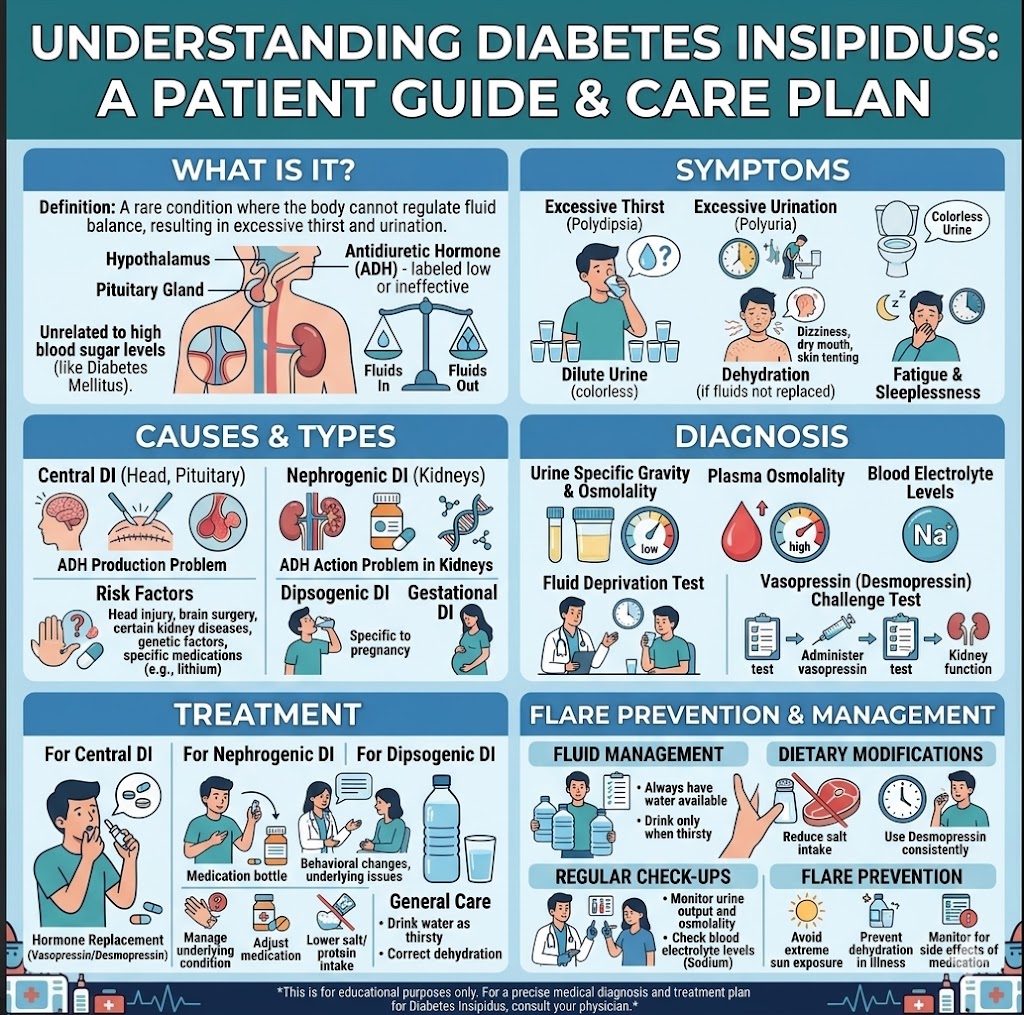
Diabetes insipidus (die-uh-BEE-teze in-SIP-uh-dus) is a rare condition disrupting the body's fluid balance. It causes excessive urination and intense thirst, unrelated to blood sugar problems like common diabetes. Though incurable, treatments effectively manage symptoms, relieving thirst and preventing dehydration.
Understanding the Condition
Diabetes Insipidus: Understanding and Managing a Rare Fluid Imbalance
Understanding the Condition
Diabetes insipidus (die-uh-BEE-teze in-SIP-uh-dus) is a rare condition disrupting the body's fluid balance. It causes excessive urination and intense thirst, unrelated to blood sugar problems like common diabetes. Though incurable, treatments effectively manage symptoms, relieving thirst and preventing dehydration.
Common Symptoms
Symptoms in Adults: Patients typically experience:
Extreme Thirst: Persistent and intense thirst, often with a preference for cold water.
Excessive Urination: Passing large volumes of very pale, dilute urine. While adults typically urinate 1-3 quarts (1-3 liters) daily, those with diabetes insipidus might urinate up to 20 quarts (19 liters) daily if they drink many fluids.
Nighttime Urination: Waking frequently at night to urinate and drink water.
Symptoms in Babies and Young Children: Symptoms can be more subtle and include:
Frequent Wet Diapers/Bed-wetting: Large amounts of pale urine resulting in heavy, wet diapers or bed-wetting.
Constant Thirst: Persistent thirst, often wanting water and cold liquids.
Weight Loss & Poor Growth: Difficulty gaining weight or growing as expected.
Irritability & Sleep Problems: Unusual fussiness, irritability, and disturbed sleep.
Constipation: Difficulty passing stool.
Vision Problems: Issues with sight.
Consultation Guide
Which Specialist to Meet
Before your appointment, list all your symptoms, including their onset and severity. Bring a list of all medications, supplements, and vitamins you take. Be ready to share your medical history, including any recent head injuries, surgeries, or other health conditions. Prepare specific questions for your doctor.
Book a doctor visit near me
Recognizing Dehydration Symptoms: Be aware of the signs of dehydration (extreme tiredness, lightheadedness, confusion) and electrolyte imbalance (loss of appetite, muscle weakness) to seek prompt medical attention.
Hydration Strategies: Always carry water and stay hydrated, especially in warm weather or during physical activity, to manage intense thirst and prevent fluid loss.
Emergency Preparedness: Ensure you have an adequate supply of medication, especially when traveling, and know how to contact your healthcare provider in case of symptoms worsening or supply issues.
Consultation Guide
You should consult with a primary care physician who may then refer you to an endocrinologist (hormone specialist), a nephrologist (kidney specialist), or, for children, a pediatrician. A genetic counselor may also be helpful if a genetic cause is suspected.
Preparations Before Your Visit
This test examines your DNA to identify specific genetic changes (mutations) that might cause or increase your risk for certain types of diabetes insipidus, especially if there's a family history. It involves analyzing parts of your DNA (exome or genome).
Other Medications (for specific causes): Medications may be used to address underlying causes, such as reducing high calcium levels or managing low potassium levels, which can contribute to the condition. (Duration: Varies based on the underlying condition.)
Addressing Underlying Causes
Management of Underlying Conditions: If diabetes insipidus is caused by another condition like a tumor, head injury, or certain medications, treating or managing that underlying condition is critical. This might involve surgery for a tumor. (Duration: Varies depending on the cause, from short-term to ongoing management.)
Pregnancy-Related Management
Temporary Hormone Replacement: For gestational diabetes insipidus (during pregnancy), temporary use of synthetic hormone might be necessary until after delivery. (Duration: Typically resolves after childbirth.)
Careful Medication Management: For individuals taking medications known to cause nephrogenic diabetes insipidus (e.g., lithium, certain antivirals), close monitoring of kidney function and fluid balance is essential. Regular communication with your doctor about medication side effects is crucial.
Injury Prevention: Taking precautions to prevent head injuries can reduce the risk of central diabetes insipidus caused by brain damage.
Long-Term Monitoring & Management
Diagnostic Procedures
A test of your urine's appearance, concentration, and content, used to detect issues like infections, kidney disease, and for diabetes insipidus, to assess how diluted or concentrated the urine is.
What to Expect
You will provide a midstream urine sample in a sterile cup at the clinic. The sample is then sent to a lab for quick, painless analysis.
Blood Tests (Electrolytes and ADH Levels)
These tests measure the levels of essential minerals like sodium and potassium (electrolytes) and antidiuretic hormone (ADH) in your blood to assess fluid balance and kidney function.
What to Expect
A healthcare professional will draw a small sample of blood, usually from a vein in your arm, using a needle. You might feel a brief sting or pressure. The sample is then sent for lab analysis.
Fluid Deprivation Test
This test assesses how your kidneys respond to fluid restriction. Under medical supervision, you stop drinking fluids for several hours while your urine output, weight, and blood concentration are monitored. This helps differentiate types of diabetes insipidus.
What to Expect
You will be closely monitored in a controlled environment (often a hospital). You'll be asked to stop drinking fluids for a specified period. Your weight, urine output, and blood/urine samples will be collected periodically. You will be monitored for signs of dehydration.
MRI (Magnetic Resonance Imaging) of the Brain
An imaging test using a powerful magnetic field and radio waves to create detailed images of your brain, focusing on the hypothalamus and pituitary gland, to detect structural abnormalities like tumors or damage.
What to Expect
You will lie on a movable table that slides into a large, tunnel-shaped machine. You must remain still during the scan, which can take 30-60 minutes. You might hear loud banging noises, so earplugs may be offered. Contrast dye may be injected into a vein to enhance images.
What to Expect
Genetic testing typically involves providing a blood sample or a cheek swab. These samples are then sent to a specialized lab for analysis. The physical risk is minimal. Discussion with a doctor or genetic counselor about potential results is important.
Treatment Options
Medications
Hormone Replacement Therapy (Synthetic Antidiuretic Hormone): A synthetic version of the missing antidiuretic hormone (ADH) helps the kidneys reabsorb water and reduce urine production. It is available as nasal spray, oral tablets, or injection. (Duration: Lifelong for most forms of central diabetes insipidus.)
Diuretic Medications (for certain types): Paradoxically, certain diuretic medications can help the kidneys retain water in cases where the kidneys don't respond to ADH (nephrogenic diabetes insipidus). (Duration: Long-term, as directed by a doctor.)
Regular Medical Check-ups: Ongoing monitoring by a healthcare professional is vital to adjust treatment, track fluid balance, and prevent complications like dehydration or electrolyte imbalances.
Monitoring Fluid Intake and Output: Keeping track of how much you drink and urinate can help you and your doctor understand how well the treatment is working and identify any signs of dehydration.
Prevention & Long-Term Wellbeing
Lifestyle and Home Remedies
Adequate Fluid Intake: It's crucial to drink enough fluids to stay hydrated, especially for those with severe thirst. This often involves drinking small amounts frequently throughout the day. (Duration: Lifelong.)
Diet Modification: Sometimes, a low-salt or low-protein diet can help reduce the amount of urine the kidneys produce, especially in nephrogenic diabetes insipidus. (Duration: Long-term, as advised by a healthcare professional.)
Prevention & Risk Management
Genetic Counseling: If there's a family history of diabetes insipidus, seeking genetic counseling can help understand the risks and potential inheritance patterns.
Tags & Topics
Notice an error or need an update?
Help us keep medical information accurate. Report incorrect info or suggest an edit.


