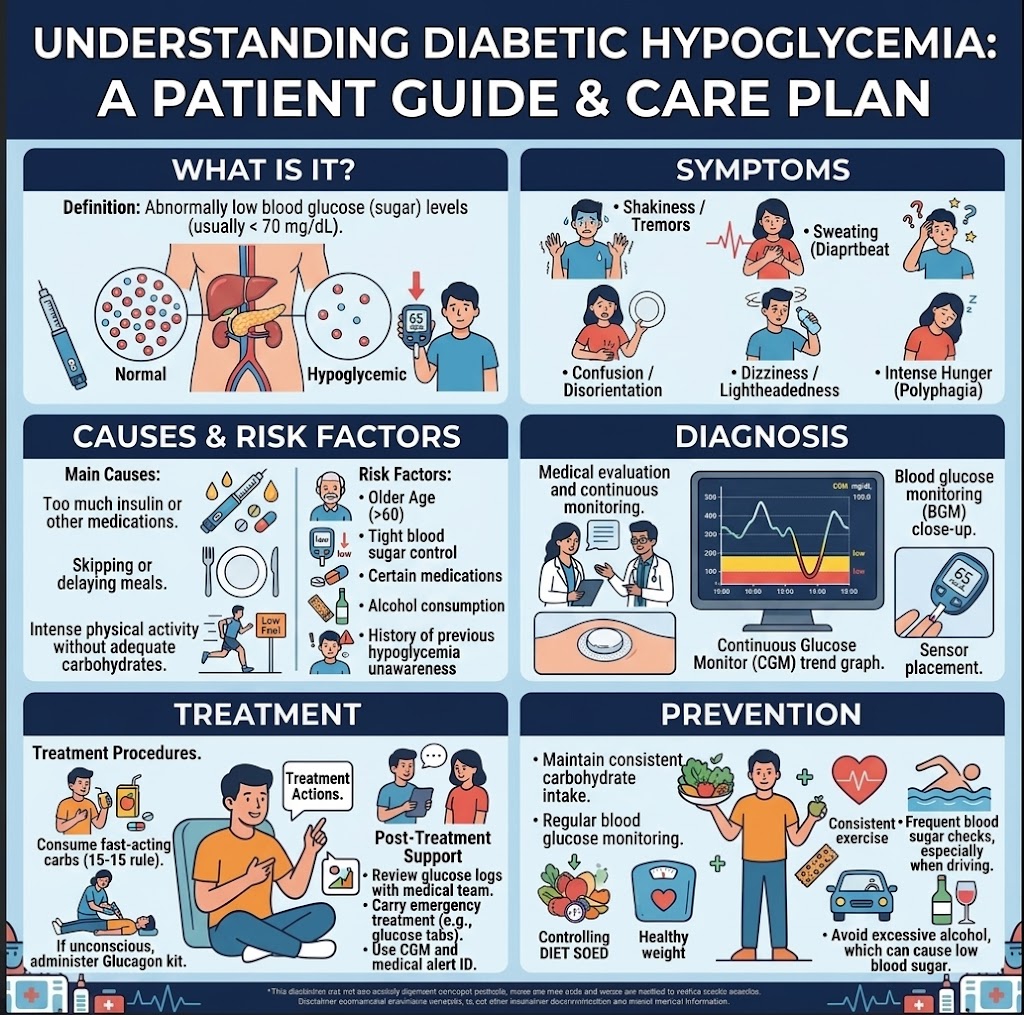
Diabetic hypoglycemia, often called low blood sugar, occurs when glucose levels in the blood drop too low in someone with diabetes. Glucose is the body's primary energy source, vital for the brain and overall function. For many, a blood sugar level below 70 milligrams per deciliter (mg/dL), or 3.9 millimoles per liter (mmol/L), indicates hypoglycemia. However, your specific target range should be discussed with your healthcare professional. Recognizing early symptoms and treating low blood sugar immediately is crucial. Simple sugars like glucose tablets, fruit juice, or hard candy can quickly raise blood sugar. It's also important to educate family and friends about your symptoms and how to assist if you are unable to treat yourself.
Understanding the Condition
Diabetic Hypoglycemia (Low Blood Sugar)
Understanding the Condition
Diabetic hypoglycemia, often called low blood sugar, occurs when glucose levels in the blood drop too low in someone with diabetes. Glucose is the body's primary energy source, vital for the brain and overall function. For many, a blood sugar level below 70 milligrams per deciliter (mg/dL), or 3.9 millimoles per liter (mmol/L), indicates hypoglycemia. However, your specific target range should be discussed with your healthcare professional. Recognizing early symptoms and treating low blood sugar immediately is crucial. Simple sugars like glucose tablets, fruit juice, or hard candy can quickly raise blood sugar. It's also important to educate family and friends about your symptoms and how to assist if you are unable to treat yourself.
Common Symptoms
Early Signs of Low Blood Sugar: These symptoms develop first and can include a feeling of hunger, shakiness, sweating, feeling anxious, dizziness or lightheadedness, confusion, trouble concentrating, a headache, irritability, and a fast heartbeat.
Symptoms During Sleep: If low blood sugar occurs while sleeping, you might experience sweating through pajamas or sheets, having nightmares, and waking up feeling tired or confused.
Severe Symptoms (Requires Immediate Help): Untreated low blood sugar can worsen, leading to poor coordination, blurry vision, slurred speech, profound confusion or disorientation, passing out (loss of consciousness), and seizures. These require immediate medical attention. Symptoms can vary greatly from person to person and even from one episode to the next. Some individuals may not notice any symptoms, a condition called 'hypoglycemia unawareness,' making regular blood sugar checks essential. Always track how you feel when your blood sugar is low.
Consultation Guide
Which Specialist to Meet
Before your visit, keep a detailed log of your blood sugar readings, noting the time, value, what you ate, physical activity, and any medications taken. Make a list of all your symptoms, especially when they occur. Prepare a list of all current medications, including over-the-counter drugs and supplements, and write down any questions you have for your doctor.
Book a doctor visit near me
This is the primary method for checking your blood sugar levels at a specific moment. It helps confirm if your blood sugar is low when you experience symptoms and allows you to track your levels throughout the day.
You will use a small device called a glucometer. You'll prick your fingertip with a tiny needle (lancet) to get a drop of blood. This blood sample is then applied to a test strip, which the glucometer reads to display your blood sugar level within seconds. You might do this several times a day, especially before and after meals, exercise, or if you feel symptoms.
Continuous Glucose Monitoring (CGM)
A CGM system provides real-time blood sugar readings throughout the day and night without frequent finger pricks. It can show trends and patterns in your glucose levels, including when they drop too low or rise too high, and alert you to potential issues.
Recognize and Respond to Symptoms: Learn to recognize your specific early symptoms of low blood sugar and act immediately. Don't wait for symptoms to worsen.
Educate Your Support Network: Inform family, friends, and coworkers about your condition, the symptoms of hypoglycemia, and what to do in an emergency, including how to administer glucagon if necessary.
Carry Emergency Supplies: Always carry fast-acting sugar (e.g., glucose tablets, juice) with you. If prescribed, ensure you have a glucagon emergency kit readily available and that others know where it is and how to use it.
Wear Medical Identification: Wear a medical alert bracelet or necklace indicating you have diabetes. This can provide crucial information to emergency responders if you are unable to communicate.
Consultation Guide
Mindful Alcohol Consumption: Alcohol can cause delayed hypoglycemia, especially if consumed on an empty stomach. Always eat when you drink alcohol and monitor your blood sugar closely.
Adapt for Illness and Activity: Discuss with your doctor how to adjust your diabetes management plan during illness or periods of increased physical activity to prevent low blood sugar.
Diagnostic Procedures
Finger-Prick Blood Glucose Test
What to Expect
What to Expect
A small, disposable sensor is painlessly inserted just under the skin, usually on your arm or abdomen. This sensor continuously measures glucose in the fluid between your cells. A small transmitter sends this data wirelessly to a receiver or smartphone app. You will wear the sensor for several days to weeks, depending on the specific device, and change it periodically. You might still need to perform occasional finger-prick checks to calibrate the CGM or verify readings.
Hemoglobin A1C Testing: Regular A1C tests (every 3-6 months) provide an average of your blood sugar levels over the past 2-3 months, giving your doctor insight into your overall glucose control and helping to fine-tune your treatment plan to minimize hypoglycemia risk.
Treatment Options
Immediate Action for Low Blood Sugar
Rule of 15: For mild to moderate low blood sugar, consume 15 grams of fast-acting carbohydrates (e.g., glucose tablets, 4 ounces of fruit juice, regular soda). Wait 15 minutes, then recheck your blood sugar. If it's still below 70 mg/dL, repeat the process. Once your blood sugar returns to normal, eat a small snack or meal if your next planned meal is more than an hour away. (Duration: As needed, until blood sugar stabilizes (typically 15-30 minutes per episode).)
Glucagon Emergency Kit: For severe low blood sugar where the person is unconscious or unable to swallow, a glucagon injection rapidly raises blood sugar by signaling the liver to release stored glucose. It can be administered by trained family members or friends. Call emergency services after administration. (Duration: As needed during a severe emergency; the person should typically regain consciousness within 15 minutes.)
Preventative Management
Consistent Meal Plan: Maintain a regular schedule of balanced meals and snacks. Consistent carbohydrate intake helps prevent blood sugar fluctuations and drops. (Duration: Continuous, daily management.)
Medication and Activity Adjustments: Collaborate with your doctor to fine-tune medication dosages, particularly insulin, based on your diet and exercise. Learn how to adjust food or medication around physical activity to prevent hypoglycemia. (Duration: Ongoing, as prescribed and monitored by a doctor, adapting to lifestyle.)
Regular Blood Sugar Monitoring: Consistently check your blood sugar levels as advised by your healthcare provider. This helps identify trends, prevent lows, and understand how food, exercise, and medication affect your glucose.
Regular Medical Check-ups: Maintain regular appointments with your healthcare team to review your blood sugar logs, adjust your treatment plan, and discuss any concerns.
Prevention & Long-Term Wellbeing
You should consult with an endocrinologist, who specializes in diabetes and hormonal conditions, or your primary care physician. A certified diabetes educator (CDE) or registered dietitian can also provide valuable guidance on managing your condition.
Preparations Before Your Visit
Prevention and Long-Term Wellbeing
Tags & Topics
Notice an error or need an update?
Help us keep medical information accurate. Report incorrect info or suggest an edit.


