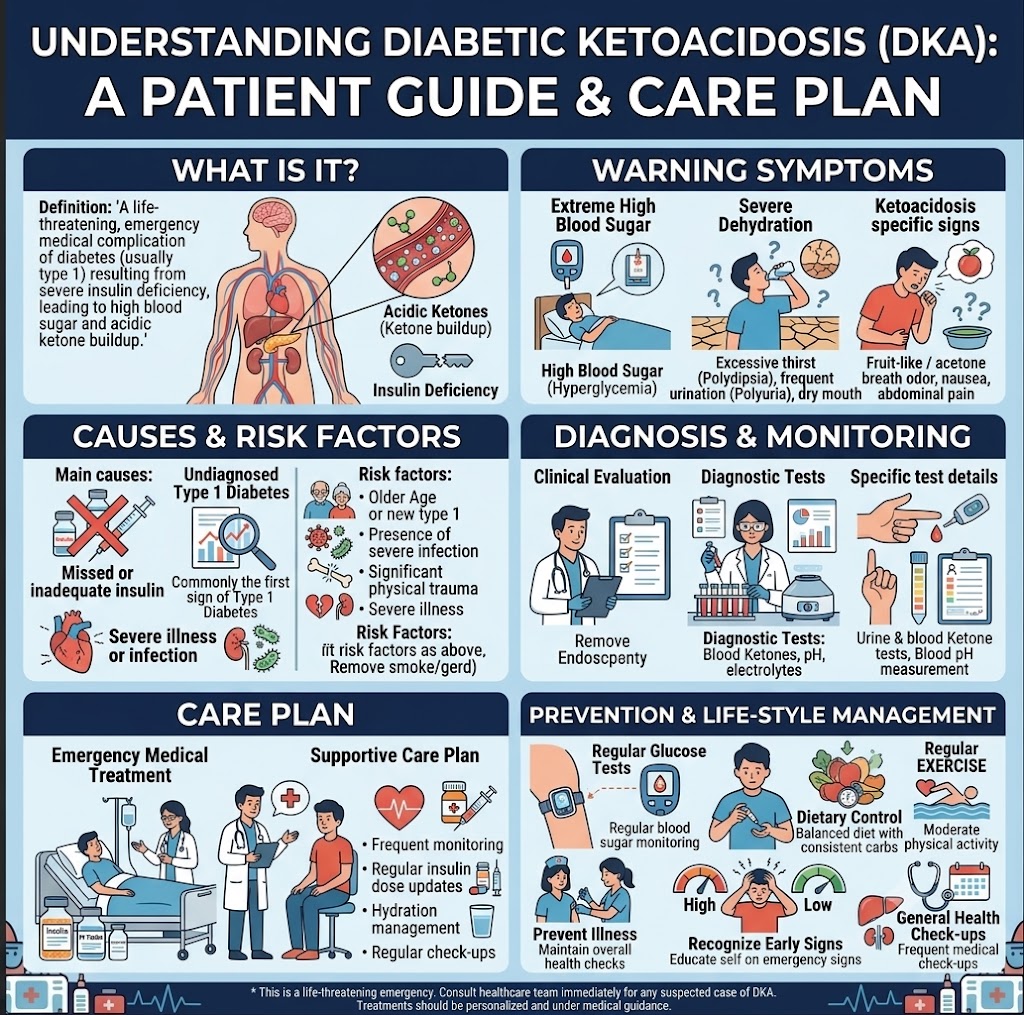
Diabetic ketoacidosis (DKA) is a severe and life-threatening complication of diabetes. It occurs when the body lacks enough insulin to use blood sugar (glucose) for energy. Instead, the body starts breaking down fat, producing acidic substances called ketones. A dangerous buildup of these ketones in the blood can lead to DKA, which requires immediate medical attention.
Understanding the Condition
Diabetic Ketoacidosis (DKA): Understanding and Managing a Serious Diabetes Complication
Understanding the Condition
Diabetic ketoacidosis (DKA) is a severe and life-threatening complication of diabetes. It occurs when the body lacks enough insulin to use blood sugar (glucose) for energy. Instead, the body starts breaking down fat, producing acidic substances called ketones. A dangerous buildup of these ketones in the blood can lead to DKA, which requires immediate medical attention.
Common Symptoms
Extreme Thirst: Feeling unusually thirsty.
Frequent Urination: Needing to urinate much more often than usual.
Nausea and Vomiting: Feeling sick to your stomach and throwing up.
Stomach Pain: Abdominal discomfort or pain.
Weakness and Fatigue: Feeling very tired, weak, or generally unwell.
Shortness of Breath: Difficulty breathing, or breathing that feels labored.
Fruity-Scented Breath: Breath that smells sweet, similar to nail polish remover.
Confusion: Difficulty thinking clearly, disorientation, or altered mental state.
Before your visit, keep a detailed record of your blood sugar and urine ketone levels, note any recent symptoms, illnesses, injuries, and all current medications you are taking. Be prepared to discuss your diabetes management plan and any challenges you're facing.
Book a doctor visit near me
Routine Ketone Testing: If your blood sugar is consistently high (e.g., above 250 mg/dL or 13.9 mmol/L), or if you experience DKA symptoms, use an at-home kit to check for ketones in your urine. Early detection prevents DKA from worsening.
Insulin Management: Never skip insulin doses. If you are on insulin therapy, ensure you understand how to adjust your dose during illness or when blood sugar levels are high, as per your doctor's instructions.
Recognize Warning Signs: Be familiar with the symptoms of DKA, such as extreme thirst, frequent urination, nausea, abdominal pain, and fruity-smelling breath. Seek emergency care immediately if these symptoms develop.
Long-Term Wellbeing with Diabetes
Consultation Guide
Treating Underlying Causes: If an infection or another medical condition triggered DKA, specific treatments (e.g., antibiotics for an infection) will be provided to address the root cause. (Duration: Varies widely depending on the underlying condition, from a few days for acute infections to ongoing management for chronic issues.)
Diagnostic Procedures
High Blood Sugar (Home Test Sign): A blood sugar level consistently above 250 mg/dL (13.9 mmol/L).
Ketones in Urine (Home Test Sign): Presence of moderate to large amounts of ketones in a urine test.
Consultation Guide
Which Specialist to Meet
Blood and Urine Ketone Tests
These tests measure acid levels (ketones) in blood or urine. High ketones, from fat breakdown due to insufficient insulin, indicate developing DKA.
What to Expect
A blood test typically uses a finger-prick meter; a urine test uses a dipstick. Both provide quick results.
This test measures blood sugar (glucose) levels. Persistently high glucose signals uncontrolled diabetes and DKA risk.
What to Expect
For a rapid test, a finger-prick sample is used. A laboratory blood test involves blood drawn from a vein, usually in your arm.
A urinalysis examines your urine for signs of infection, kidney issues, and high sugar/ketone levels, crucial for DKA diagnosis.
What to Expect
You will provide a midstream urine sample. It's visually checked, then tested with a dipstick for substances like protein, sugar, and ketones. Lab analysis may include a microscopic exam.
Electrocardiogram (ECG or EKG)
An ECG records the heart's electrical signals to assess its rate and rhythm. It helps identify heart strain or irregularities from electrolyte imbalances common in DKA.
What to Expect
You will lie down; small, sticky patches (electrodes) on your chest and limbs connect to an ECG machine. The test is painless and takes only a few minutes.
A chest X-ray images your heart, lungs, and chest bones using radiation. It may be done in DKA to check for infections like pneumonia, which can trigger or complicate the condition.
What to Expect
You will stand or sit in front of an X-ray machine, holding your breath briefly. The process is quick and painless; a technologist positions you for different views.
Electrolyte Replacement: Intravenous replacement of essential minerals (e.g., potassium) to correct imbalances common in DKA, ensuring proper heart and nerve function. (Duration: Administered as needed, based on regular blood tests, until electrolyte levels are stable throughout the initial treatment phase.)
Treatment Options
Acute Hospital Care (Emergency Treatment)
Develop a 'Sick Day' Plan: Work with your healthcare team to create a specific plan for managing your diabetes when you are sick, including guidelines for medication adjustments, fluid intake, and when to seek medical help.
Regular Medical Check-ups: Maintain regular appointments with your primary care provider and endocrinologist to review your diabetes management plan, monitor for complications, and ensure your treatment is optimized.
Prevention & Long-Term Wellbeing
Initial consultation can be with a primary care physician or family doctor. For ongoing diabetes management and prevention of complications like DKA, an endocrinologist (a specialist in hormones and metabolism) is recommended. In an emergency, an emergency physician will provide immediate care.
Preparations Before Your Visit
Fluid Replacement: Intravenous (IV) fluids rehydrate the body and help dilute high blood sugar, crucial for DKA recovery. (Duration: Typically initiated immediately upon hospital admission, continuing for several hours to days until rehydration is complete.)
Insulin Therapy: Insulin is administered intravenously to reverse ketone effects, allowing cells to use glucose for energy and lowering blood sugar. (Duration: Given continuously via IV drip until blood sugar and ketone levels normalize (usually over several hours to a day), then transitioned to subcutaneous injections.)
Adherence to Diabetes Plan: Strictly follow your prescribed insulin regimen, blood sugar monitoring schedule, and dietary recommendations to keep diabetes under control. (Duration: Lifelong management.)
Hydration: Maintain adequate fluid intake daily, especially when blood sugar is high or during illness, to prevent dehydration. (Duration: Ongoing daily practice.)
Prevention of DKA
Consistent Blood Sugar Monitoring: Regularly check your blood sugar levels as advised by your healthcare provider, especially when feeling unwell or stressed, to detect high levels early.
Healthy Lifestyle Choices: Adopt a balanced diet, engage in regular physical activity, and maintain a healthy weight. These habits are fundamental to effective diabetes management and overall health.
Stress Management: Stress can impact blood sugar levels. Practice stress-reducing techniques such as mindfulness, yoga, or hobbies to help manage your overall wellbeing.
Education and Support: Continuously educate yourself about diabetes and connect with support groups or diabetes educators. Understanding your condition empowers you to make informed health decisions.
Tags & Topics
Notice an error or need an update?
Help us keep medical information accurate. Report incorrect info or suggest an edit.


