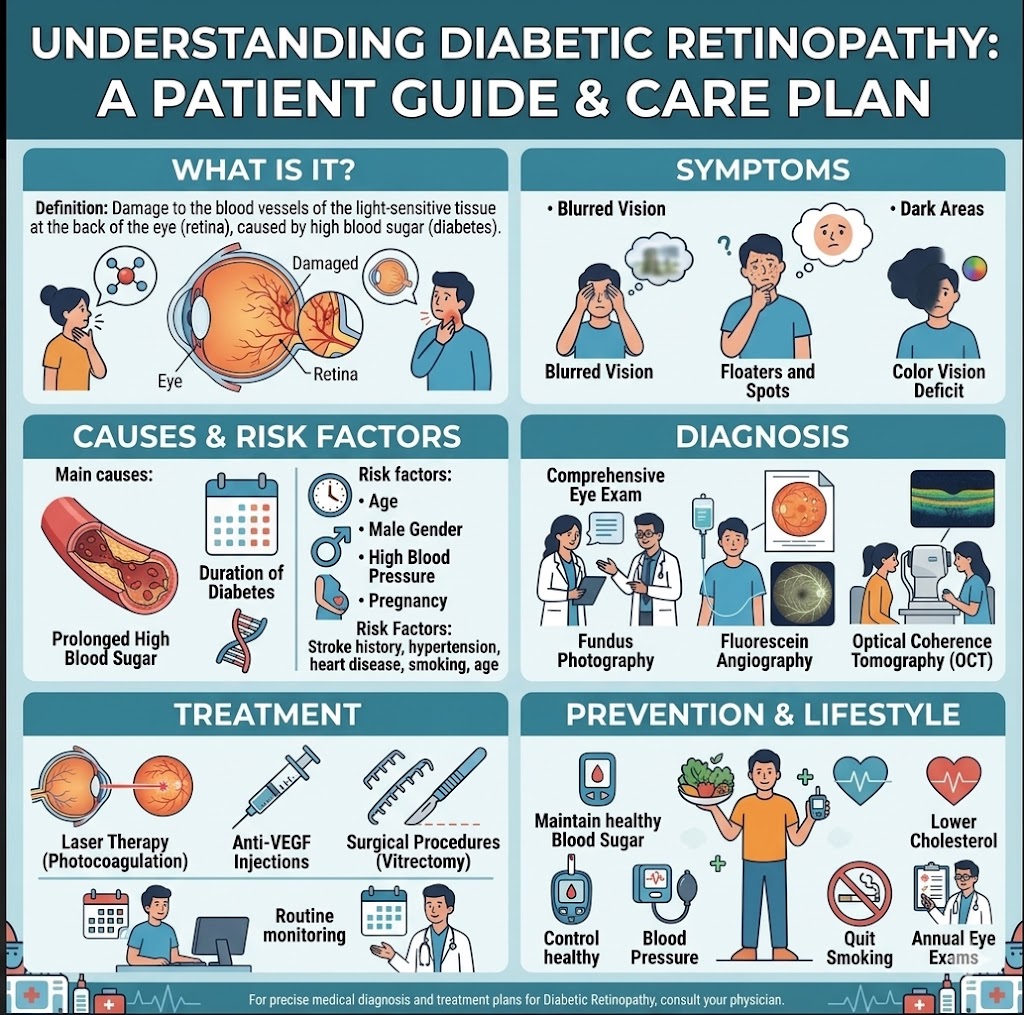
Diabetic retinopathy is an eye complication of diabetes, damaging tiny blood vessels in the retina, the light-sensitive tissue at the back of the eye. This can lead to fluid leakage or blockages. Diabetic macular edema (DME) is a related condition where fluid leaks into the macula, the central retina part for sharp vision, causing swelling. Both affect those with type 1 or 2 diabetes, with risk increasing over time and with uncontrolled blood sugar. Early stages often lack symptoms but can progress to severe vision loss or blindness without treatment. Pregnancy can heighten risk, requiring extra eye exams.
Understanding the Condition
Diabetic Retinopathy and Diabetic Macular Edema: A Guide to Eye Health with Diabetes
Understanding the Condition
Diabetic retinopathy is an eye complication of diabetes, damaging tiny blood vessels in the retina, the light-sensitive tissue at the back of the eye. This can lead to fluid leakage or blockages. Diabetic macular edema (DME) is a related condition where fluid leaks into the macula, the central retina part for sharp vision, causing swelling. Both affect those with type 1 or 2 diabetes, with risk increasing over time and with uncontrolled blood sugar. Early stages often lack symptoms but can progress to severe vision loss or blindness without treatment. Pregnancy can heighten risk, requiring extra eye exams.
Common Symptoms
Often No Symptoms Early On: Vision may seem fine in initial stages.
Blurred or Changing Vision: Vision can become less clear or fluctuate.
Floaters or Dark Spots: Small specks or strings appearing in your sight.
Poor Night Vision: Difficulty seeing well in dim light.
Faded Colors: Colors may appear duller than usual.
Wavy or Bent Straight Lines: Straight objects may look distorted (common in DME).
Feeling of Pressure in Eyes: An unusual sensation behind the eyes.
Partial or Complete Vision Loss: Occurs in advanced stages.
Consultation Guide
Which Specialist to Meet
Regular Dilated Eye Exams: Essential yearly exams, even without symptoms, for early detection. More frequent exams if pregnant or existing damage.
Monitor Vision Changes: Promptly contact your eye care professional for any sudden changes like blurriness, dark spots, or wavy lines.
Consultation Guide
Eye Injections (Anti-VEGF Agents): Medications injected into the eye block a protein that causes leaky blood vessels and fluid accumulation in the macula, reducing swelling and improving vision. (Duration: Often monthly initially, then adjusted based on response; treatment can be ongoing.)
Steroid Injections or Implants: Corticosteroids, injected or delivered by a slow-release implant, reduce inflammation and swelling in the macula. (Duration: Injections may be every few months. Implants can last several months to years.)
Procedures (Laser Therapy)
Diagnostic Procedures
Consult an eye care professional, such as an ophthalmologist (a medical doctor specializing in eye diseases and surgery) or an optometrist (a primary eye care provider). These specialists diagnose and treat diabetes-related eye conditions.
Preparations Before Your Visit
Comprehensive Dilated Eye Exam
Eye drops widen your pupils, allowing the doctor to widely view the retina, optic nerve, and blood vessels to detect damage or leakage.
What to Expect
After drops are applied, wait 15-30 minutes. The doctor uses a special magnifying lens and light to examine your eye's interior. Vision will be blurry and light-sensitive for several hours, making driving unsafe.
Fluorescein Angiography
A special dye injected into your arm highlights retinal blood flow. Rapid photos reveal blockages, leaks, or abnormal blood vessel growth characteristic of these conditions.
What to Expect
Dye is injected into an arm vein, then retinal photos are taken. You might feel a warm flush or metallic taste. Skin and urine will temporarily turn yellowish/orange for about 24 hours.
Optical Coherence Tomography (OCT)
A non-invasive light-wave imaging test creating detailed cross-sectional retinal images. It precisely measures retinal thickness and identifies fluid buildup (edema).
What to Expect
You sit at the machine, chin on a support, looking at a target light. The test is quick, painless, and involves no eye contact.
Treatment Options
Bring a list of all medications. Be prepared for pupil dilation with eye drops, which temporarily blurs vision and increases light sensitivity. Arrange for someone to drive you home after your appointment.
Book a doctor visit near me
Medications
Focal or Grid Laser Treatment (Photocoagulation): A precise laser seals off specific leaky blood vessels in the macula, preventing further leakage and reducing swelling. (Duration: Typically a single session for specific leaks, with potential for follow-up.)
Panretinal Photocoagulation (Scatter Laser Treatment): Wider laser treatment to the peripheral retina reduces the growth of new, abnormal vessels that can bleed and scar, helping preserve central vision. (Duration: May require one or more sessions over weeks or months.)
Surgical Procedures
Vitrectomy: Surgical removal of the eye's vitreous gel, blood, or scar tissue to clear vision and relieve retinal traction. (Duration: A single surgery followed by a recovery period of several weeks.)
Strict Blood Sugar Control: Crucial for managing diabetes and protecting eyes, following medication, diet, and exercise plans.
Manage Blood Pressure and Cholesterol: Controlling these factors helps prevent further damage to blood vessels, including those in the eyes.
Adhere to Treatment Plans: Diligently follow all prescribed treatments and follow-up appointments to safeguard your vision.
Prevention & Long-Term Wellbeing
Prevention
Healthy Lifestyle: A balanced diet, regular physical activity, and avoiding smoking support overall health, improve diabetes management, and promote long-term eye health.
Tags & Topics
Notice an error or need an update?
Help us keep medical information accurate. Report incorrect info or suggest an edit.


