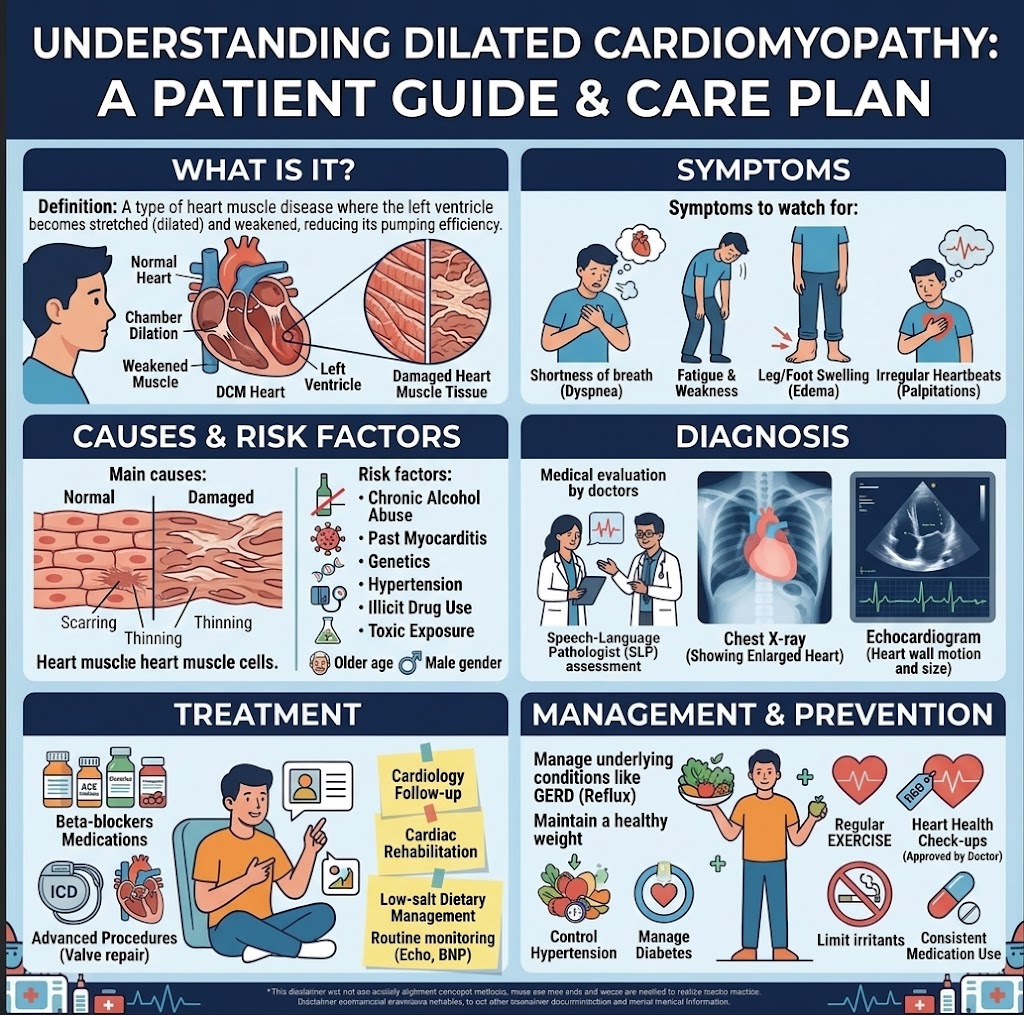
Dilated cardiomyopathy is a serious heart muscle condition where the heart's main pumping chambers, typically starting with the left ventricle, become thin, stretched, and enlarged. This enlargement makes it harder for the heart muscle to effectively pump blood to the rest of the body. If left untreated, this progressive weakening of the heart can lead to heart failure. Symptoms can be subtle or absent in early stages, but the condition can become life-threatening. It is a common cause of heart failure and is observed more frequently in men than women.
Understanding the Condition
Dilated Cardiomyopathy: Understanding a Weakened Heart
Understanding the Condition
Dilated cardiomyopathy is a serious heart muscle condition where the heart's main pumping chambers, typically starting with the left ventricle, become thin, stretched, and enlarged. This enlargement makes it harder for the heart muscle to effectively pump blood to the rest of the body. If left untreated, this progressive weakening of the heart can lead to heart failure. Symptoms can be subtle or absent in early stages, but the condition can become life-threatening. It is a common cause of heart failure and is observed more frequently in men than women.
Common Symptoms
Shortness of breath: Especially during physical activity or when lying flat.
Fatigue: Feeling unusually tired or weak, even after rest.
Swelling (edema): Fluid buildup in the legs, ankles, feet, or abdomen.
Weight gain: Rapid increase in weight due to fluid retention.
Palpitations: A sensation of a pounding, fluttering, or rapid heartbeat.
Dizziness or lightheadedness: Feeling faint or woozy, particularly when standing up quickly.
Chest pain or discomfort: A feeling of pressure, aching, or discomfort in the chest area.
Difficulty sleeping flat: Needing to use extra pillows or sleep in a more upright position to breathe comfortably.
Consultation Guide
Which Specialist to Meet
Your initial visit should be with your primary care provider, who can then refer you to a cardiologist (a heart specialist). If a family history of heart conditions exists, a genetic counselor might also be recommended.
Preparations Before Your Visit
Before your appointment, list all your symptoms, even mild ones, and note when they started. Prepare a complete medical history, including any family history of heart disease, and a list of all medications, vitamins, and supplements you currently take. Write down any questions you have for your doctor.
Book a doctor visit near me
Electrodes for an ECG will be placed on your chest, and a blood pressure cuff on your arm. You will then start walking on a treadmill or riding a stationary bike, with intensity gradually increasing. Your medical team will closely monitor you. You will report any symptoms. The test stops at your target heart rate or if symptoms/changes occur. Active part is 10-15 minutes.
Symptom Monitoring: Be vigilant for any changes in your symptoms, such as increased shortness of breath, swelling, or sudden weight gain, and report them to your healthcare provider promptly.
Cardiac Rehabilitation: Participate in a structured exercise and education program tailored for heart patients, which can improve physical fitness, reduce symptoms, and enhance overall quality of life.
Consultation Guide
You will lie on a motorized table that slides into a large, donut-shaped machine. You must lie still; you may be asked to hold your breath for short periods. A contrast dye might be given through an IV to enhance images, which can cause a warm sensation. The scan takes minutes, though the entire process is longer.
Diagnostic Procedures
Cardiac Catheterization
What to Expect
You will typically receive a local anesthetic to numb the insertion site. The catheter is gently advanced. You might feel pressure but generally no pain. A special dye for X-ray images may be injected, causing a warm sensation. The procedure lasts an hour or more, followed by monitoring.
A common imaging test using a small amount of radiation to create pictures of your heart, lungs, blood vessels, and chest bones. It can reveal the size and shape of your heart, as well as fluid in or around your lungs, which can indicate heart problems.
What to Expect
You will stand or sit in front of an X-ray machine. A technician will position you and ask you to hold your breath for a few seconds while the image is taken. The process is quick, painless, and requires no special preparation.
CT Scan (Computerized Tomography)
An advanced X-ray imaging technique that creates detailed cross-sectional images, or 'slices,' of your heart, blood vessels, and surrounding tissues. These images offer more detail than standard X-rays and help assess the heart's structure and any abnormalities.
What to Expect
Often called an 'echo,' this test uses high-frequency sound waves to create moving pictures of your heart. It shows the size and shape of your heart chambers, how well your heart muscle is pumping, and how blood flows through the heart valves. It's a key tool for diagnosing dilated cardiomyopathy.
What to Expect
You will lie on a table, and a gel will be applied to your chest. A trained technician will then move a handheld device called a transducer over your chest. You might feel slight pressure. The sound waves are painless and create images visible on a monitor. The test usually takes 30-60 minutes, and you may be asked to change positions.
Electrocardiogram (ECG or EKG)
A simple, quick test that records the electrical activity of your heart. It measures the timing and strength of electrical signals as they pass through your heart, helping to detect irregular heartbeats, heart rate issues, and signs of heart strain.
What to Expect
You will lie down, and several sticky patches called electrodes will be placed on your chest, arms, and legs. Wires connect these electrodes to an ECG machine, which records your heart's electrical signals. The test is painless and typically takes only a few minutes.
This involves examining your DNA for specific changes or 'mutations' in your genes that may be linked to certain heart conditions, including inherited forms of dilated cardiomyopathy. It can help assess risk for family members.
What to Expect
A small sample of your blood or a swab from inside your cheek will be collected. This sample is then sent to a laboratory for analysis. The results can take several weeks, followed by a discussion with your doctor or a genetic counselor to understand the implications of the findings.
A stress test evaluates how your heart performs under physical strain. It typically involves exercising on a treadmill or stationary bicycle while your heart rate, blood pressure, and electrical activity (ECG) are monitored. If you cannot exercise, medication can be given to simulate the effects of exercise on your heart.
What to Expect
Treatment Options
This procedure involves inserting a thin, flexible tube (catheter) into a blood vessel, usually in the arm or groin, and guiding it to the heart. It provides detailed information about the heart's pumping ability, valve function, and blood vessels. It can measure pressures within the heart chambers and sometimes allow for tissue samples or even treatments.
Medications
Heart-Strengthening Medications: Various medications are prescribed to improve the heart's pumping efficiency, manage fluid retention, control heart rhythm, reduce strain on the heart, and prevent blood clots. These typically include drugs that help relax blood vessels, reduce excess fluid, slow the heart rate, or thin the blood. (Duration: Generally lifelong, requiring regular monitoring and adjustments by your doctor.)
Pacemaker: A small, battery-powered device surgically placed under the skin near the collarbone, with wires leading to the heart. It sends electrical pulses to keep the heart beating at a regular and appropriate pace, preventing dangerously slow heartbeats. (Duration: Lifelong. The device's battery typically needs replacement every 5 to 10 years through a minor procedure.)
Implantable Cardioverter-Defibrillator (ICD): Similar to a pacemaker, an ICD is a small device implanted in the chest. It constantly monitors your heart rhythm and delivers a controlled electrical shock if it detects dangerously fast or irregular heartbeats, restoring a normal rhythm. (Duration: Lifelong. Like pacemakers, the battery usually needs replacement every 5 to 10 years.)
Ventricular Assist Device (VAD) / Left Ventricular Assist Device (LVAD): A mechanical pump surgically implanted, usually in the left lower chamber of the heart, to help pump blood from the heart to the rest of the body. A VAD is used for severely weakened hearts, either as a temporary measure while awaiting a heart transplant or as a long-term solution. (Duration: Can be temporary (months to years) as a bridge to transplant, or permanent (lifelong) for those not eligible for transplant.)
Surgical Procedures
Heart Transplant: A major operation where a severely diseased or failing heart is replaced with a healthy donor heart. This is usually considered for advanced cases of dilated cardiomyopathy when other treatments have not been successful. (Duration: Lifelong, requiring ongoing medical care and immunosuppressant medications to prevent rejection of the new heart.)
Adhere to Treatment Plan: Take all prescribed medications exactly as directed and attend all follow-up appointments with your cardiologist to monitor your condition and adjust treatments as needed.
Prevention & Long-Term Wellbeing
Prevention
Manage Health Conditions: Effectively treat and manage conditions like high blood pressure, diabetes, and high cholesterol, which can contribute to heart disease.
Healthy Lifestyle Choices: Adopt a balanced diet, engage in regular physical activity as advised by your doctor, limit alcohol intake, and completely avoid smoking and recreational drug use.
Regular Medical Check-ups: Ensure you have routine doctor visits to monitor your overall health and detect any potential heart issues early.
Genetic Counseling: If dilated cardiomyopathy runs in your family, discuss this with your doctor and consider genetic counseling to understand your risk and potential preventive strategies.
Long-Term Monitoring and Management
Dietary Modifications: Follow a low-sodium diet to help manage fluid retention and reduce strain on your heart. Discuss fluid intake guidelines with your doctor.
Stress Management: Implement stress-reducing techniques like mindfulness, yoga, or meditation, as stress can impact heart health.
Tags & Topics
Notice an error or need an update?
Help us keep medical information accurate. Report incorrect info or suggest an edit.

