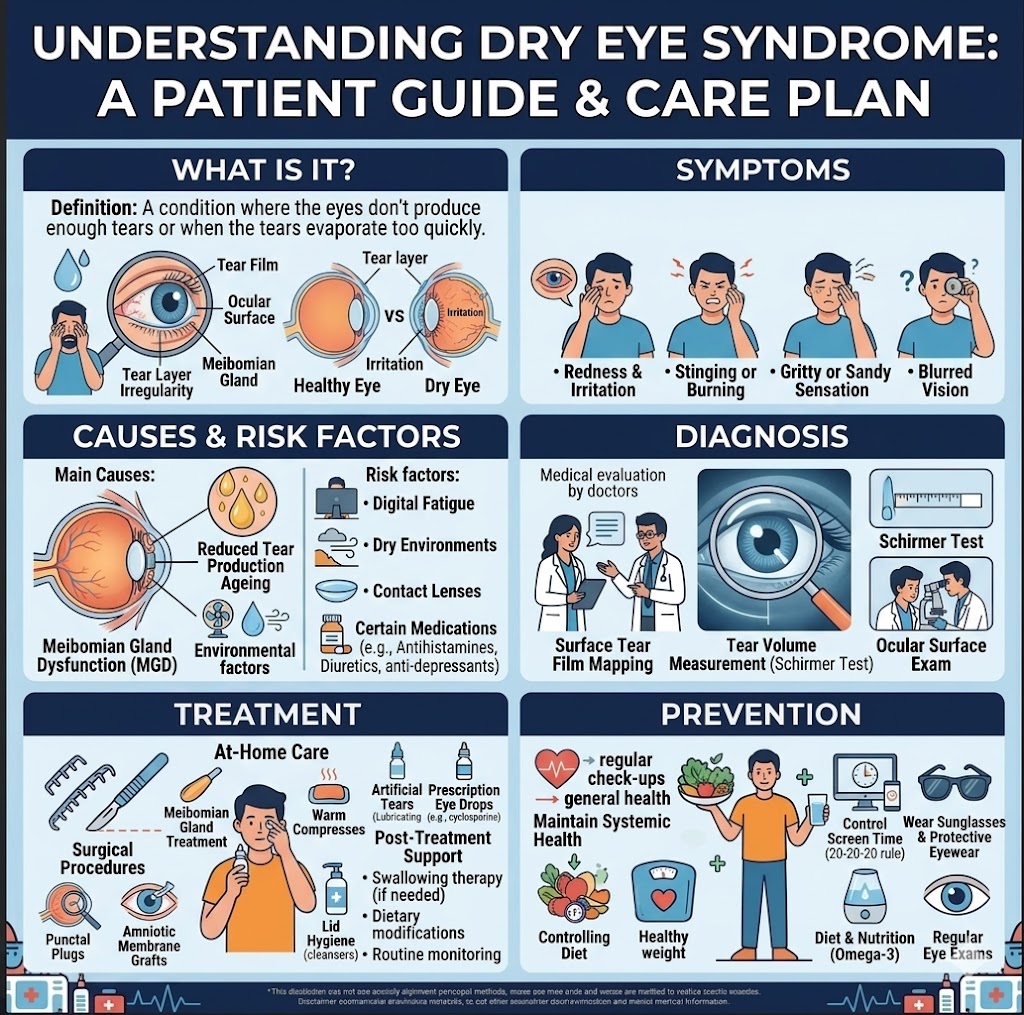
Dry eye is a common condition where your eyes don't get enough lubrication from your tears. This happens either because your eyes don't produce enough tears, or the tears you do produce are of poor quality. When tears are inadequate or unstable, it can lead to inflammation and damage on the eye's surface, causing discomfort. This condition can flare up in specific environments, such as on airplanes, in air-conditioned rooms, during prolonged screen time, or while cycling.
Understanding the Condition
Dry Eyes: Understanding and Managing the Condition
Understanding the Condition
Common Symptoms
Stinging, Burning, or Scratchy Sensation: A feeling as if something is in your eye, or a persistent burning or stinging discomfort.
Stringy Mucus Around Eyes: Small strands of mucus accumulating in or around your eyes.
Sensitivity to Light: Increased discomfort or pain when exposed to bright light.
Redness of the Eyes: Visibly red or bloodshot eyes.
Feeling of Having Something in Your Eyes: A persistent sensation of grittiness or a foreign body.
Difficulty Wearing Contact Lenses: Increased discomfort or inability to tolerate contact lenses.
Watery Eyes (Paradoxical Tearing): Sometimes, severe dryness can paradoxically trigger excessive tear production as a reflex, but these tears often lack the necessary components to properly lubricate the eye.
Blurred Vision or Eye Fatigue: Vision that temporarily blurs, especially after reading, or a general feeling of tiredness in the eyes.
Consultation Guide
Which Specialist to Meet
If you experience persistent dry eye symptoms such as redness, irritation, fatigue, or pain, you should consult a general healthcare provider first. They can offer initial guidance or refer you to an eye care specialist like an ophthalmologist (a medical doctor specializing in eye care and surgery) or an optometrist (a healthcare professional who provides primary eye care, including vision testing and diagnosis of eye diseases).
Preparations Before Your Visit
Before your appointment, it's helpful to write down all your symptoms, including when they started, what makes them better or worse, and how they affect your daily life. Also, list any medications you're taking (both prescription and over-the-counter), any known allergies, and any medical conditions you have. Prepare a list of questions for your doctor to ensure all your concerns are addressed.
Book a doctor visit near me
Over-the-Counter Lubricating Eye Drops (Artificial Tears): These drops help add moisture to your eyes. They are available without a prescription and come in various formulations (with or without preservatives). You may need to try several brands to find one that works best. Preservative-free drops are generally recommended for frequent use. (Duration: Used as needed, often indefinitely to manage symptoms.)
Prescription Eye Drops to Reduce Inflammation: Your doctor may prescribe anti-inflammatory eye drops to reduce the inflammation on your eye's surface that contributes to dry eye symptoms. (Duration: Often used long-term, as prescribed by your doctor.)
Omega-3 Fatty Acid Supplements: Some studies suggest that dietary supplements containing omega-3 fatty acids may help improve dry eye symptoms by promoting healthier tear film components. Consult your doctor before starting any supplements.
Consultation Guide
Dry eye is a common condition where your eyes don't get enough lubrication from your tears. This happens either because your eyes don't produce enough tears, or the tears you do produce are of poor quality. When tears are inadequate or unstable, it can lead to inflammation and damage on the eye's surface, causing discomfort. This condition can flare up in specific environments, such as on airplanes, in air-conditioned rooms, during prolonged screen time, or while cycling.
Lubricating Gels and Ointments: Thicker than drops, these provide longer-lasting relief, especially overnight. They can cause temporary blurred vision. (Duration: Used as needed, often at bedtime due to temporary blurred vision.)
Warm Compresses and Eyelid Hygiene: Applying a warm compress to your eyelids and gently cleaning them can help improve the function of oil glands in your eyelids, which contribute to tear quality. (Duration: Daily, or as recommended by your doctor.)
Diagnostic Procedures
Comprehensive Eye Examination
This involves a general check of your eye health, including a visual acuity test and an examination of the external parts of your eyes and eyelids.
What to Expect
You'll sit in a chair, and your vision will be checked using an eye chart. The doctor will also visually inspect your eyelids and the front of your eye.
Slit-Lamp Examination
Using a special microscope with a bright light, the doctor closely examines the surface of your eye, including the cornea (the clear front part), conjunctiva (the membrane lining the inside of your eyelids and covering the white part of your eye), and eyelids.
What to Expect
You will place your chin on a rest and your forehead against a band. The doctor will shine a bright light into your eye and look through the microscope. This is painless, though the light may be bright.
This test measures how many tears your eyes produce. Small strips of filter paper are placed inside your lower eyelids for several minutes.
What to Expect
The doctor will gently place a small, thin strip of paper just inside the lower lid of each eye. You'll keep your eyes closed for about five minutes while the paper absorbs any tears produced. You might feel a slight tickle, but it's generally not painful. The doctor then measures how much moisture has soaked the paper.
Tear Film Breakup Time (TBUT)
This test evaluates the stability of your tear film. A special dye is applied to your eye, and the doctor observes how quickly the tear film on your eye's surface breaks apart between blinks.
What to Expect
A small amount of a yellow dye, called fluorescein, will be applied to your eye, either with a drop or a soft paper strip. You will then blink normally. The doctor will use the slit lamp with a blue filter to watch your tear film after a blink, noting how many seconds it takes for dry spots to appear on your cornea. This helps assess tear quality.
Ocular Surface Staining
Specific dyes (like fluorescein or lissamine green) are used to highlight any damage or dry spots on the surface cells of your eye, indicating the severity of dry eye.
What to Expect
Similar to the TBUT, a small amount of dye is applied to your eye. The doctor then examines your eye under a blue or white light to look for any stained areas on the cornea or conjunctiva, which indicates areas of dryness or damage. It's a quick and painless procedure.
Treatment Options
Prescription Medications
Tear-Stimulating Medications: Certain oral or topical medications can help stimulate tear production. (Duration: As prescribed by your doctor.)
Punctal Plugs: Tiny, temporary or permanent silicone plugs are inserted into the tear ducts (small openings in the inner corner of your eyelids) to block tear drainage, thereby conserving your natural tears and any artificial tears you use. (Duration: Temporary plugs dissolve over time; permanent plugs can be removed if needed.)
Regular Eye Check-ups: Maintain regular visits with your eye care professional to monitor your condition and adjust your treatment plan as needed.
Prevention & Long-Term Wellbeing
Home Remedies and Lifestyle Changes
Prevention and Long-Term Management
Avoid Airflow Directly into Your Eyes: Direct exposure to hair dryers, car heaters, air conditioners, or fans can quickly dry out eyes. Try to minimize this exposure.
Add Moisture to the Air: Using a humidifier in your home or office, especially during dry seasons or in air-conditioned environments, can help reduce tear evaporation.
Take Eye Breaks During Screen Time: When reading or doing tasks that require visual concentration (like working on a computer), blink frequently or follow the '20-20-20 rule': every 20 minutes, look at something 20 feet away for 20 seconds to rest your eyes and encourage blinking.
Wear Wraparound Sunglasses: When outdoors, especially on windy days, wear sunglasses that wrap around the sides of your face to protect your eyes from wind and dry air.
Stay Hydrated: Drinking plenty of water throughout the day can contribute to overall body hydration, which may positively impact tear production.
Tags & Topics
Notice an error or need an update?
Help us keep medical information accurate. Report incorrect info or suggest an edit.


