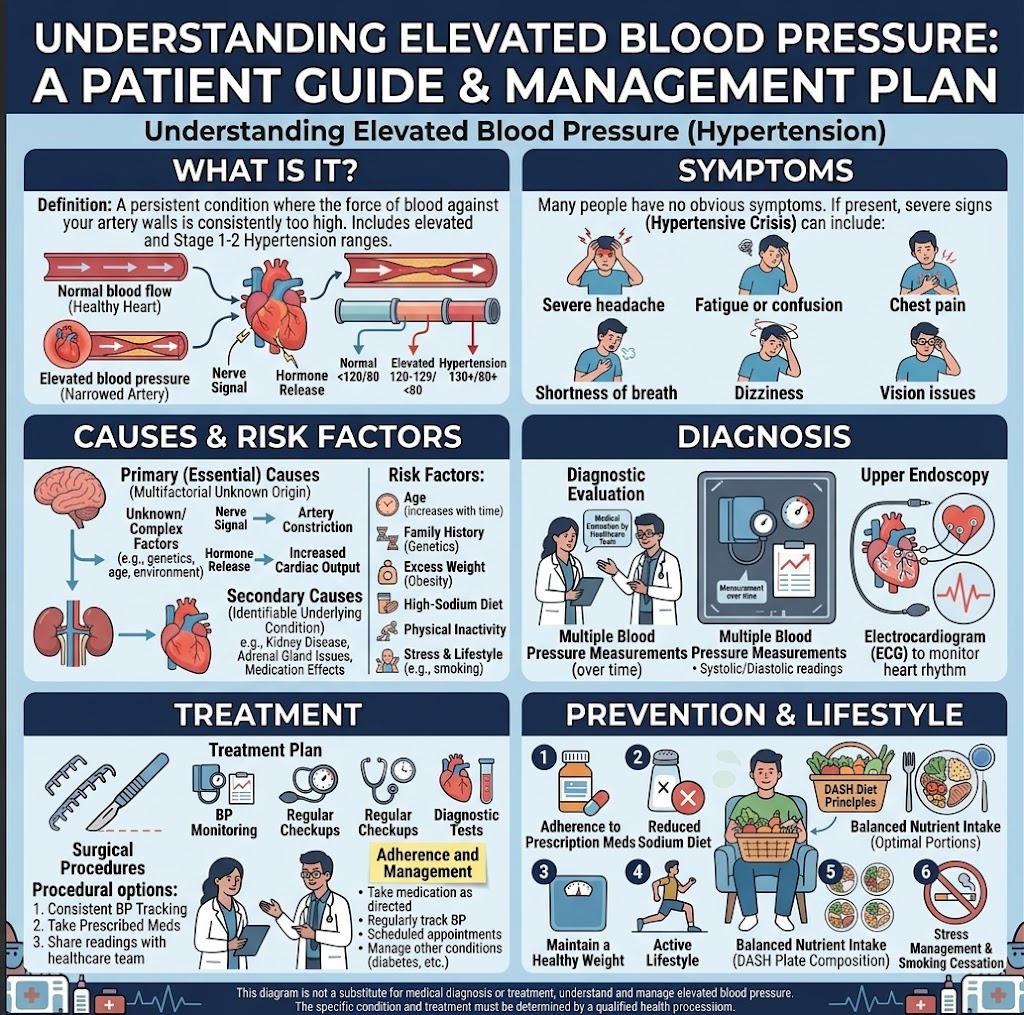
Elevated blood pressure means your blood pressure readings are slightly higher than what is considered ideal, but not yet high enough to be diagnosed as high blood pressure (hypertension). Blood pressure is measured in millimeters of mercury (mm Hg) and categorized into stages. While elevated blood pressure isn't a disease itself, it's a critical warning sign. Without proper management, it often progresses to high blood pressure over time. Uncontrolled elevated blood pressure and eventual hypertension significantly increase your risk of serious health issues like heart attacks, strokes, and even changes in memory, thinking, or judgment (cognitive decline). Regular monitoring and healthy lifestyle choices are crucial to prevent it from worsening.
Understanding the Condition
Elevated Blood Pressure: Understanding and Management
Understanding the Condition
Elevated blood pressure means your blood pressure readings are slightly higher than what is considered ideal, but not yet high enough to be diagnosed as high blood pressure (hypertension). Blood pressure is measured in millimeters of mercury (mm Hg) and categorized into stages. While elevated blood pressure isn't a disease itself, it's a critical warning sign. Without proper management, it often progresses to high blood pressure over time. Uncontrolled elevated blood pressure and eventual hypertension significantly increase your risk of serious health issues like heart attacks, strokes, and even changes in memory, thinking, or judgment (cognitive decline). Regular monitoring and healthy lifestyle choices are crucial to prevent it from worsening.
Common Symptoms
Lack of Symptoms: Elevated blood pressure typically causes no noticeable symptoms. It is often referred to as a 'silent' condition because you won't feel it. The only way to detect it is by having your blood pressure measured.
Consultation Guide
Which Specialist to Meet
Symptom Awareness and Reporting: Although elevated blood pressure itself has no symptoms, be vigilant for any unusual changes in your health and report them to your doctor.
Consultation Guide
You should first consult your primary care physician. If your blood pressure remains elevated despite lifestyle changes, or if you have other risk factors, your doctor may refer you to a cardiologist (a heart specialist).
Preparations Before Your Visit
Before your blood pressure check, avoid caffeine, alcohol, and strenuous exercise for at least 30 minutes. Wear loose-fitting clothing that allows the cuff to be placed directly on your arm. Arrive a few minutes early to relax before the measurement.
Book a doctor visit near me
Diagnostic Procedures
A blood pressure test measures the force of your blood against the walls of your arteries as your heart pumps. It's a standard part of routine health check-ups and is essential for screening for elevated or high blood pressure.
What to Expect
During the test, a healthcare professional will wrap an inflatable cuff around your upper arm. The cuff will inflate, briefly squeezing your arm tightly, which some people find slightly uncomfortable but is not painful. This sensation lasts only a few seconds. The device then slowly deflates, measuring two numbers: systolic pressure (the top number, when your heart beats) and diastolic pressure (the bottom number, when your heart rests between beats). The entire process is quick and simple. You can also monitor your blood pressure at home using an automatic electronic device. It's recommended to have your home monitor checked annually by a healthcare professional for accuracy and to keep a record of your readings.
Treatment Options
Medications
Antihypertensive Medications: While lifestyle changes are the primary treatment for elevated blood pressure, if these measures are insufficient or if the blood pressure progresses towards hypertension, your doctor may consider prescribing medication. These medications work in various ways, such as relaxing blood vessels or helping the body remove excess fluid, to lower blood pressure. The specific type and dosage will be tailored to your individual needs and other health conditions. (Duration: Typically long-term, often lifelong, under medical supervision.)
Consistent Medical Follow-ups: Attending all scheduled appointments with your healthcare provider to review your blood pressure readings, adjust lifestyle plans, and discuss any necessary medication changes.
Prevention & Long-Term Wellbeing
Lifestyle Modifications (Home Remedies)
Healthy Diet: Adopting a balanced diet rich in fruits, vegetables, whole grains, and lean proteins, while limiting saturated and trans fats, cholesterol, sodium, and added sugars. The DASH (Dietary Approaches to Stop Hypertension) diet is often recommended. (Duration: Ongoing, for long-term health.)
Regular Physical Activity: Engaging in at least 150 minutes of moderate-intensity aerobic activity or 75 minutes of vigorous-intensity activity per week, along with muscle-strengthening activities at least twice a week. (Duration: Ongoing, as a lifelong habit.)
Weight Management: Achieving and maintaining a healthy weight. Losing even a small amount of weight can significantly lower blood pressure. (Duration: Ongoing, with a focus on sustainable changes.)
Stress Reduction: Practicing stress-reducing techniques such as meditation, yoga, deep breathing exercises, or spending time in nature. (Duration: Ongoing, integrated into daily life.)
Limiting Alcohol and Avoiding Tobacco: Reducing alcohol intake to moderate levels (up to one drink per day for women, up to two for men) and completely avoiding all tobacco products. (Duration: Ongoing, for overall cardiovascular health.)
Long-Term Monitoring
Home Blood Pressure Monitoring: Using a home blood pressure monitor as recommended by your healthcare professional to track your readings between doctor visits. This helps your care team assess the effectiveness of your management plan.
Tags & Topics
Notice an error or need an update?
Help us keep medical information accurate. Report incorrect info or suggest an edit.

