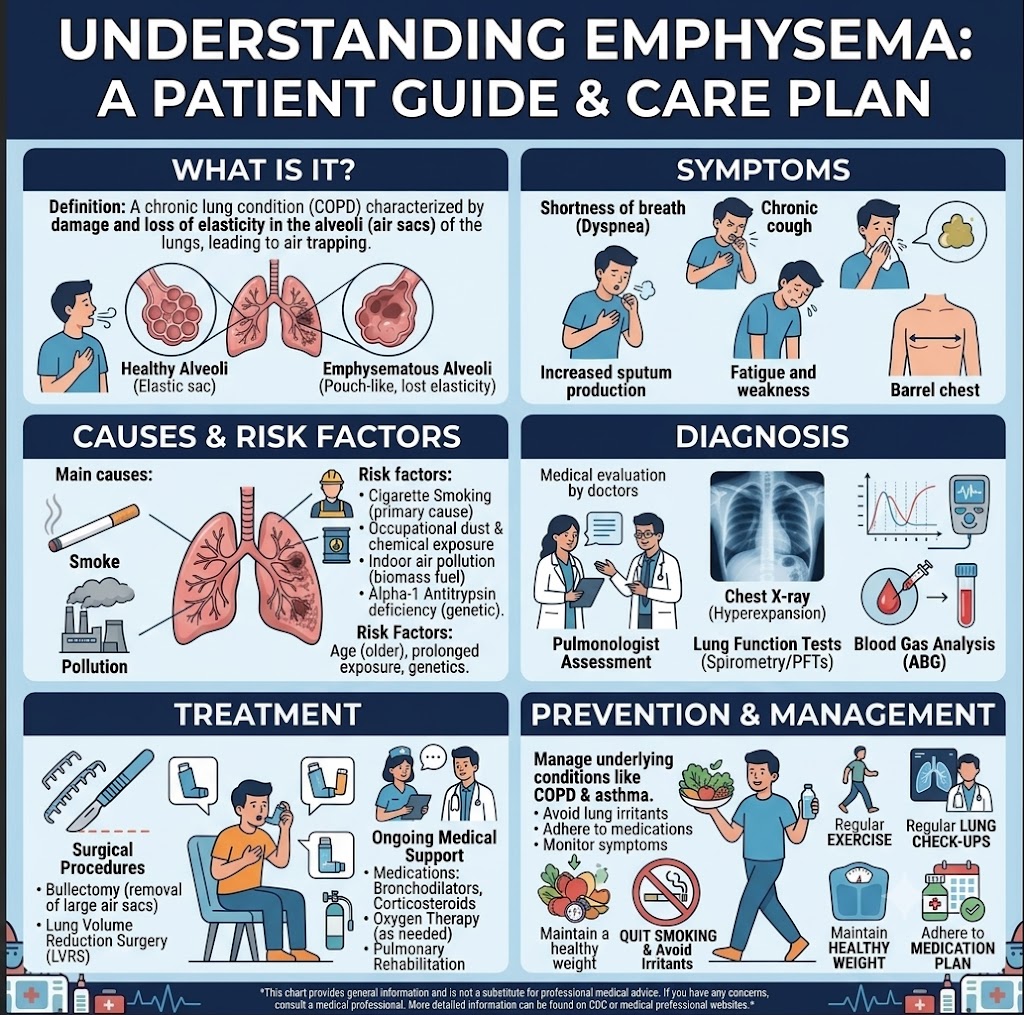
Emphysema is a chronic lung disease causing shortness of breath. It damages the tiny, stretchy air sacs (alveoli) in your lungs that normally help push out old air and bring in fresh oxygen. When these sac walls weaken and break, they form larger, less efficient air spaces. This makes it hard to exhale stale air fully, leaving less room for new air. The result is persistent breathlessness, worsening over time and with activity. A major form of Chronic Obstructive Pulmonary Disease (COPD), emphysema often occurs with chronic bronchitis. Treatment can manage symptoms and slow progression, but existing damage cannot be reversed.
Understanding the Condition
Emphysema: Understanding This Lung Condition
Understanding the Condition
Emphysema is a chronic lung disease causing shortness of breath. It damages the tiny, stretchy air sacs (alveoli) in your lungs that normally help push out old air and bring in fresh oxygen. When these sac walls weaken and break, they form larger, less efficient air spaces. This makes it hard to exhale stale air fully, leaving less room for new air. The result is persistent breathlessness, worsening over time and with activity. A major form of Chronic Obstructive Pulmonary Disease (COPD), emphysema often occurs with chronic bronchitis. Treatment can manage symptoms and slow progression, but existing damage cannot be reversed.
Common Symptoms
Shortness of Breath: The main symptom, especially during physical activity. Can progress to breathlessness even at rest.
Wheezing: A whistling or squeaking sound when you breathe out.
Chest Tightness: A feeling of pressure or heaviness in the chest.
Fatigue: Unusual tiredness, often due to increased breathing effort and reduced oxygen.
Weight Loss and Ankle Swelling: May occur in advanced stages.
Acute Exacerbations (Flare-Ups): Sudden worsening of symptoms for days or weeks, triggered by infections or pollution. Requires prompt medical care to prevent serious complications.
Consultation Guide
Which Specialist to Meet
List all symptoms (onset, severity, triggers), current medications, medical history (especially smoking/irritant exposure), and questions for your doctor.
Book a doctor visit near me
Antibiotics: Treat bacterial lung infections that worsen symptoms. (Duration: Short-term (days to weeks) during infection.)
Oxygen Therapy: Supplemental oxygen for low blood oxygen levels. (Duration: Daily, long-term, as medically needed.)
Pulmonary Rehabilitation: Program with exercise, breathing techniques, education, and support. (Duration: Weeks to months, often with ongoing components.)
Monitor Symptoms: Watch for worsening symptoms or flare-ups; contact your doctor promptly.
Consultation Guide
Breathe into a mouthpiece forcefully after a deep breath. Repeated several times. May cause brief dizziness.
Images of your heart, lungs, and chest bones, detecting lung damage or related issues.
Checks for a genetic deficiency of the AAT protein, a rare cause of emphysema.
Do Not Smoke: Avoid all tobacco products; smoking is the leading cause.
Avoid Secondhand Smoke: Stay away from areas with active smoking.
Protect Lungs at Work: Use masks and ventilation if exposed to fumes/dust.
Reduce Air Pollution Exposure: Minimize breathing indoor/outdoor pollutants like smog.
Get Vaccinated: Receive annual flu and pneumonia vaccines to prevent infections.
Long-Term Monitoring and Management
Diagnostic Procedures
Spirometry (Lung Function Test)
Measures how much air you breathe in/out and how quickly, diagnosing emphysema and monitoring progression.
What to Expect
What to Expect
Stand/sit against a plate, hold breath briefly while images are taken. Quick and painless.
CT Scan (Computerized Tomography Scan)
Detailed cross-sectional images of your lungs, showing the extent of emphysema damage more clearly than X-rays.
What to Expect
Lie on a table that slides into a large scanner. May need to hold breath. Can involve IV contrast dye (warm sensation).
Alpha-1-Antitrypsin (AAT) Blood Test
What to Expect
A small blood sample drawn from a vein, typically in your arm. Brief, minor discomfort.
Treatment Options
Medications
Bronchodilators: Inhaled medications that relax airways to ease breathing. (Duration: Daily or as needed, long-term.)
Inhaled Steroids: Reduce airway inflammation, preventing flare-ups. (Duration: Daily, long-term.)
Combination Inhalers: Combine bronchodilators and inhaled steroids. (Duration: Daily, long-term.)
Lung Volume Reduction Surgery: Removes damaged lung tissue to improve function of healthier areas. (Duration: Single procedure, followed by significant recovery.)
Lung Transplant: Replaces diseased lung(s) with healthy donor lung(s) for very severe cases. (Duration: Single procedure, followed by lifelong anti-rejection medication.)
Adhere to Treatment: Consistently take medications and follow medical advice.
Regular Check-ups: Attend follow-up appointments to monitor lung function and adjust treatment.
Maintain Activity: Stay physically active within limits, as guided by your healthcare team.
Address Mental Health: Seek support for anxiety or depression related to managing a chronic condition.
Prevention & Long-Term Wellbeing
Start with your primary care physician, who may refer you to a pulmonologist (lung specialist). Respiratory therapists or dietitians might also be part of your care.
Preparations Before Your Visit
Lifestyle Changes & Home Remedies
Quitting Smoking: The most vital step. Utilize support programs and nicotine replacement. (Duration: Lifelong commitment.)
Avoiding Lung Irritants: Stay away from secondhand smoke, chemical fumes, dust, and air pollution. (Duration: Lifelong practice.)
Regular Exercise: Doctor-approved physical activity helps strengthen breathing muscles and endurance. (Duration: Ongoing.)
Healthy Diet and Hydration: Nutritious food and fluids support health and thin mucus. (Duration: Lifelong.)
Prevention
Tags & Topics
Notice an error or need an update?
Help us keep medical information accurate. Report incorrect info or suggest an edit.


