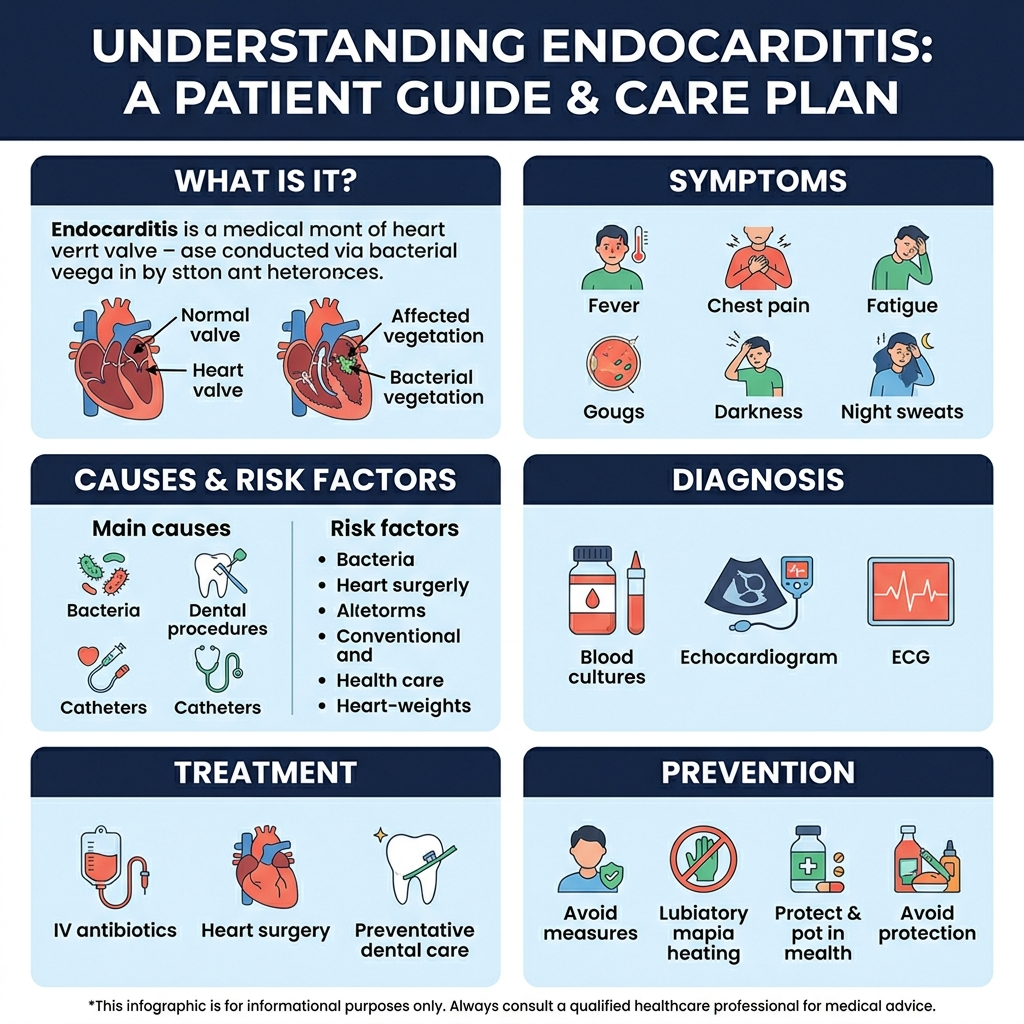
Endocarditis is a serious and potentially life-threatening condition where the inner lining of your heart chambers and valves, called the endocardium, becomes inflamed. This inflammation is almost always caused by an infection. Germs, such as bacteria or fungi, enter your bloodstream and then travel to your heart. Once there, they can attach to areas of the heart that are already damaged, such as existing faulty heart valves, artificial valves, or other heart defects. If not treated quickly, endocarditis can severely damage or destroy your heart valves. Treatment typically involves strong medications and sometimes surgery.
Understanding the Condition
Endocarditis: Understanding Heart Infection
Understanding the Condition
Common Symptoms
Common Symptoms
Less Common Symptoms: Unexplained weight loss, blood in your urine, tenderness in your spleen (an organ that filters blood), red spots on the palms of your hands or soles of your feet (Janeway lesions), or tender red spots under your fingernails or on your fingertips/toes (Osler's nodes).
Before your visit, prepare a list of your symptoms, including when they started and how they've changed. Share your complete medical history, including any existing heart conditions, past infections, or recent dental or surgical procedures. Also, list all medications you are currently taking. Write down any questions you have for your doctor.
Book a doctor visit near me
Vigilance for Symptoms: Be aware of endocarditis symptoms and report any new or returning signs to your doctor immediately.
Manage Underlying Conditions: Effectively manage any existing heart conditions, diabetes, or other health issues that might increase your risk for endocarditis.
MedicAlert Information: Consider wearing a medical alert bracelet or carrying a card if you have a history of endocarditis or an artificial heart valve, to inform medical professionals in an emergency.
Consultation Guide
Endocarditis is a serious and potentially life-threatening condition where the inner lining of your heart chambers and valves, called the endocardium, becomes inflamed. This inflammation is almost always caused by an infection. Germs, such as bacteria or fungi, enter your bloodstream and then travel to your heart. Once there, they can attach to areas of the heart that are already damaged, such as existing faulty heart valves, artificial valves, or other heart defects. If not treated quickly, endocarditis can severely damage or destroy your heart valves. Treatment typically involves strong medications and sometimes surgery.
Diagnostic Procedures
Signs of Worsening Infection: If you've been diagnosed with endocarditis and experience increasing shortness of breath, more swelling in your legs or belly, or significant weakness, inform your doctor immediately as these could mean the infection is progressing.
Consultation Guide
Which Specialist to Meet
You should first see your primary care physician. They will likely refer you to a cardiologist (a heart specialist) and possibly an infectious disease specialist. A cardiac surgeon may also be consulted if surgical intervention is considered.
Preparations Before Your Visit
Essential for diagnosis, revealing infection signs and, most importantly, identifying the specific bacteria or fungi (via blood cultures) to guide targeted treatment.
What to Expect
A healthcare professional will draw blood, usually from your arm, with a small needle. You might feel a brief pinch. Samples are then sent to a lab for analysis.
Echocardiogram (Cardiac Ultrasound)
Uses sound waves to create moving images of your heart, crucial for visualizing infectious growths (vegetations) on valves, assessing valve damage, and checking heart function.
What to Expect
You'll lie down while a technician applies gel to your chest and moves a handheld device (transducer). It's painless, takes 30-60 minutes, and may require brief position changes or breath holds.
Electrocardiogram (ECG or EKG)
Records the heart's electrical signals to check its rhythm and rate. It can detect irregular heartbeats or signs of heart strain.
What to Expect
Small, sticky patches (electrodes) are placed on your chest and sometimes limbs, connected to a machine. This test is quick, painless, and usually takes only a few minutes.
Provides images of your heart and lungs. While not directly diagnosing endocarditis, it helps identify complications like fluid in the lungs or heart enlargement resulting from valve damage.
What to Expect
You'll stand or sit briefly, holding your breath for a few seconds while the X-ray is taken. The procedure is quick and painless.
CT Scan (Computed Tomography Scan)
Uses X-rays to create detailed cross-sectional images of the heart and surrounding areas. It helps assess severe valve damage, locate abscesses, or see if the infection has spread.
What to Expect
You lie on a table that slides into a large, donut-shaped machine. You must remain still, and may receive a contrast dye injection to enhance images. It's painless but can be noisy, lasting 15-60 minutes.
Treatment Options
Medications
Antibiotic or Antifungal Therapy: Strong intravenous (IV) medications are administered to target and kill the specific germs identified as causing the infection. This is the primary treatment for endocarditis. (Duration: Typically 2 to 6 weeks, often starting in a hospital and potentially continuing at home with regular monitoring.)
Surgical Procedures
Heart Valve Repair or Replacement Surgery: Performed if the infection severely damages heart valves, if the infection is resistant to medication, or if large vegetations pose a risk of breaking off. Surgeons either repair the damaged heart valve(s) or replace them with artificial ones. (Duration: A single major surgical procedure, followed by several weeks to months of recovery.)
Rest and Nutrition: Includes adequate rest, proper nutrition, and pain management to support the body's recovery and aid in fighting the infection. (Duration: Ongoing throughout the treatment period and during recovery.)
Prevention & Long-Term Wellbeing
Abscess Drainage: Surgical procedure to drain pockets of pus (abscesses) that may form within or near the heart due to the infection. (Duration: A single surgical procedure, with recovery time varying based on complexity.)
Prevention Strategies
Maintain Good Oral Hygiene: Regularly brush and floss your teeth and see your dentist for routine check-ups. Poor dental health can allow bacteria to enter the bloodstream.
Avoid IV Drug Use: If you inject drugs, seek help and advice, as this significantly increases the risk of germs entering your bloodstream and causing endocarditis.
Discuss Preventative Antibiotics: If you have a known heart defect, artificial heart valve, or a history of endocarditis, discuss with your doctor whether you need preventative antibiotics before certain dental or surgical procedures.
Promptly Treat Infections: Seek medical attention for any suspected infections, especially skin infections or persistent fevers, to prevent germs from spreading to your heart.
Long-Term Monitoring and Management
Regular Medical Check-ups: If you have a history of endocarditis or underlying heart conditions, regular follow-up appointments with your cardiologist are essential to monitor your heart health and detect any recurrence or complications early.
Tags & Topics
Notice an error or need an update?
Help us keep medical information accurate. Report incorrect info or suggest an edit.

