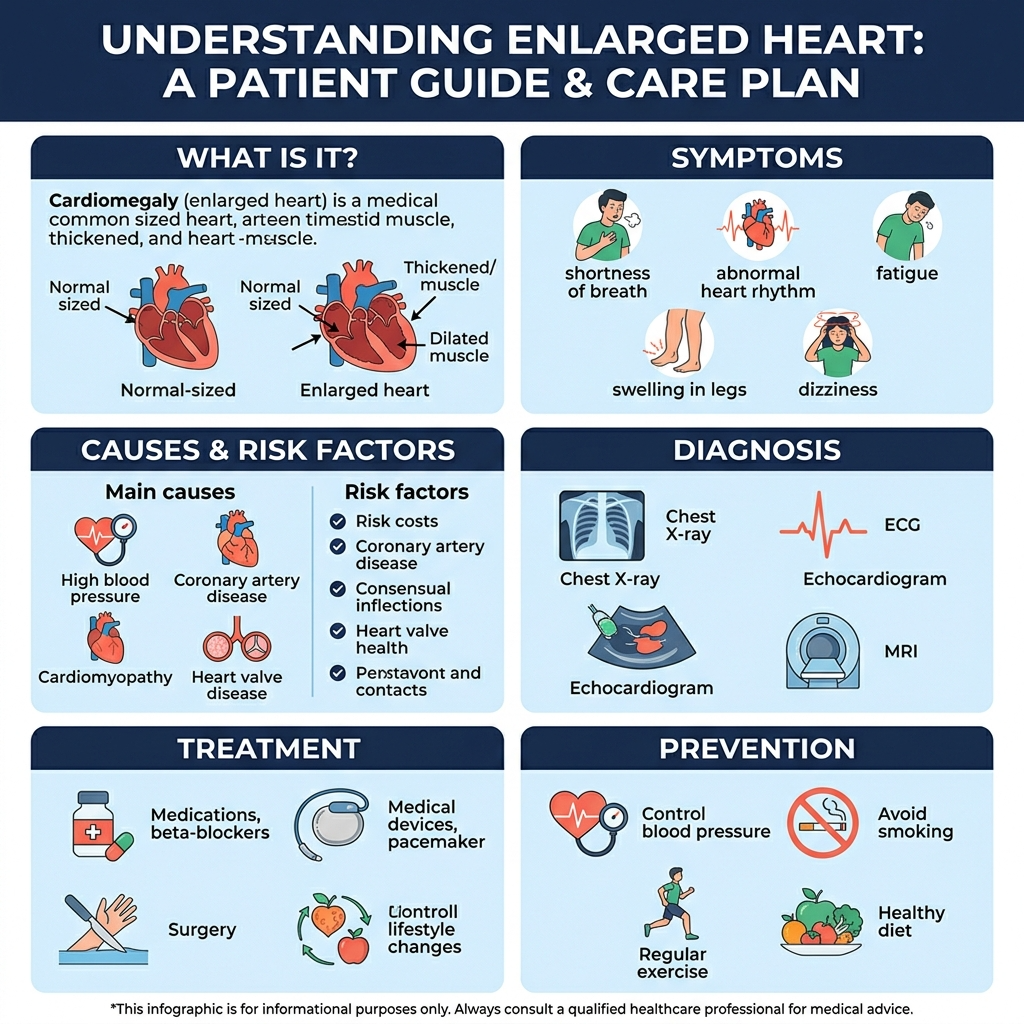
An enlarged heart, medically known as cardiomegaly, is not a disease in itself but a sign of another underlying health issue. It means your heart muscle has either stretched, thickened, or its chambers have expanded. This forces the heart to work harder to pump blood effectively to the rest of your body. An enlarged heart can be temporary, such as during pregnancy, or a permanent condition resulting from heart damage or disease. Early detection is crucial for effective treatment.
Understanding the Condition
Enlarged Heart: Understanding Cardiomegaly
Understanding the Condition
Common Symptoms
Shortness of Breath: Feeling breathless, especially during physical activity or when lying flat.
Swelling: Noticeable swelling in your legs, ankles, and feet due to fluid retention.
Fatigue: Persistent tiredness or lack of energy.
Heart Palpitations: A feeling of a pounding, fluttering, or rapid heartbeat.
Chest Pain: Discomfort or pain in the chest area.
Dizziness or Lightheadedness: Feeling unsteady or faint, sometimes leading to fainting.
Cough: A persistent cough, especially when lying down, sometimes with frothy mucus.
Consultation Guide
Which Specialist to Meet
Before your visit, gather information about your symptoms, including when they started and how often they occur. List all medications you are currently taking, including over-the-counter drugs and supplements. Be ready to discuss your personal and family medical history, especially any history of heart disease. Prepare a list of questions you have for your doctor to ensure all your concerns are addressed.
Book a doctor visit near me
Symptom Awareness: Be vigilant for any changes in your symptoms and report them promptly to your healthcare provider.
Consultation Guide
Manage Blood Pressure: Regularly monitor and keep high blood pressure under control through medication and lifestyle changes, as it is a leading cause of an enlarged heart.
Diagnostic Procedures
Begin by consulting your family doctor or a general practitioner. If an enlarged heart is suspected, they will likely refer you to a cardiologist, a heart specialist, for further diagnosis and treatment.
Preparations Before Your Visit
A chest X-ray uses radiation to create images of your heart, lungs, blood vessels, and bones in the chest. It helps doctors assess the size and shape of your heart and check for fluid around your lungs.
What to Expect
You will stand or sit against an X-ray plate, and a technician will ask you to hold your breath briefly while the image is taken. The procedure is quick, painless, and typically takes only a few minutes.
This test uses sound waves to produce moving pictures of your heart. It shows the heart's chambers, valves, and how blood flows through your heart, helping to identify structural problems or weakened pumping ability.
What to Expect
You will lie on a table while a technician applies a special gel to your chest. A handheld device, called a transducer, is then moved across your chest to capture images. The procedure is painless and usually takes 30 to 60 minutes. Sometimes it's performed during exercise or with an intravenous contrast.
Electrocardiogram (ECG or EKG)
An ECG records the electrical signals of your heart. It helps detect irregular heartbeats (arrhythmias), heart attacks, or other issues related to the heart's electrical activity.
What to Expect
You will lie down, and small, sticky patches called electrodes will be placed on your chest, and sometimes your arms and legs. Wires connect these patches to a machine that records the electrical activity. The test is quick, painless, and generally takes about 5 to 10 minutes.
CT Scan (Computerized Tomography)
A CT scan uses specialized X-ray equipment and computer processing to create detailed cross-sectional images (slices) of your bones, blood vessels, and soft tissues, offering more detail than plain X-rays.
What to Expect
You will lie on a movable table that slides into a large, donut-shaped machine. You may be asked to hold your breath at certain times. Depending on the area being scanned, you might receive a contrast dye intravenously or orally. The scan typically takes 15 to 60 minutes and is painless.
Cardiac Catheterization
What to Expect
A stress test, often called an exercise stress test, shows how your heart works during physical activity. It helps identify blood flow problems within the heart that might not be evident at rest.
What to Expect
Regular Diagnostic Testing: Undergo periodic diagnostic tests, such as echocardiograms or ECGs, as recommended by your doctor to track your heart's health.
Treatment Options
An enlarged heart, medically known as cardiomegaly, is not a disease in itself but a sign of another underlying health issue. It means your heart muscle has either stretched, thickened, or its chambers have expanded. This forces the heart to work harder to pump blood effectively to the rest of your body. An enlarged heart can be temporary, such as during pregnancy, or a permanent condition resulting from heart damage or disease. Early detection is crucial for effective treatment.
This procedure involves guiding a thin, flexible tube (catheter) through a blood vessel, usually in your groin or wrist, to your heart. It allows doctors to assess heart pressures, take tissue samples, inject dye to visualize blood vessels, or perform certain treatments.
Electrodes will be placed on your chest to monitor your heart's electrical activity. You will then walk on a treadmill or ride a stationary bike, with the intensity gradually increasing. Your heart rate, blood pressure, and breathing will be continuously monitored. If you cannot exercise, medication may be given to simulate the effects of exercise on your heart. The exercise portion usually lasts 15-30 minutes.
Medications
Blood Pressure Medications: Drugs designed to relax blood vessels, slow heart rate, or remove excess fluid, thereby reducing the heart's workload and improving pumping efficiency. (Duration: Typically lifelong)
Diuretics: Medications that help your body eliminate excess fluid and sodium, reducing swelling and fluid buildup around the lungs. (Duration: Ongoing, as prescribed)
Blood Thinners: Medications to prevent blood clots, which can be a risk with certain enlarged heart conditions. (Duration: Ongoing, as prescribed)
Anti-Arrhythmics: Medications used to control or restore a regular heart rhythm in cases of irregular heartbeats. (Duration: Ongoing, as prescribed)
Medical Procedures and Therapies
Implantable Cardioverter-Defibrillator (ICD): A small device surgically placed in the chest that continuously monitors heart rhythm and delivers electric shocks if dangerous fast heartbeats are detected, restoring a normal rhythm. (Duration: Device battery lasts 5-10 years, then replaced; therapy is lifelong)
Pacemaker: A small, battery-powered device implanted under the skin near the collarbone to send electrical impulses that prevent the heart from beating too slowly. (Duration: Device battery lasts 5-10 years, then replaced; therapy is lifelong)
Ventricular Assist Device (VAD): A mechanical pump implanted in the chest to help a weakened heart pump blood from its lower chambers to the rest of the body. It can be a bridge to a heart transplant or a long-term solution. (Duration: Temporary (months/years) or permanent, depending on its purpose)
Surgical Procedures
Coronary Artery Bypass Surgery (CABG): This surgery creates new pathways for blood to flow around blocked or narrowed heart arteries, using healthy blood vessels taken from another part of the body. (Duration: One-time surgery; benefits can last 10-15+ years, with lifelong management of underlying disease)
Heart Transplant: A major operation where a failing heart is replaced with a healthy donor heart. This treatment is typically reserved for severe cases where other therapies have not been effective. (Duration: One-time surgery; requires lifelong anti-rejection medications and careful monitoring)
Control Cholesterol and Diabetes: Effectively manage cholesterol levels and diabetes with diet, exercise, and medication to protect heart health.
Quit Smoking: Eliminating tobacco use significantly reduces strain on the heart and improves overall cardiovascular function.
Maintain Healthy Weight: Achieve and maintain a healthy body mass index through balanced nutrition and regular physical activity.
Regular Specialist Follow-ups: Attend all scheduled appointments with your cardiologist to monitor your heart condition and adjust treatment as needed.
Medication Adherence: Take all prescribed medications exactly as directed, without skipping doses or stopping without medical advice.
Prevention & Long-Term Wellbeing
You will receive a local anesthetic at the catheter insertion site and may be given a sedative to help you relax. You might feel some pressure but generally no pain. X-ray imaging guides the catheter. The procedure can take 30 minutes to several hours, followed by a recovery period where you might need to lie flat for a few hours.
Lifestyle Modifications (Home Remedies)
Heart-Healthy Diet: Adopting a diet low in sodium, unhealthy fats, and processed foods, focusing on fruits, vegetables, and whole grains. This helps reduce the heart's workload. (Duration: Lifelong)
Regular Physical Activity: Engaging in moderate exercise as advised by your doctor to strengthen the heart and improve overall cardiovascular health. (Duration: Lifelong)
Weight Management: Maintaining a healthy body weight to reduce strain on the heart. (Duration: Lifelong)
Avoid Smoking and Limit Alcohol: Quitting smoking and reducing alcohol intake are vital for improving heart health. (Duration: Lifelong)
Prevention of Enlarged Heart
Healthy Diet and Exercise: Commit to a consistent heart-healthy diet and exercise routine as primary protective measures.
Stress Reduction: Implement stress management techniques such as meditation, yoga, or hobbies to reduce cardiovascular strain.
Long-Term Monitoring and Management
Tags & Topics
Notice an error or need an update?
Help us keep medical information accurate. Report incorrect info or suggest an edit.

