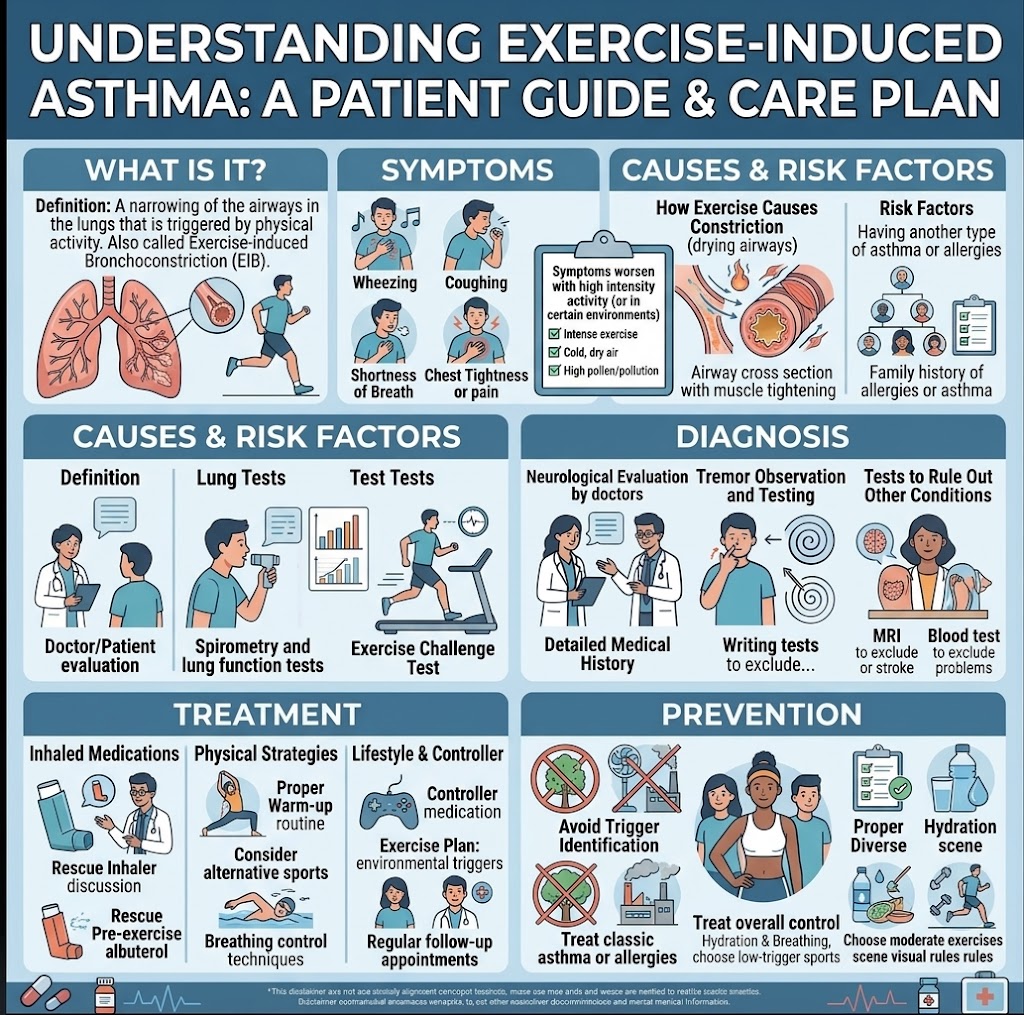
Exercise-induced bronchoconstriction (EIB) is a condition where the airways in your lungs temporarily narrow during or soon after physical activity. This narrowing makes it harder to breathe, causing symptoms like shortness of breath, wheezing, and coughing. While it's often referred to as exercise-induced asthma, EIB can affect people who do not have general asthma. With proper treatment and preventive measures, most individuals with EIB can continue to exercise and maintain an active lifestyle.
Understanding the Condition
Exercise-Induced Breathing Difficulties (Exercise-Induced Bronchoconstriction)
Understanding the Condition
Exercise-induced bronchoconstriction (EIB) is a condition where the airways in your lungs temporarily narrow during or soon after physical activity. This narrowing makes it harder to breathe, causing symptoms like shortness of breath, wheezing, and coughing. While it's often referred to as exercise-induced asthma, EIB can affect people who do not have general asthma. With proper treatment and preventive measures, most individuals with EIB can continue to exercise and maintain an active lifestyle.
Common Symptoms
Shortness of Breath: Feeling like you can't get enough air, or finding it hard to catch your breath during or after exercise.
Wheezing: A whistling or high-pitched sound heard when you breathe, especially when exhaling.
Coughing: A persistent cough that develops during or after physical activity.
Chest Tightness: A feeling of pressure, squeezing, or pain in your chest.
Unusual Fatigue: Feeling much more tired than expected during exercise, even with moderate activity.
Poor Athletic Performance: Experiencing a noticeable decline in your ability to perform during sports or workouts, despite effort. Symptoms of exercise-induced bronchoconstriction typically appear within 5 to 20 minutes of starting exercise, or 5 to 10 minutes after stopping, and can last for 30 to 60 minutes or longer if left untreated. Seek immediate medical care if symptoms are severe or worsen quickly, especially with blue lips or fingernails.
Consultation Guide
Which Specialist to Meet
Initially, you should consult your primary care physician. If needed, they may refer you to a pulmonologist (a doctor specializing in lung conditions) or an allergist (a doctor specializing in allergies and asthma).
Preparations Before Your Visit
Before your appointment, gather information about your symptoms: when they occur, what activities trigger them, how long they last, and their severity. Make a list of all medications you are currently taking, including over-the-counter drugs and supplements. Be prepared to discuss your medical history, including any family history of asthma or allergies, and write down any questions you have for the doctor.
Book a doctor visit near me
Your doctor will conduct a thorough physical exam and ask detailed questions about your health, exercise habits, and symptom patterns. They will inquire about your personal and family history of allergies, asthma, and other respiratory conditions.
During this visit, you'll answer questions about when your symptoms appear, what activities trigger them, and how they affect you. The doctor will listen to your lungs and heart. This initial step helps rule out other conditions and guide further testing.
This is the most definitive test for exercise-induced bronchoconstriction. It involves controlled physical activity performed under medical supervision to intentionally trigger symptoms and then measure changes in lung function.
Before-Exercise Inhalers: These fast-acting medications, typically inhaled a short time before physical activity, relax the muscles around your airways, opening them up and preventing symptoms. They also provide quick relief if symptoms occur. (Duration: Effects last for a few hours; used as needed before exercise, typically 15-30 minutes prior.)
Daily Controller Inhalers: For individuals with more frequent or severe symptoms, daily inhaled medications may be prescribed. These work to reduce inflammation in the airways over time, making them less reactive to exercise. (Duration: Taken daily, with consistent use for long-term control.)
Warm-Up and Cool-Down: Performing a gradual warm-up before intense exercise and a cool-down afterward can help prepare your airways and reduce the risk of symptoms. (Duration: Part of every exercise session.)
Nose Breathing: Breathing through your nose rather than your mouth helps warm and humidify the air before it reaches your lungs, which can lessen irritation. (Duration: Practice consistently during exercise.)
Environmental Control: Avoid exercising outdoors when air pollution levels are high, or in very cold, dry, or windy conditions. Covering your mouth and nose with a scarf or mask in cold weather can help warm and humidify the air you breathe. (Duration: Ongoing, adjusted based on conditions.)
Hydration: Staying well-hydrated by drinking plenty of water can help maintain moisture in your airways. (Duration: Daily practice.)
Regular Doctor Visits: Schedule follow-up appointments with your healthcare provider to review your symptoms, medication effectiveness, and overall asthma control.
Personalized Action Plan: Work with your doctor to create an individualized action plan that outlines how to manage your symptoms, adjust medication, and what to do in case of an exacerbation.
Recognize Warning Signs: Learn to identify early signs of worsening symptoms so you can take prompt action and prevent severe episodes.
Diagnostic Procedures
Physical Examination and Medical History
What to Expect
Spirometry (Lung Function Test)
Spirometry is a common test that measures how much air you can breathe out and how quickly you can do so. It assesses your lung capacity and airflow, helping to identify airway narrowing.
What to Expect
Exercise Challenge Test
What to Expect
You will exercise on a treadmill or stationary bike, or sometimes perform specific activities like running, for a set period, typically 6 to 8 minutes. Your heart rate will be monitored to ensure sufficient exertion. Before and after exercise, you will undergo spirometry to measure lung function. A significant drop in lung function after exercise confirms the diagnosis. You may be asked to avoid certain medications before the test.
Treatment Options
You will sit and breathe into a mouthpiece connected to a device called a spirometer. You'll be asked to take a deep breath and then exhale as hard and fast as you can for several seconds. This may be done multiple times to get consistent readings. You might perform spirometry before and after an exercise challenge or medication to see how your lung function changes.
Medications
Pre-Exercise Medication: Using prescribed inhalers 15-30 minutes before exercise as directed by your doctor can effectively prevent airway narrowing.
Proper Warm-up and Cool-down: Engage in 10-15 minutes of light-to-moderate activity before intense exercise and a similar cool-down period afterward to gradually prepare and recover your airways.
Manage Environmental Triggers: Limit outdoor exercise on days with high pollen counts or significant air pollution. In cold, dry weather, wear a scarf or mask over your mouth and nose to warm and humidify inhaled air.
Avoid Irritants: Minimize exposure to strong fumes, chemicals (like chlorine in pools), and tobacco smoke, which can irritate airways.
Maintain Good Overall Health: Treat underlying conditions such as allergies or colds promptly, as respiratory infections can worsen EIB.
Long-Term Monitoring & Management
Prevention & Long-Term Wellbeing
Home Remedies & Lifestyle Adjustments
Prevention
Healthy Lifestyle: Maintain a balanced diet, stay hydrated, and ensure adequate sleep to support overall lung health and immune function.
Tags & Topics
Notice an error or need an update?
Help us keep medical information accurate. Report incorrect info or suggest an edit.


