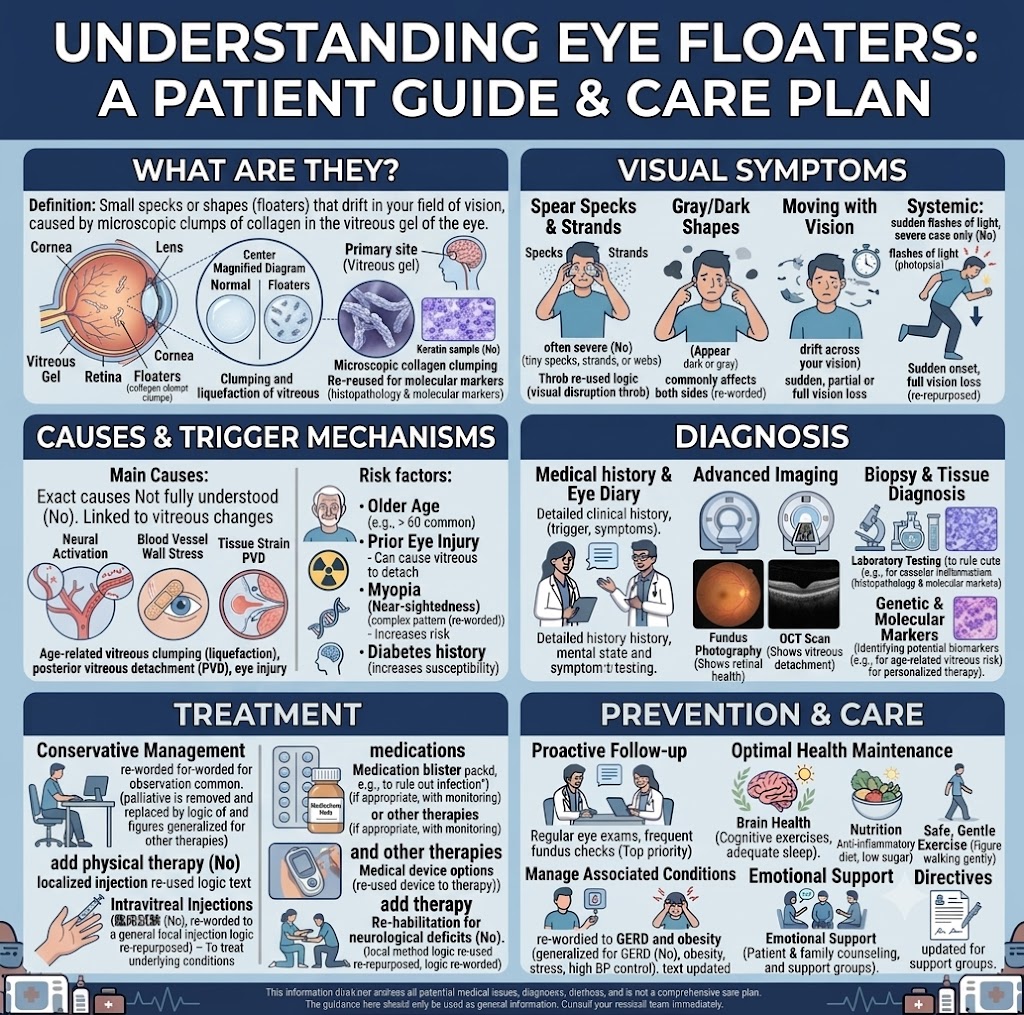
Eye floaters are small spots, specks, strings, or cobweb-like shapes that appear to drift across your vision. They move as your eyes move and seem to dart away when you try to look at them directly. Most floaters are harmless and result from natural aging processes as the jelly-like substance inside your eye changes. However, a sudden increase in floaters, especially when accompanied by flashes of light or vision loss, can signal a serious eye emergency requiring immediate medical attention.
Understanding the Condition
Eye Floaters: Understanding Spots in Your Vision
Understanding the Condition
Eye floaters are small spots, specks, strings, or cobweb-like shapes that appear to drift across your vision. They move as your eyes move and seem to dart away when you try to look at them directly. Most floaters are harmless and result from natural aging processes as the jelly-like substance inside your eye changes. However, a sudden increase in floaters, especially when accompanied by flashes of light or vision loss, can signal a serious eye emergency requiring immediate medical attention.
Common Symptoms
Common Symptoms
When to Seek Immediate Medical Attention: A sudden and significant increase in the number of eye floaters.The abrupt appearance of new floaters.Flashes of light in the same eye where you see floaters.A gray 'curtain' or blurry patch blocking part of your vision.Loss of side (peripheral) vision, appearing as darkness from one or more sides.
Consultation Guide
Which Specialist to Meet
Before your visit, be prepared to discuss your symptoms, including when they started, how often they occur, and any changes you've noticed. Inform your doctor about any other medical conditions you have and all medications you are currently taking. You will likely undergo a dilated eye exam, which means drops will be used to widen your pupils. This will make your vision blurry and sensitive to light for several hours, so arrange for someone to drive you home afterward and bring sunglasses for comfort.
Book a doctor visit near me
Be Aware of Vision Changes: Pay close attention to any sudden increase in floaters, flashes of light, or changes in your vision (like a shadow or curtain). Report these symptoms to an eye specialist immediately.
Consultation Guide
Addressing Underlying Causes: If floaters are caused by an infection, inflammation, bleeding, or a retinal tear, treatment will focus on resolving that specific issue. This might involve medications for inflammation or infection, managing systemic conditions like diabetes or high blood pressure, or immediate repair for retinal tears. (Duration: Varies widely depending on the underlying condition, from a few days to several months or ongoing management.)
Laser Vitreolysis: This procedure uses a specialized laser to break up or vaporize larger, disruptive floaters into smaller, less noticeable pieces or to completely eliminate them. It is generally considered for dense, clearly defined floaters located away from the retina. (Duration: Typically 1-3 sessions, each lasting about 20-60 minutes. Improvement may be immediate, but full resolution can take a few days to weeks.)
Eye Protection: Wear protective eyewear during sports, household chores, or occupational activities where there's a risk of eye injury, as trauma can cause floaters or more severe eye damage.
Diagnostic Procedures
An ophthalmologist, which is a medical doctor specializing in eye and vision care. They are trained to perform eye exams, diagnose and treat eye diseases, prescribe medications, and perform eye surgery.
Preparations Before Your Visit
Dilated Eye Exam (Fundoscopy)
This is the primary way an eye doctor examines the back of your eye, including the retina and the vitreous gel. Eye drops are used to enlarge (dilate) your pupils, allowing the doctor a clearer view of the internal structures. The doctor uses a special magnifying lens and a light to carefully inspect for floaters, signs of retinal tears, bleeding, or inflammation.
What to Expect
After the dilating eye drops are administered, it will take about 15-30 minutes for your pupils to widen. During the exam, you'll be asked to look in various directions while the doctor shines a bright light into your eye. You might feel some pressure but usually no pain. The exam itself typically lasts about 5-10 minutes. Your vision will be blurry and sensitive to light for several hours after the exam, so you should not drive until your vision returns to normal.
In some cases, especially if a clear view of the retina is obstructed (e.g., by significant bleeding), an ocular ultrasound may be used. This non-invasive test uses sound waves to create detailed images of the eye's internal structures, helping to identify retinal tears, detachments, or other abnormalities that might be causing floaters.
What to Expect
You will typically sit or lie down. A special gel will be applied to your closed eyelid, and a small handheld probe will be gently placed on the eyelid. The probe emits sound waves that bounce off the eye's structures, creating images on a monitor. The procedure is painless and usually takes only a few minutes.
Treatment Options
Observation and Medical Management
Watchful Waiting: For most common floaters that are not disruptive or indicate a serious underlying condition, no specific treatment is needed. The brain often learns to ignore them, and they may become less noticeable over time or settle out of the direct line of vision. (Duration: Ongoing; regular follow-up eye exams are recommended to monitor for any changes.)
Vitrectomy: This surgical procedure involves removing the vitreous gel, along with the floaters, from the eye. The removed gel is then replaced with a saline solution or a special gas/oil bubble, which eventually gets replaced by the eye's natural fluid. This is usually reserved for very dense or numerous floaters that significantly impair vision and have not responded to other treatments, or in cases of retinal detachment. (Duration: A single surgical procedure, typically lasting 30-90 minutes. Recovery can take several weeks to months, with vision gradually improving over this period.)
Prevention & Long-Term Wellbeing
Prevention
Regular Comprehensive Eye Exams: Schedule routine dilated eye exams, especially if you are over 50, nearsighted, or have conditions like diabetes. Early detection of retinal issues or other eye problems can prevent serious complications.
Manage Underlying Health Conditions: Effectively manage chronic conditions such as diabetes and high blood pressure, as these can increase the risk of eye complications, including bleeding in the eye or diabetic retinopathy, which can lead to floaters.
Long-Term Monitoring and Lifestyle
Healthy Lifestyle: Maintain a healthy diet rich in fruits, vegetables, and omega-3 fatty acids, and stay hydrated. While not a direct prevention for floaters, a healthy lifestyle supports overall eye health.
Avoid Eye Strain (if applicable): Though not directly preventing floaters, regular breaks from screens and good lighting can reduce eye fatigue and make existing floaters less bothersome.
Tags & Topics
Notice an error or need an update?
Help us keep medical information accurate. Report incorrect info or suggest an edit.


