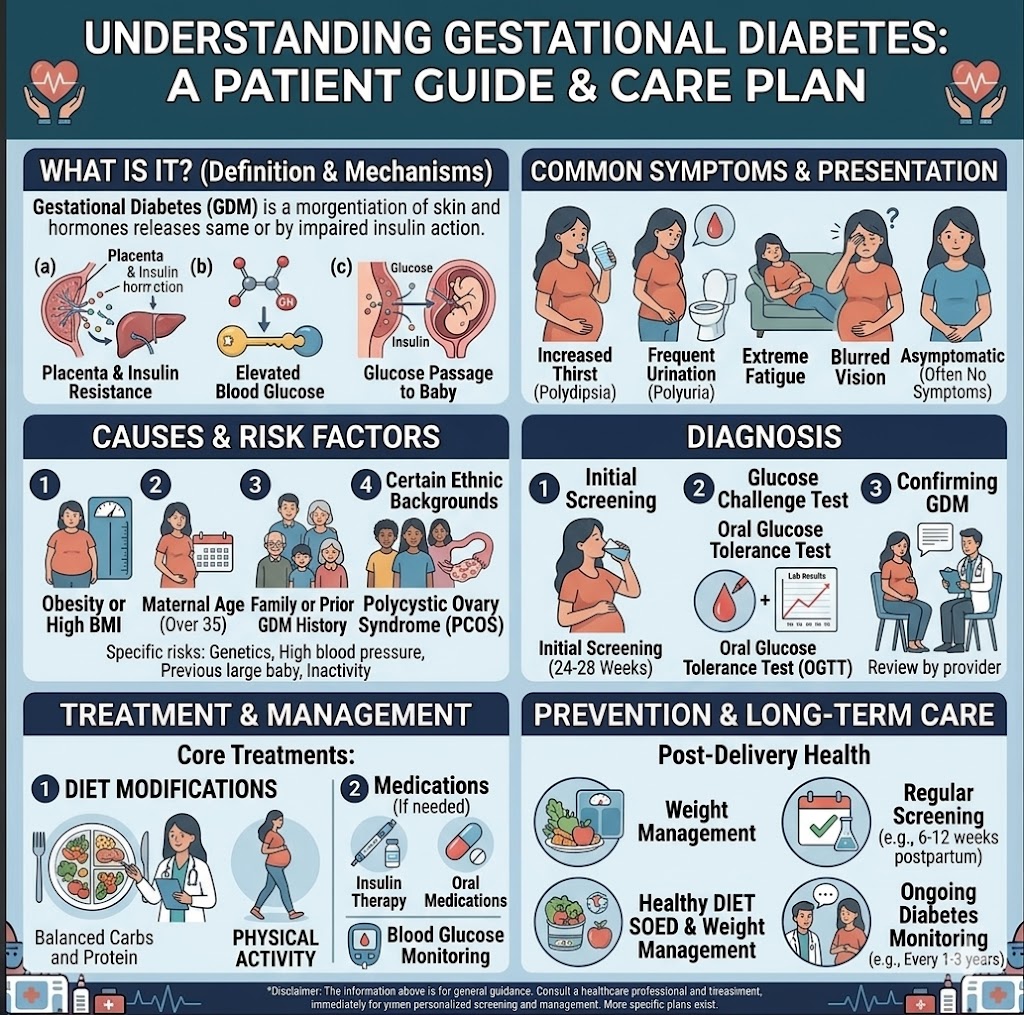
Gestational diabetes is a type of diabetes that develops or is first diagnosed during pregnancy. It affects how your body's cells use sugar (glucose), leading to higher-than-normal blood sugar levels. This can impact both your pregnancy and your baby's health. The good news is that with careful management—typically involving healthy eating, regular physical activity, and sometimes medication—it can often be controlled. For most individuals, blood sugar levels return to normal shortly after the baby is born. However, having gestational diabetes increases your risk of developing type 2 diabetes later in life. Common risk factors include being over 25, having excess weight before pregnancy, a family history of type 2 diabetes, or having had gestational diabetes in a previous pregnancy.
Understanding the Condition
Gestational Diabetes: Understanding and Managing During Pregnancy
Understanding the Condition
Common Symptoms
Often No Noticeable Symptoms: Most individuals with gestational diabetes do not experience symptoms that are easy to spot.
Increased Thirst: Feeling unusually thirsty can be a subtle sign.
Frequent Urination: Needing to urinate more often than usual may occur.
Consultation Guide
Which Specialist to Meet
Consultation Guide
Gestational diabetes is a type of diabetes that develops or is first diagnosed during pregnancy. It affects how your body's cells use sugar (glucose), leading to higher-than-normal blood sugar levels. This can impact both your pregnancy and your baby's health. The good news is that with careful management—typically involving healthy eating, regular physical activity, and sometimes medication—it can often be controlled. For most individuals, blood sugar levels return to normal shortly after the baby is born. However, having gestational diabetes increases your risk of developing type 2 diabetes later in life. Common risk factors include being over 25, having excess weight before pregnancy, a family history of type 2 diabetes, or having had gestational diabetes in a previous pregnancy.
Before becoming pregnant, discuss your overall health, any family history of diabetes, and your lifestyle habits (diet, exercise, weight) with your doctor. Once pregnant, ensure you attend all prenatal appointments. Be ready to discuss your personal and family medical history, as well as any risk factors you may have for gestational diabetes.
Book a doctor visit near me
Post-Delivery Blood Sugar Check: Your blood sugar levels will be checked 6 to 12 weeks after your baby is born to ensure they have returned to normal. This is crucial because gestational diabetes is a risk factor for future type 2 diabetes.
Regular Screening for Type 2 Diabetes: Because you have a higher risk, it's important to be screened for type 2 diabetes every 1 to 3 years, or as recommended by your doctor, even if your post-delivery blood sugar was normal. Continue to discuss your risk with your healthcare provider.
Diagnostic Procedures
Glucose Challenge Test (1-Hour Glucose Test)
This is a screening test typically done during pregnancy to identify individuals who might have gestational diabetes. It measures how your body processes sugar.
What to Expect
You will be asked to drink a sweet, sugary liquid. One hour later, a blood sample will be taken from your arm to measure your blood sugar level. You usually do not need to fast before this test. If your blood sugar level is above a certain threshold, further testing will be recommended to confirm a diagnosis.
Oral Glucose Tolerance Test (OGTT)
If your glucose challenge test results are abnormal, an OGTT is performed to definitively diagnose or rule out gestational diabetes. This test provides a more detailed picture of how your body handles sugar over several hours.
What to Expect
You will need to fast (not eat or drink anything except water) for 8-14 hours before the test. First, a fasting blood sample will be drawn. Then, you will drink a more concentrated sugary liquid. Blood samples will be drawn again at specific time intervals, usually at 1 hour, 2 hours, and sometimes 3 hours after drinking the solution. This allows your healthcare provider to track your blood sugar response over time.
Treatment Options
Medications
Oral Medications: If lifestyle changes alone are not sufficient to keep your blood sugar levels within target ranges, your doctor may prescribe oral medications that help your body produce more insulin or use insulin more effectively. (Duration: Daily, typically until delivery)
Insulin Injections: For some individuals, insulin injections may be necessary if oral medications are ineffective or not suitable. Insulin helps transport sugar from your blood into your cells for energy, lowering high blood sugar levels. (Duration: Daily, typically until delivery)
Labor Induction: In some cases of gestational diabetes, especially if the baby is growing very large, or if the pregnancy goes past the due date, your doctor might recommend inducing labor. This means artificially starting contractions to deliver the baby when it is medically safer than continuing the pregnancy. (Duration: For the duration of the labor and delivery process)
Prevention & Long-Term Wellbeing
You will primarily consult with an Obstetrician/Gynecologist (OB/GYN) for prenatal care. If your gestational diabetes is complex or high-risk, a Maternal-Fetal Medicine specialist may be involved. A Registered Dietitian can help you develop a healthy eating plan, and a Certified Diabetes Educator can provide guidance on blood sugar monitoring and management.
Preparations Before Your Visit
Lifestyle Management
Healthy Eating Plan: Work with a dietitian to create a balanced meal plan focusing on appropriate portion sizes, limiting refined carbohydrates and sugary drinks, and including plenty of fiber-rich foods, lean proteins, and healthy fats. This helps manage blood sugar levels. (Duration: Throughout pregnancy and often recommended long-term)
Regular Physical Activity: Engage in moderate-intensity exercise, such as brisk walking or swimming, for at least 30 minutes most days of the week, as advised by your doctor. This helps your body use sugar more efficiently and can lower blood sugar levels. (Duration: Throughout pregnancy and often recommended long-term)
Blood Sugar Monitoring: You will be taught how to use a home glucose meter to check your blood sugar levels several times a day (e.g., fasting and after meals). This data helps you and your healthcare team understand how your body is responding to food and activity, and whether adjustments are needed. (Duration: Daily, throughout the remainder of your pregnancy)
Prevention
Achieve and Maintain a Healthy Weight: Before becoming pregnant, work towards a healthy weight. If you are overweight, losing even a small amount of weight can significantly reduce your risk of developing gestational diabetes.
Adopt a Balanced Diet: Focus on a nutritious eating plan rich in whole grains, fruits, vegetables, lean proteins, and healthy fats. Limiting processed foods and sugary drinks can help manage blood sugar levels even before pregnancy.
Engage in Regular Physical Activity: Incorporate at least 30 minutes of moderate-intensity exercise most days of the week. This helps improve insulin sensitivity and contributes to overall health.
Long-Term Monitoring and Health
Maintain Healthy Lifestyle Habits: After pregnancy, continue to prioritize healthy eating and regular exercise. These habits are vital for reducing your long-term risk of developing type 2 diabetes and promoting overall wellbeing.
Managing During Pregnancy
Increased Prenatal Checkups: You will likely have more frequent prenatal appointments, particularly during the last trimester, to closely monitor your blood sugar levels and your baby's growth and health.
Monitor for Complications: Your healthcare team will monitor for potential complications associated with gestational diabetes, such as preeclampsia (high blood pressure during pregnancy), to ensure prompt management if they arise.
Tags & Topics
Notice an error or need an update?
Help us keep medical information accurate. Report incorrect info or suggest an edit.


