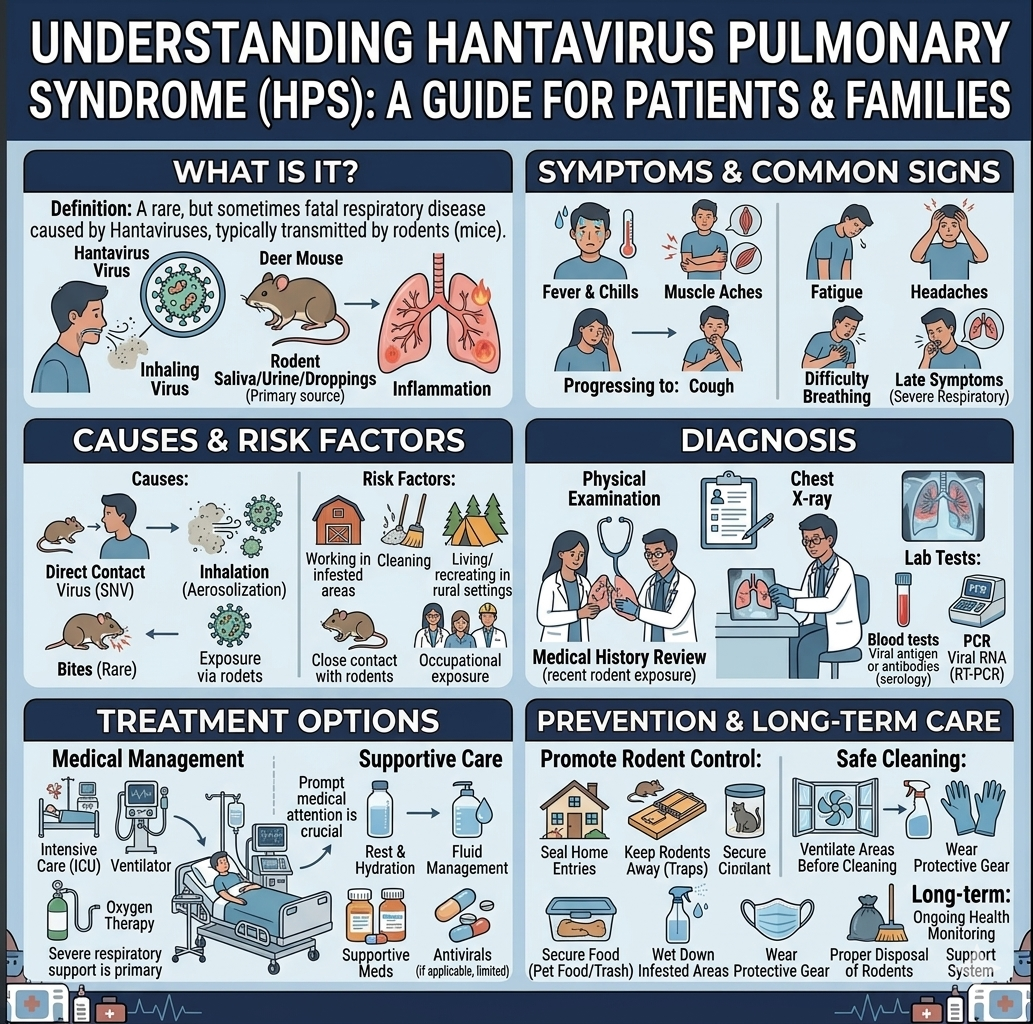
Hantavirus Pulmonary Syndrome (HPS) is a rare but severe illness caused by hantaviruses. It starts with symptoms similar to the flu but quickly worsens, potentially leading to life-threatening damage to the lungs and heart. This condition is also known as hantavirus cardiopulmonary syndrome. The virus is primarily carried by certain rodents, most commonly deer mice in North America. People typically get infected by breathing in airborne virus particles from rodent urine, droppings, or saliva. Since specific treatments are limited, preventing contact with rodents and safely cleaning areas they inhabit is crucial for protection.
Understanding the Condition
Hantavirus Pulmonary Syndrome: A Guide for Non-Medical Persons
Understanding the Condition
Hantavirus Pulmonary Syndrome (HPS) is a rare but severe illness caused by hantaviruses. It starts with symptoms similar to the flu but quickly worsens, potentially leading to life-threatening damage to the lungs and heart. This condition is also known as hantavirus cardiopulmonary syndrome. The virus is primarily carried by certain rodents, most commonly deer mice in North America. People typically get infected by breathing in airborne virus particles from rodent urine, droppings, or saliva. Since specific treatments are limited, preventing contact with rodents and safely cleaning areas they inhabit is crucial for protection.
Common Symptoms
Early Stage (Flu-like symptoms, lasting several days): These signs usually appear about 2 to 3 weeks after infection and may include:* **Fever:** High body temperature.* **Fatigue:** Extreme tiredness.* **Muscle Aches:** Especially in large muscle groups like the back, thighs, and shoulders.* **Headaches:** Persistent pain in the head.* **Dizziness:** Feeling lightheaded or unsteady.* **Chills:** Feeling cold and shivering.* **Stomach Problems:** Nausea, vomiting, diarrhea, or abdominal pain.
Late Stage (Severe lung and heart problems, as disease progresses): As HPS advances, it can damage lung tissues and cause fluid buildup, leading to serious lung and heart dysfunction. Symptoms may include:* **Shortness of Breath:** Difficulty breathing, which can worsen rapidly.* **Cough:** Often dry, persistent cough.* **Chest Pain:** Discomfort or pressure in the chest.* **Fluid in Lungs:** Buildup of fluid, making breathing harder.* **Low Blood Pressure:** Dangerously low pressure, affecting organ function.* **Rapid Heart Rate:** Heart beating unusually fast.**Key Warning:** HPS symptoms can quickly become severe. If you experience flu-like symptoms that rapidly worsen, particularly with trouble breathing, seek immediate medical attention.
Consultation Guide
Which Specialist to Meet
You should first consult your primary care physician if you suspect HPS or have worsening flu-like symptoms, especially after potential rodent exposure. Depending on the severity and progression, your doctor may refer you to an infectious disease specialist, a pulmonologist (lung specialist), or a critical care specialist for hospital-based treatment.
Preparations Before Your Visit
Before your visit, make a detailed list of your symptoms, noting when they started and how they have changed. Be prepared to discuss any recent exposure to rodents or rodent droppings, including activities like cleaning out sheds, camping, or working in rural areas. Inform your doctor about any recent travel, other medical conditions, and all medications or supplements you are currently taking. Write down any questions you have for your doctor.
Book a doctor visit near me
Your doctor will ask about your symptoms, potential exposure to rodents, and your overall health. They will perform a physical examination to check for signs of illness like fever, lung sounds, and blood pressure.
Intravenous Fluids and Medications: Administering fluids and medications directly into a vein to help maintain blood pressure, support kidney function, and manage other symptoms. (Duration: As needed, throughout the illness.)
Diagnostic Procedures
Medical History and Physical Exam
What to Expect
Expect questions about your health and a physical check-up. It is painless and non-invasive.
These tests help detect signs of infection, assess organ function (like kidneys and liver), and specifically look for antibodies produced by your immune system in response to the hantavirus. Advanced blood tests can also directly identify the virus's genetic material.
What to Expect
A healthcare professional will draw blood from your arm. You might feel a brief sting; the process is quick.
This imaging test uses a small amount of radiation to create pictures of your lungs and heart. It helps doctors look for signs of fluid buildup in the lungs or other lung damage characteristic of HPS.
What to Expect
You'll stand or lie still for moments as the X-ray machine takes images. It's painless and quick.
This non-invasive test measures the oxygen levels in your blood. Low oxygen levels are a common indicator of lung problems in HPS.
What to Expect
A small clip on your finger or earlobe painlessly measures blood oxygen levels.
Electrocardiogram (ECG/EKG)
This test records the electrical activity of your heart. It can help identify if HPS is affecting your heart's function, which is crucial given the "cardiopulmonary" aspect of the syndrome.
What to Expect
Small sticky patches (electrodes) are placed on your chest and limbs, connected to a machine that records your heart's electrical signals. You lie still; it's painless and quick.
Post-Recovery Follow-up: After recovering from HPS, it is important to have follow-up medical appointments to monitor lung and heart function, as severe illness can sometimes lead to lasting damage or reduced capacity. Your doctor may recommend regular check-ups and pulmonary function tests to ensure optimal recovery.
Treatment Options
Medical Procedures and Therapies
Supportive Care (Primary Treatment): There is no specific antiviral medication for HPS. Treatment focuses on supporting the body's vital functions, managing severe lung and heart complications, and allowing the immune system to fight the infection. (Duration: Can range from several days to weeks in critical care, depending on disease severity and recovery.)
Oxygen Therapy: Providing supplemental oxygen through a mask or nasal tubes to maintain adequate blood oxygen levels, especially as lung function declines. (Duration: As needed, throughout the illness.)
Extracorporeal Membrane Oxygenation (ECMO): For the most severe cases where the lungs and/or heart are failing despite other treatments, ECMO is a life-support system. It involves pumping blood out of the body to an artificial lung machine, which removes carbon dioxide and adds oxygen, before returning the blood to the body. This allows the patient's own heart and lungs to rest and heal. (Duration: Typically used for short periods (days to weeks) until the lungs and heart can recover sufficiently to function on their own. It provides vital temporary support.)
Prevention & Long-Term Wellbeing
Mechanical Ventilation: If breathing difficulties become severe, a breathing machine (ventilator) may be used to assist or take over breathing for the patient. A tube is placed into the windpipe to connect to the machine. (Duration: Can last from several days to weeks, depending on lung recovery.)
Prevention (Avoiding Rodent Contact and Safe Cleanup)
Rodent Control: Seal holes and cracks in homes and buildings to prevent rodents from entering. Use traps (snap traps are preferred) to remove rodents. Keep food in rodent-proof containers and clean up spills immediately.
Safe Cleanup of Rodent-Infested Areas: Before cleaning, ventilate the area for at least 30 minutes by opening windows and doors. Wear protective gear, including gloves and a fitted respirator (N95 or higher). Do not sweep or vacuum dry rodent droppings; instead, wet down contaminated areas with a bleach solution (1 part bleach to 10 parts water) or household disinfectant before wiping them up with paper towels. Dispose of rodent waste in sealed bags.
Outdoor Precautions: Be cautious when camping, hiking, or working in rural areas where rodents may be present. Avoid disturbing rodent burrows or nests. Store food in sealed containers and keep campsites clean.
Long-Term Monitoring
Tags & Topics
Notice an error or need an update?
Help us keep medical information accurate. Report incorrect info or suggest an edit.


