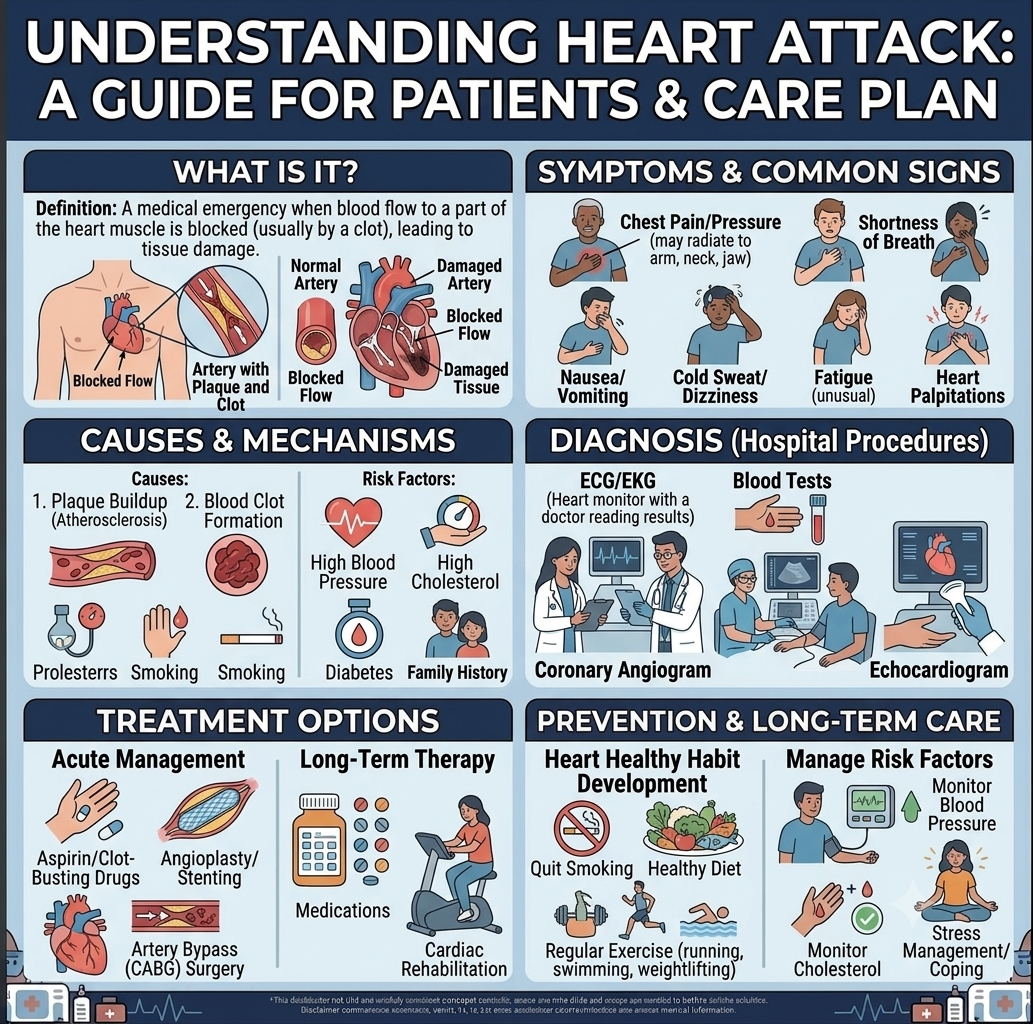
A heart attack (myocardial infarction) occurs when blood flow to part of the heart muscle is severely reduced or blocked, usually by a clot forming on fatty plaque buildup (atherosclerosis) in heart arteries. This deprives the heart muscle of oxygen, causing damage or death. Prompt treatment is vital to prevent severe complications or death.
Understanding the Condition
Heart Attack (Myocardial Infarction)
Understanding the Condition
Common Symptoms
Common Symptoms
Atypical Symptoms (especially in women): Women may experience more subtle symptoms like unusual fatigue, sleep disturbances, stomach discomfort (heartburn-like pain), or brief/sharp pain in the neck, arm, or back, rather than classic chest pain.
Silent Heart Attack: Some heart attacks have few or no symptoms, or symptoms that are mistaken for other conditions like heartburn or the flu. These can still cause significant heart muscle damage.
Before your appointment, gather your complete medical history, including any existing conditions, current medications, and family history of heart disease. Prepare a detailed list of all your symptoms, when they started, and any questions you have for your doctor.
Book a doctor visit near me
Uses radiation to create images of your heart, lungs, blood vessels, and bones in your chest. It helps identify lung conditions or fluid around the heart that might mimic or be associated with heart attack symptoms.
Symptom Awareness: Be vigilant for any new or recurring heart attack symptoms or warning signs. Seek immediate emergency medical help if they occur.
Consultation Guide
Warning Signs: Persistent chest pain or pressure (angina) that occurs with activity and doesn't improve with rest can be an early warning, caused by temporary decreased blood flow to the heart.
Emergency Signs: Sometimes, the first sign is sudden cardiac arrest, where the heart stops beating effectively.
Consultation Guide
Which Specialist to Meet
Prevention and Risk Factor Management
Quit Smoking: Smoking is a major risk factor; quitting immediately reduces your heart attack risk. Avoid all exposure to secondhand smoke.
Diagnostic Procedures
Electrocardiogram (ECG or EKG)
A quick and painless test that records the electrical signals of your heart. It helps diagnose heart attacks, irregular heart rhythms, and assess overall heart function.
What to Expect
Small, sticky patches (electrodes) are placed on your chest and limbs. These are connected to a machine that records your heart's electrical activity. You'll lie still for a few minutes. The test is quick and painless.
What to Expect
You'll stand or sit in front of an X-ray machine, possibly holding your breath briefly. The procedure is fast, painless, and exposes you to a minimal amount of radiation.
Uses sound waves to create moving pictures of your heart. This provides detailed information about your heart muscle, valves, and blood flow, helping to detect damage from a heart attack or other heart conditions.
What to Expect
You'll lie on an examination table. A technician applies a special gel to your chest and moves a small device (transducer) over it. You might feel slight pressure, but it's generally painless. The test usually takes 30-60 minutes.
Cardiac Catheterization
A procedure where a thin, flexible tube (catheter) is guided through a blood vessel (usually in the groin or arm) to the heart. It provides detailed information about heart muscle, valve function, pressures within the heart, and blood vessel blockages.
What to Expect
You'll receive a local anesthetic to numb the insertion site, and often a sedative to help you relax. A small incision is made, and the catheter is inserted into an artery. You may feel pressure but generally no pain. The procedure can last from 30 minutes to several hours.
Often performed as part of a cardiac catheterization, this test uses X-rays and a special contrast dye, injected through a catheter, to visualize the heart's blood vessels (coronary arteries). It clearly shows if arteries are narrowed or blocked.
What to Expect
What to Expect
Electrodes will monitor your heart rate and rhythm while you exercise or after receiving a heart-stimulating medication. Your blood pressure will also be tracked. The test typically takes about an hour, including preparation and recovery.
NSAID Caution: Discuss Nonsteroidal Anti-inflammatory Drugs (NSAIDs) with your doctor. These can increase heart attack risk; use the lowest dose for the shortest time, especially if you have heart disease or take aspirin.
Calcium Intake: Prioritize calcium from food sources (dairy, leafy greens). Discuss calcium supplements with your doctor, as some research suggests a potential increased heart attack risk, especially in specific populations.
Long-Term Monitoring and Support
Treatment Options
A heart attack (myocardial infarction) occurs when blood flow to part of the heart muscle is severely reduced or blocked, usually by a clot forming on fatty plaque buildup (atherosclerosis) in heart arteries. This deprives the heart muscle of oxygen, causing damage or death. Prompt treatment is vital to prevent severe complications or death.
Similar to cardiac catheterization, a contrast dye is injected, which might create a brief warm sensation. X-ray images are taken to show the blood flow. If a blockage is found, treatment like angioplasty may be performed immediately.
Evaluates how your heart works during physical activity (walking on a treadmill or riding a stationary bike). It can reveal blood flow changes that might indicate coronary artery disease. If exercise isn't possible, medication can simulate these effects.
Emergency Interventions
Immediate Medical Help: Call emergency medical services without delay. Paramedics can begin treatment on the way to the hospital, which is crucial for saving heart muscle. (Duration: Immediate)
Oxygen and Pain Relief: Supplemental oxygen may be given to ease breathing, and medications are administered to reduce chest pain and discomfort. (Duration: Emergency)
Clot-Busting Medications (Thrombolytics): Administered to dissolve blood clots that are blocking blood flow to the heart, restoring crucial circulation. (Duration: Emergency, then ongoing for prevention)
Medications
Antiplatelet Medications: Help prevent blood clots by making blood platelets less sticky, reducing the risk of further blockages. (Duration: Long-term, often lifelong)
Beta-Blockers: Slow the heart rate and lower blood pressure, which reduces the heart's workload and strain. (Duration: Long-term)
Cholesterol-Lowering Medications: Reduce the amount of harmful cholesterol in the blood, slowing the buildup of plaque in arteries. (Duration: Long-term, often lifelong)
Blood Pressure Medications: Help control high blood pressure, thereby lessening the burden on your heart. (Duration: Long-term)
Angioplasty and Stenting: A catheter with a balloon is guided to the blocked artery; the balloon is inflated to open the artery, and a small mesh tube (stent) is typically left in place to keep it open. (Duration: Single procedure, stent remains permanently)
Coronary Artery Bypass Surgery (CABG): A healthy blood vessel from another part of the body is used to create a new path for blood to flow around a blocked or partially blocked heart artery. (Duration: Single surgery, recovery weeks to months)
Manage Chronic Conditions: Effectively manage existing conditions like high blood pressure, high cholesterol, and diabetes through lifestyle changes and prescribed medications.
Stress Management: Practice healthy coping mechanisms for stress, such as mindfulness, meditation, or engaging in hobbies.
Flu Vaccination: Getting an annual flu shot can help prevent heart attacks, particularly for individuals with existing heart disease.
Medication Adherence: Take all prescribed medications exactly as directed by your doctor to manage heart health and prevent future events.
Regular Medical Check-ups: Attend all follow-up appointments with your cardiologist and primary care physician to monitor your condition and adjust treatment as needed.
Prevention & Long-Term Wellbeing
If you suspect a heart attack, immediately call emergency medical services. For ongoing care and prevention, you should consult a cardiologist (a doctor specializing in heart conditions) or your primary care physician.
Preparations Before Your Visit
Extracorporeal Membrane Oxygenation (ECMO): A heart-lung machine temporarily takes over the work of the heart and lungs, allowing them to rest and heal in severe cases of heart or lung failure. (Duration: Temporary, days to weeks depending on recovery)
Cardiac Rehabilitation: A supervised program including exercise training, education about heart-healthy living, and counseling to help you recover, improve heart health, and reduce future risks. (Duration: Weeks to months, often integrated into long-term lifestyle)
Healthy Diet: Adopt a diet rich in fruits, vegetables, whole grains, and lean proteins. Limit saturated and trans fats, cholesterol, sodium, and added sugars.
Regular Physical Activity: Aim for at least 150 minutes of moderate-intensity aerobic exercise or 75 minutes of vigorous-intensity exercise per week.
Maintain a Healthy Weight: Achieving and maintaining a healthy weight significantly reduces strain on the heart and improves overall cardiovascular health.
Support System: Utilize family, friends, or support groups for emotional well-being and to help maintain a healthy lifestyle post-heart attack.
Tags & Topics
Notice an error or need an update?
Help us keep medical information accurate. Report incorrect info or suggest an edit.

