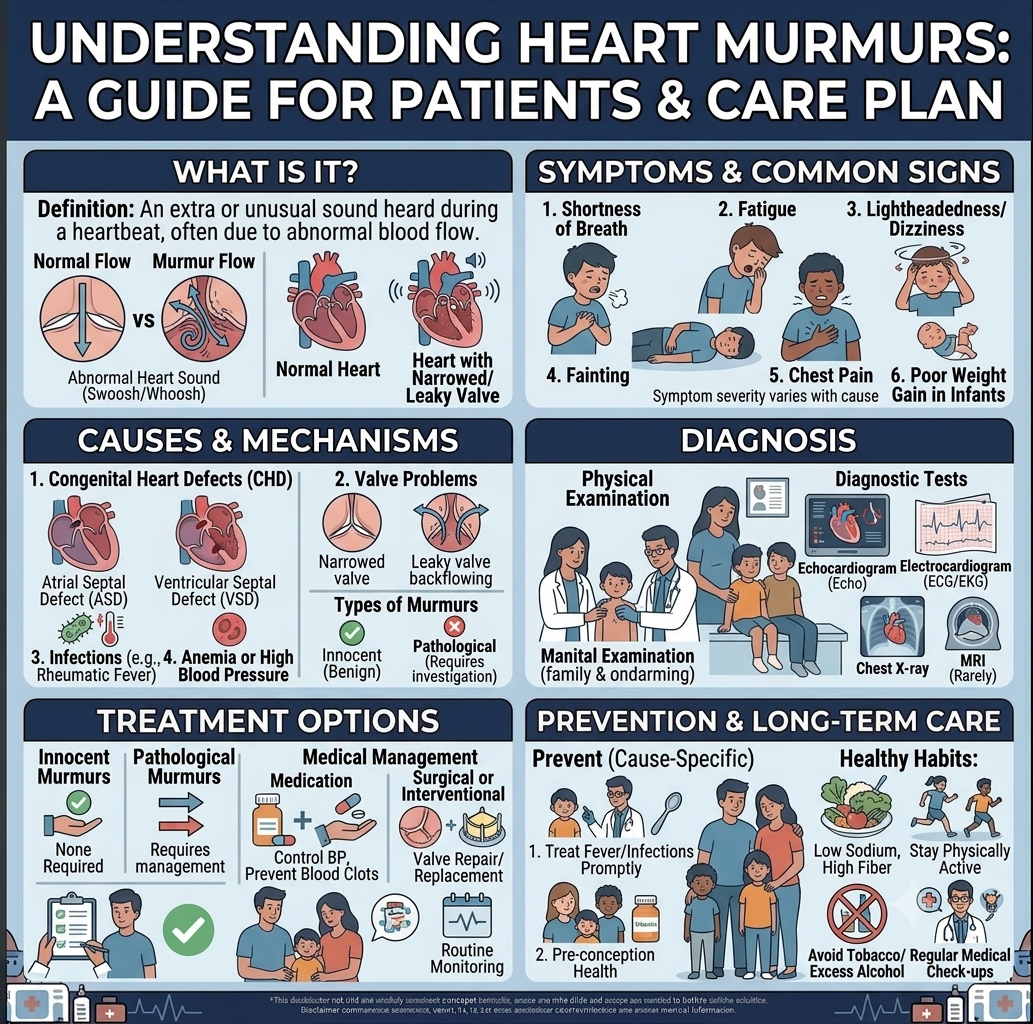
A heart murmur is an extra or unusual sound heard during a heartbeat, often described as a swishing or whooshing noise. While a typical heart makes a rhythmic 'lub-dup' sound as its valves close, turbulent (choppy) blood flow through the heart chambers or valves creates these additional vibrations. Heart murmurs can be congenital (present at birth) or acquired later in life. They are categorized as either 'innocent' (harmless, requiring no treatment and common in children) or 'abnormal' (potentially signaling an underlying heart condition, such as damaged valves or structural defects).
Understanding the Condition
Common Symptoms
Shortness of Breath: Difficulty breathing or feeling winded, especially during physical exertion or when lying flat.
Blue or Gray Skin Coloration (Cyanosis): A bluish tint on the lips, fingertips, or skin, indicating insufficient oxygen levels in the bloodstream.
Swelling (Edema): Unexplained fluid buildup and swelling in the legs, ankles, feet, or abdomen.
Dizziness and Fainting: Feeling lightheaded or losing consciousness suddenly due to temporary drops in blood flow to the brain.
Chronic Fatigue: Persistent, severe tiredness or lack of energy, even after adequate rest, indicating the heart is working harder to pump blood.
Consultation Guide
Which Specialist to Meet
You should start by consulting your Primary Care Provider (PCP) for an initial evaluation. If an abnormal murmur is suspected, they will refer you to a Cardiologist (a heart specialist) or, in the case of children, a Pediatric Cardiologist.
Preparations Before Your Visit
Before your appointment, document all symptoms, noting when they occur and what triggers them. Write down your personal and family medical history, specifically any history of heart disease, stroke, or high blood pressure. Compile a complete list of all medications, supplements, and dosages you take, and prepare a list of questions regarding diagnostic tests.
Book a doctor visit near me
Observation and Monitoring: Innocent heart murmurs require no medical intervention. Periodic follow-ups are scheduled to ensure no new symptoms develop. (Duration: Ongoing or lifelong monitoring, typically during routine annual physical exams.)
Consultation Guide
Understanding Heart Murmurs: Causes, Diagnostics, and Treatments
Understanding the Condition
Diagnostic Procedures
Electrocardiogram (ECG or EKG)
A rapid, non-invasive test that records the electrical signals in your heart to check its rhythm, rate, and overall electrical health.
What to Expect
You will lie flat on an exam table. A technician will attach small, sticky patches (electrodes) to your chest, arms, and legs. You must lie still for a few minutes while the machine records your heart's activity. The procedure is entirely painless and takes about 5 to 10 minutes.
An imaging test that uses a small amount of radiation to capture pictures of your heart, lungs, blood vessels, and chest bones.
What to Expect
You will be asked to stand against a flat metal plate. The technician will position the X-ray machine and ask you to take a deep breath and hold it for a few seconds to prevent image blurring. You may be imaged from the front and the side. This is painless and completed within minutes.
Computerized Tomography (CT) Scan
A sophisticated imaging technique that combines a series of X-ray images taken from different angles to create highly detailed, cross-sectional views of the heart's tissues and blood vessels.
What to Expect
You will lie on a motorized table that slides into a large, doughnut-shaped scanner. You must remain very still during the scan, and you may be asked to hold your breath briefly. In some cases, a special contrast dye is injected through an intravenous (IV) line to make blood vessels show up more clearly.
Cardiac Catheterization
An invasive diagnostic and sometimes therapeutic procedure used to evaluate heart pressures, check valve function, and identify blockages in the coronary arteries.
What to Expect
Treatment Options
A heart murmur is an extra or unusual sound heard during a heartbeat, often described as a swishing or whooshing noise. While a typical heart makes a rhythmic 'lub-dup' sound as its valves close, turbulent (choppy) blood flow through the heart chambers or valves creates these additional vibrations. Heart murmurs can be congenital (present at birth) or acquired later in life. They are categorized as either 'innocent' (harmless, requiring no treatment and common in children) or 'abnormal' (potentially signaling an underlying heart condition, such as damaged valves or structural defects).
This is performed in a specialized laboratory. You will receive medication to help you relax, but you will remain awake. A doctor numbs an area in your groin or arm and inserts a long, thin, flexible tube (catheter) into a blood vessel, guiding it to your heart. You may feel mild pressure but should not feel pain.
Conservative Management
Medications
Heart Strain and Fluid Management Therapy: Prescription medications are utilized to lower blood pressure, relax blood vessels, prevent harmful blood clots, or help the body eliminate excess fluid, reducing the workload on the heart. (Duration: Typically a lifelong daily therapy, though it may be adjusted based on disease progression or surgical outcomes.)
Surgical and Interventional Procedures
Heart Valve Repair or Replacement: Surgical intervention to fix or replace a diseased, leaking, or narrowed heart valve. This can be performed via open-heart surgery or through minimally invasive catheter-based techniques. (Duration: The procedure itself takes 2 to 6 hours; surgical recovery spans 4 to 12 weeks, with benefits generally lasting several decades or a lifetime.)
Proactive Infection Prevention: Practice good dental hygiene and receive prompt treatment for bacterial infections (such as strep throat) to lower the risk of endocarditis, a dangerous heart valve infection.
Prevention & Long-Term Wellbeing
Prevention & Cardiovascular Health
Heart-Healthy Nutrition: Consume a balanced diet rich in vegetables, fruits, whole grains, lean proteins, and healthy fats while minimizing sodium, saturated fats, and refined sugars.
Regular Physical Activity: Engage in moderate-intensity aerobic exercise, such as brisk walking, swimming, or cycling, for at least 150 minutes per week, as cleared by your doctor.
Avoid Tobacco and Limit Alcohol: Completely avoid smoking and exposure to secondhand smoke, and limit alcohol consumption to protect blood vessels and prevent heart muscle strain.
Long-Term Monitoring
Blood Pressure and Cholesterol Control: Monitor and manage blood pressure and cholesterol levels regularly to prevent plaque buildup and extra strain on the heart valves.
Tags & Topics
Notice an error or need an update?
Help us keep medical information accurate. Report incorrect info or suggest an edit.

