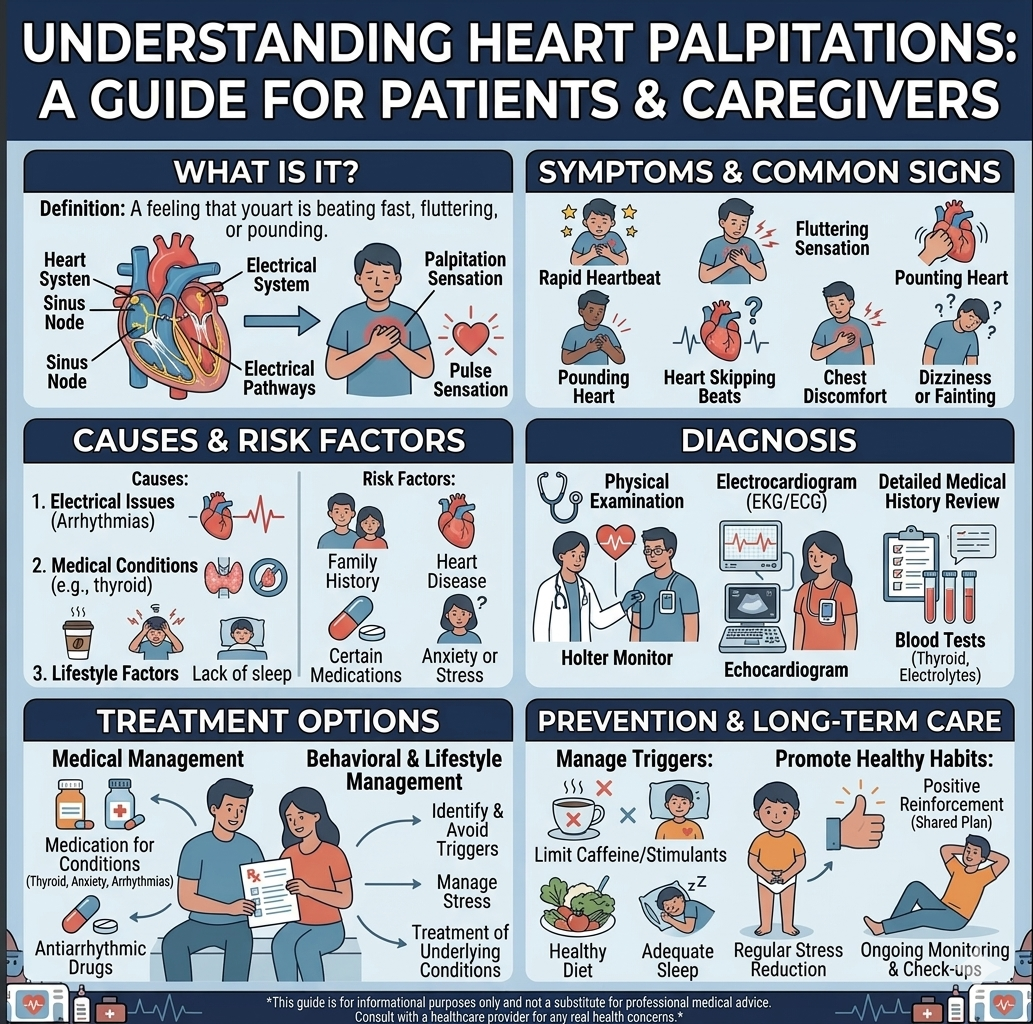
Heart palpitations are sensations of your heart beating unusually fast, fluttering, or pounding. While often harmless and triggered by common factors like stress, exercise, or certain medications, they can rarely signal a more serious underlying heart condition, such as an irregular heartbeat. Understanding when to seek medical advice for these sensations is important.
Understanding the Condition
Understanding Heart Palpitations
Understanding the Condition
Common Symptoms
What Heart Palpitations Feel Like: Heart palpitations can feel like your heart is skipping beats, fluttering rapidly, pounding, beating very fast, or even flipping or flopping in your chest. These sensations might be felt in your chest, throat, or neck and can occur during activity or at rest.**Seek emergency medical attention if palpitations occur with:** chest discomfort or pain, fainting, severe shortness of breath, or severe dizziness.
Consultation Guide
Which Specialist to Meet
Begin by consulting your primary care doctor for an initial evaluation. If necessary, they may refer you to a cardiologist, a heart specialist, for further assessment and specialized care.
Preparations Before Your Visit
To prepare for your visit:* **Symptoms:** Detail what palpitations feel like, frequency, duration, and any triggers. A symptom diary is very helpful.* **Medical History:** Include existing conditions, past surgeries, and family history of heart disease.* **Medications:** List all prescription, over-the-counter, vitamin, and herbal supplements.* **Lifestyle:** Discuss diet, exercise, caffeine, alcohol, and stress levels.
Book a doctor visit near me
After an initial ECG, electrodes are taped to your chest and connected to a small recorder worn on a belt or in a pocket. You'll receive instructions on care (e.g., avoiding baths) and may keep a diary of symptoms. After the recording period, the device is returned for analysis.
Symptom Monitoring and Communication: Record recurrent palpitations, triggers, and symptoms to share with your healthcare provider.
Manage Underlying Health Conditions: Effectively treat high blood pressure, diabetes, thyroid disorders, or anxiety that can affect heart rhythm.
Maintain a Healthy Weight: Achieve and maintain a healthy weight to reduce heart strain and cardiovascular risks.
Avoid Smoking and Excessive Alcohol: Quit smoking entirely and limit alcohol, as both contribute to heart rhythm problems.
Adequate Sleep: Aim for 7-9 hours of quality sleep nightly, as poor sleep impacts heart health and stress.
Diagnostic Procedures
Electrocardiogram (ECG or EKG)
An electrocardiogram (ECG or EKG) quickly records your heart's electrical signals. It helps doctors assess heart rate, rhythm, and detect potential damage.
What to Expect
You'll lie down while small, sticky patches (electrodes) are placed on your chest, and sometimes arms or legs. These connect to a machine recording your heart's electrical activity. The test is painless, takes a few minutes, and requires you to lie still and breathe normally.
A Holter monitor is a small, wearable device that continuously records your heart's electrical activity, typically for 1 to 2 days, during your regular activities. It's used when an ECG might miss infrequent irregular heartbeats.
What to Expect
An echocardiogram uses sound waves to create moving pictures of your heart. It visualizes heart size, shape, valve function, and blood flow, helping diagnose various heart conditions.
What to Expect
You'll lie on an exam table. A gel is applied to your chest, and a handheld device (transducer) is moved across it, sending and receiving sound waves. Images are displayed on a screen. The test is generally painless and takes 30-60 minutes.
A chest X-ray uses a small amount of radiation to image your heart, lungs, blood vessels, airways, and bones. It can identify lung problems (e.g., fluid, infections) or changes in heart size.
What to Expect
You'll stand or sit in front of an X-ray machine. The technologist will position you and ask you to hold your breath briefly. Multiple views may be taken. The procedure is quick, painless, and requires removing jewelry or metal objects.
Treatment Options
Heart palpitations are sensations of your heart beating unusually fast, fluttering, or pounding. While often harmless and triggered by common factors like stress, exercise, or certain medications, they can rarely signal a more serious underlying heart condition, such as an irregular heartbeat. Understanding when to seek medical advice for these sensations is important.
Avoid Triggers: Identify and avoid excessive caffeine, nicotine, alcohol, and certain stimulant medications. (Duration: Ongoing.)
Regular Exercise: Engage in moderate physical activity for overall heart health; consult your doctor for appropriate levels. (Duration: Ongoing.)
Medications
Heart Rate Regulators: Medications to slow heart rate or restore normal rhythm for certain irregular heartbeats. (Duration: As prescribed by a doctor, often long-term.)
Anxiety or Thyroid Medications: Treatments for underlying anxiety or overactive thyroid can resolve palpitations. (Duration: As prescribed by a doctor, varying based on the condition.)
Catheter Ablation: Uses heat or cold to scar heart tissue, blocking abnormal electrical signals causing persistent irregular rhythms. (Duration: A single procedure, with follow-up as needed; effects often long-lasting.)
Pacemaker or Implantable Defibrillator: Surgical implantation of a device to regulate heart rhythm or deliver shocks for severe, life-threatening irregular beats. (Duration: Single surgical procedure; device provides many years of management.)
Prevention & Long-Term Wellbeing
Home Remedies and Lifestyle Adjustments
Stress Management: Practice relaxation (e.g., deep breathing, meditation) to reduce stress, a common trigger. (Duration: Ongoing, as needed.)
Balanced Diet and Hydration: Maintain a heart-healthy diet and ensure adequate daily hydration. (Duration: Ongoing.)
Prevention and Long-Term Heart Health
Regular Medical Check-ups: Routine doctor visits monitor heart health, especially with family history or past palpitations.
Tags & Topics
Notice an error or need an update?
Help us keep medical information accurate. Report incorrect info or suggest an edit.

