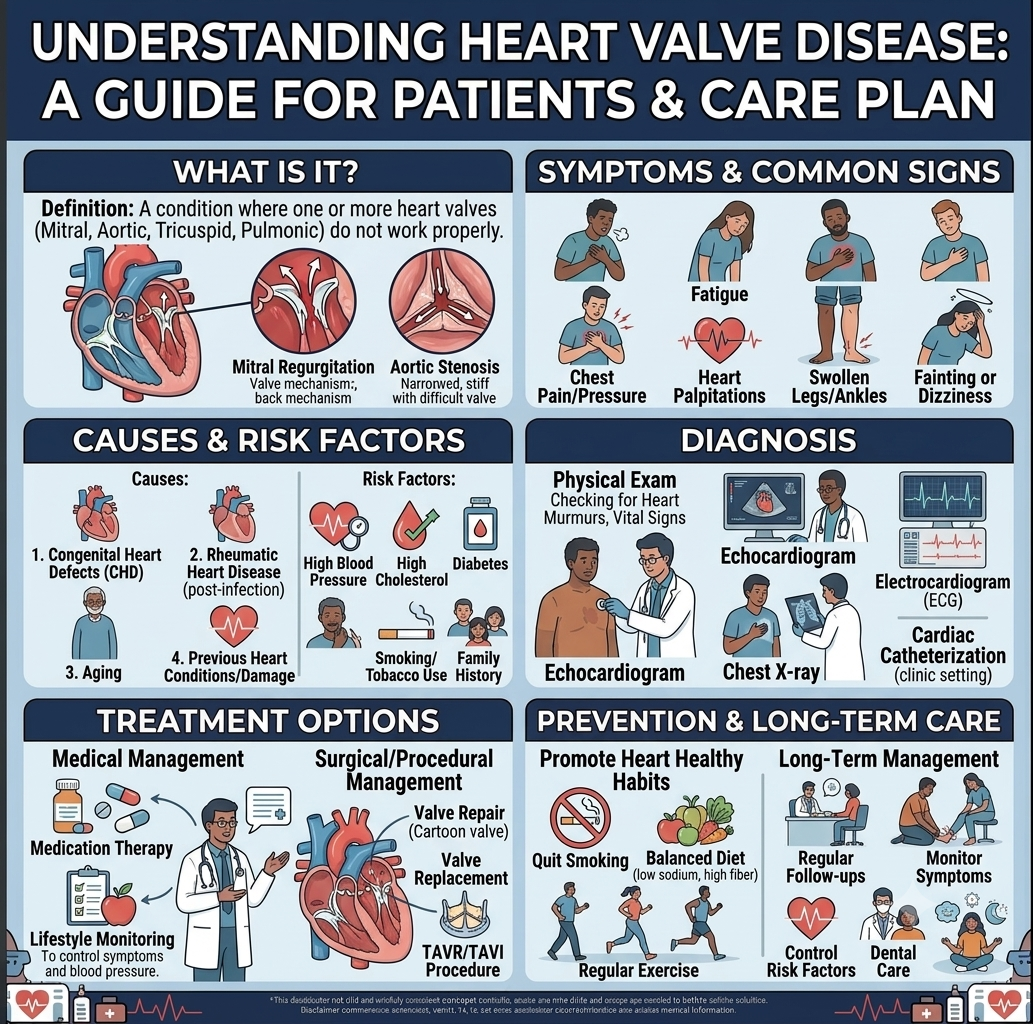
Heart valve disease occurs when one or more of your heart's four valves doesn't work correctly. These valves are crucial for ensuring blood flows through your heart in a single, forward direction. Problems can arise if a valve's flaps become stiff or narrowed (preventing it from opening fully, known as stenosis), if they don't close tightly enough (allowing blood to leak backward, called regurgitation), or if they bulge backward (a condition called prolapse, which can lead to regurgitation). This disrupts normal blood flow, affecting your heart's efficiency and the delivery of blood to your body. Treatment depends on the specific valve affected, the type of problem, and its severity.
Understanding the Condition
Heart Valve Disease: Understanding and Managing a Common Condition
Understanding the Condition
Common Symptoms
Shortness of Breath: Difficulty breathing, which may occur at rest, during activity, or when lying down.
Chest Pain: Discomfort or pain felt in the chest area.
Swelling: Noticeable puffiness in the ankles and feet due to fluid retention.
Irregular Heartbeat: A feeling that your heart is beating too fast, too slow, skipping beats, or fluttering.
Consultation Guide
Which Specialist to Meet
Before your visit, make a list of all your symptoms, including when they started, how often they occur, and anything that makes them better or worse. Bring a list of all medications, vitamins, and supplements you currently take. Be prepared to discuss your medical history and any heart-related conditions in your family. Also, write down any questions you have for the doctor.
Book a doctor visit near me
Healthy Diet: Adopting a balanced diet low in sodium, saturated fats, and cholesterol to support overall heart health and manage symptoms. (Duration: Ongoing for life)
Regular Exercise: Engaging in a doctor-approved physical activity program to strengthen the heart and improve circulation. (Duration: Ongoing for life)
Smoking Cessation: Quitting smoking to reduce damage to blood vessels and improve heart function. (Duration: Ongoing for life)
Weight Management: Maintaining a healthy body weight to lessen the strain on your heart. (Duration: Ongoing for life)
Symptom Awareness: Be vigilant for any new or worsening symptoms like shortness of breath, chest pain, or swelling, and report them to your doctor immediately.
Medication Adherence: Take all prescribed medications exactly as directed by your doctor to manage symptoms, prevent complications, and protect your heart.
Good Dental Hygiene: Practice excellent oral health to prevent bacterial infections from entering the bloodstream and potentially affecting heart valves.
Diagnostic Procedures
You should consult a cardiologist, a medical doctor who specializes in the diagnosis and treatment of heart conditions. Your general practitioner can provide a referral.
Preparations Before Your Visit
Echocardiogram (Heart Ultrasound)
This is the primary diagnostic test for heart valve disease. It uses sound waves to create live, moving images of your heart, showing the structure of your valves, how they open and close, and the direction and speed of blood flow through your heart chambers.
What to Expect
You will lie on an examination table. A technician will apply a special gel to your chest and then move a small handheld device (transducer) over the area. You may feel gentle pressure, but the procedure is painless. It typically takes about 30 to 60 minutes.
Electrocardiogram (ECG or EKG)
An ECG records the electrical signals of your heart. It can detect abnormal heart rhythms, signs of heart muscle damage, or if the heart chambers are enlarged due to valve problems.
What to Expect
Small, sticky electrode patches will be placed on your chest, arms, and legs. These electrodes are connected to a machine that records your heart's electrical activity. The test is quick, painless, and usually takes only a few minutes.
A chest X-ray provides images of your heart and lungs. It can reveal if your heart is enlarged, if the great vessels are affected, or if there is fluid buildup in your lungs, which can be indicators of heart valve disease.
What to Expect
You will stand or sit against a plate, and a technician will ask you to hold your breath briefly while the X-ray image is taken. The procedure is painless and takes only a few minutes.
Cardiac Catheterization
This is a more invasive procedure used for detailed assessment of valve function, particularly to measure pressure within the heart chambers and assess the severity of valve narrowing or leakage.
What to Expect
Treatment Options
Heart valve disease occurs when one or more of your heart's four valves doesn't work correctly. These valves are crucial for ensuring blood flows through your heart in a single, forward direction. Problems can arise if a valve's flaps become stiff or narrowed (preventing it from opening fully, known as stenosis), if they don't close tightly enough (allowing blood to leak backward, called regurgitation), or if they bulge backward (a condition called prolapse, which can lead to regurgitation). This disrupts normal blood flow, affecting your heart's efficiency and the delivery of blood to your body. Treatment depends on the specific valve affected, the type of problem, and its severity.
Medications
Blood Pressure Control Medications: Medications to lower high blood pressure, thereby reducing the workload on the heart. (Duration: Ongoing, as prescribed)
Fluid Reduction Medications (Diuretics): Medications that help the body eliminate excess fluid, reducing swelling and shortness of breath. (Duration: Ongoing, as prescribed)
Heart Rhythm Management Medications: Medications to help control irregular heartbeats and prevent complications. (Duration: Ongoing, as prescribed)
Blood Thinners (Anticoagulants): Medications prescribed to prevent blood clots, especially in certain types of valve disease or after valve replacement. (Duration: Ongoing, as prescribed, sometimes lifelong)
Surgical Procedures
Minimally Invasive Valve Surgery: Performed through smaller incisions or using catheters, reducing trauma and recovery time compared to traditional open-heart surgery. Examples include procedures to replace or repair valves without fully opening the chest. (Duration: One-time procedure, with a shorter recovery period than traditional open surgery)
Prevent Infections: Seek prompt treatment for bacterial infections, especially strep throat, to prevent rheumatic fever, which can damage heart valves. Maintain good hygiene to avoid other infections.
Regular Medical Check-ups: Attend all scheduled appointments with your cardiologist to monitor your heart valve condition, assess heart function, and adjust treatments as needed.
Prevention & Long-Term Wellbeing
You'll receive a local anesthetic at the site where a thin, flexible tube (catheter) is inserted into a blood vessel (typically in the groin or wrist). The catheter is then guided to your heart. You may feel some pressure during insertion, but generally no pain. A special dye might be injected to visualize blood flow on X-ray. The procedure can last 30 to 90 minutes, followed by a recovery period.
Lifestyle Changes and Home Remedies
Heart Valve Repair: Surgical techniques to fix a damaged valve, which may involve patching holes, rejoining valve flaps, removing excess tissue, or inserting a supportive ring. The goal is to restore normal valve function. (Duration: One-time procedure, followed by a recovery period of several weeks to months)
Heart Valve Replacement: Surgical removal of the diseased valve and replacement with an artificial valve. These can be mechanical (durable but require lifelong blood thinners) or biological tissue valves (from animal or human tissue). (Duration: One-time procedure, followed by a recovery period of several weeks to months)
Prevention
Manage Underlying Conditions: Work with your doctor to control conditions like high blood pressure, high cholesterol, and diabetes, which can contribute to heart valve damage.
Maintain a Healthy Lifestyle: Continue following a heart-healthy diet, regular exercise, and avoiding tobacco products to promote overall cardiovascular health.
Long-Term Monitoring
Tags & Topics
Notice an error or need an update?
Help us keep medical information accurate. Report incorrect info or suggest an edit.

