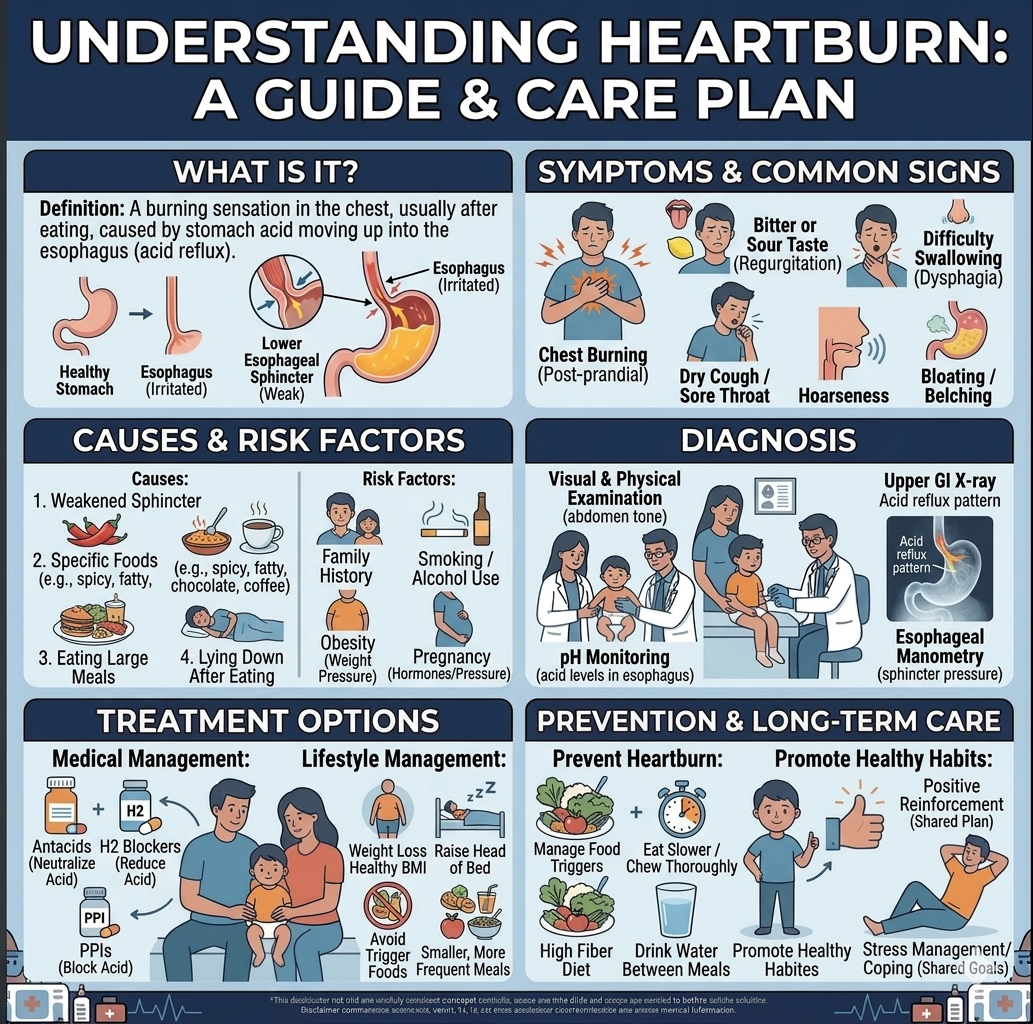
Heartburn is a burning pain behind the breastbone, often with a bitter taste, caused by stomach acid flowing back into the esophagus (acid reflux). While occasional heartburn is common, frequent or severe symptoms may indicate Gastroesophageal Reflux Disease (GERD). It's vital to differentiate severe chest pain from a heart attack, which requires immediate medical attention.
Understanding the Condition
Understanding Heartburn, Acid Reflux, and GERD
Understanding the Condition
Heartburn is a burning pain behind the breastbone, often with a bitter taste, caused by stomach acid flowing back into the esophagus (acid reflux). While occasional heartburn is common, frequent or severe symptoms may indicate Gastroesophageal Reflux Disease (GERD). It's vital to differentiate severe chest pain from a heart attack, which requires immediate medical attention.
Common Symptoms
Heartburn: A fiery sensation behind your breastbone, sometimes moving up to the throat, often with a bitter or acidic taste in the mouth. Pain frequently intensifies after eating, in the evening, or when bending over or lying down.
Gastroesophageal Reflux Disease (GERD): Frequent heartburn (occurring two or more times a week), persistent chest pain (beyond typical burning), difficulty swallowing (feeling like food is caught in the throat), regurgitation (food or liquid coming back up), chronic cough, hoarseness, sore throat, new or worsening asthma, and disturbed sleep.
Warning Signs for Immediate Medical Help (Heart Attack vs. Heartburn): Severe chest pain or pressure, especially if crushing, squeezing, or spreading to the arm, jaw, back, neck, or stomach. Also, shortness of breath, cold sweat, dizziness, lightheadedness, nausea, or vomiting. If you have persistent chest pain and are unsure, seek emergency medical help immediately, as symptoms, even if temporary, can be a warning sign.
Consultation Guide
Which Specialist to Meet
Begin with your primary care doctor. For frequent, severe, or persistent symptoms, a referral to a gastroenterologist (digestive system specialist) may be necessary.
Preparations Before Your Visit
Before your visit, detail your symptoms: frequency, triggers, and relief methods. Keep a symptom journal including food intake and pain severity. Bring a list of all current medications, supplements, and your full medical history.
Book a doctor visit near me
Smoking Cessation: Quitting significantly improves reflux symptoms. (Duration: Ongoing)
Antacids: Neutralize stomach acid for quick relief. (Duration: Short-term, for occasional symptoms)
Acid Reducers (H2 Blockers): Decrease stomach acid production. (Duration: Short-term relief or longer-term as prescribed)
Proton Pump Inhibitors (PPIs): Potent acid blockers that aid healing of esophageal tissue. (Duration: Typically daily for 4-8 weeks, or longer for chronic GERD, as prescribed)
Adhere to Treatment Plan: Strict adherence to medications and lifestyle changes ensures symptom control and complication prevention.
Consultation Guide
You'll drink a flavored barium liquid while X-rays are taken. You may be asked to change positions. The test is painless, lasting 30-60 minutes. Afterward, drink plenty of fluids to help pass the barium, which can cause temporary constipation and white stools.
Diagnostic Procedures
A gastroenterologist uses a flexible tube with a camera (endoscope) inserted down your throat to visually inspect the lining of your esophagus, stomach, and upper small intestine. This helps identify inflammation, damage, or other abnormalities. Tissue samples (biopsies) can be collected.
What to Expect
You'll receive sedatives and a throat anesthetic. Lying on your side, the endoscope is gently guided. The procedure is typically painless, lasting 15-30 minutes. Afterward, you recover as sedatives wear off. Expect a mild sore throat or bloating, which quickly subsides. A ride home is necessary due to sedation.
X-ray (Barium Swallow)
This X-ray uses a barium liquid you drink to coat and highlight your esophagus, stomach, and upper small intestine. This allows doctors to visualize organ shape, function, identify reflux, blockages, or other abnormalities.
What to Expect
Treatment Options
Medications (Over-the-Counter and Prescription)
Fundoplication: For severe, unresponsive GERD, surgery reinforces the lower esophageal sphincter by wrapping part of the stomach around the esophagus. (Duration: One-time procedure; recovery varies)
Regular Doctor Visits: For chronic GERD, consistent follow-ups with your doctor or gastroenterologist are vital to monitor the condition and adjust treatment.
Monitor for Complications: Untreated, long-term GERD can lead to esophageal narrowing, ulcers, or precancerous changes (Barrett's esophagus). Early detection is key.
Prevention & Long-Term Wellbeing
Lifestyle Changes and Home Remedies
Dietary Adjustments: Avoid trigger foods (fatty, spicy, chocolate, caffeine, alcohol, peppermint, citrus, tomatoes). Eat smaller, frequent meals. (Duration: Ongoing)
Weight Management: Losing excess weight reduces abdominal pressure, easing reflux. (Duration: Ongoing)
Eating Habits: Avoid eating 2-3 hours before bedtime. (Duration: Ongoing)
Elevate Head of Bed: Raise bed head by 6-8 inches (blocks/wedge pillow) to use gravity against reflux. (Duration: Ongoing)
Loose Clothing: Avoid tight waistbands that increase stomach pressure. (Duration: Ongoing)
Minimally Invasive Procedures: Newer techniques to strengthen the sphincter using various devices or energy. (Duration: One-time procedure; recovery varies)
Prevention
Maintain a Healthy Weight: Essential for preventing acid reflux.
Mindful Eating: Eat slowly, chew thoroughly, avoid overeating.
Identify and Avoid Trigger Foods: Learn and limit personal triggers.
Manage Stress: Practice relaxation techniques like meditation or deep breathing to mitigate stress-related digestive issues.
Stay Hydrated: Drink ample water daily.
Long-Term Monitoring
Tags & Topics
Notice an error or need an update?
Help us keep medical information accurate. Report incorrect info or suggest an edit.

