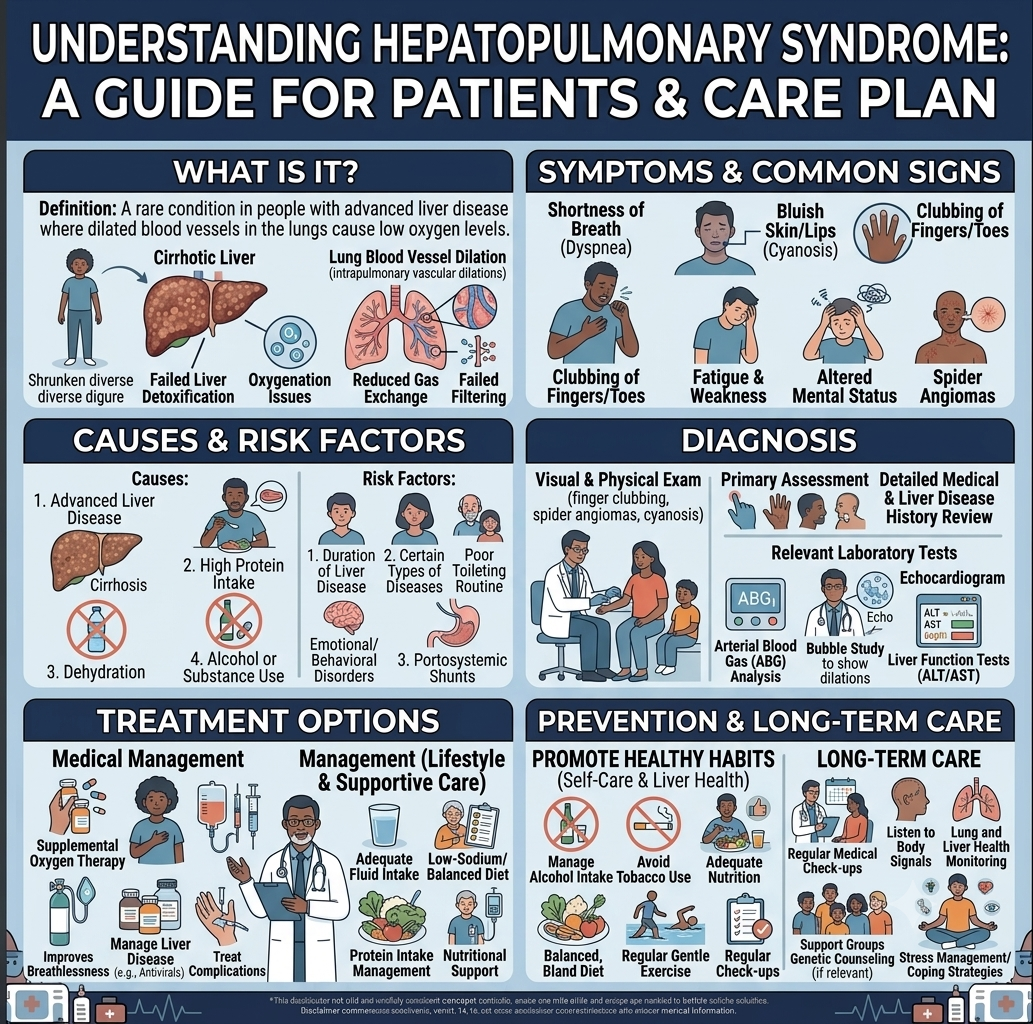
Hepatopulmonary Syndrome (HPS) is a serious lung complication that can develop in people with advanced liver disease. It occurs when the small blood vessels in the lungs widen and increase in number. This abnormal change makes it difficult for red blood cells to effectively pick up oxygen from the air you breathe. As a result, the body's tissues don't receive enough oxygen, leading to low oxygen levels in the blood, a condition called hypoxemia. While the exact link between liver disease and these specific lung changes is still being researched, a liver transplant is currently the only known cure for HPS.
Understanding the Condition
Hepatopulmonary Syndrome: A Lung Complication of Liver Disease
Understanding the Condition
Hepatopulmonary Syndrome (HPS) is a serious lung complication that can develop in people with advanced liver disease. It occurs when the small blood vessels in the lungs widen and increase in number. This abnormal change makes it difficult for red blood cells to effectively pick up oxygen from the air you breathe. As a result, the body's tissues don't receive enough oxygen, leading to low oxygen levels in the blood, a condition called hypoxemia. While the exact link between liver disease and these specific lung changes is still being researched, a liver transplant is currently the only known cure for HPS.
Common Symptoms
Shortness of Breath: You might feel breathless, particularly when sitting or standing, and find that this feeling improves when you lie down. This symptom is known as platypnea.
Finger Clubbing: The tips of your fingers may become wider and rounder than usual, resembling the shape of a drumstick. This is a sign of long-term low oxygen levels.
Spider Angioma: Small, broken blood vessels might appear just under the skin, often on the face, neck, or chest, resembling a spider's web with a central red spot and radiating fine lines.
Cyanosis: A bluish tint to the lips and skin (in lighter skin tones) or a light gray appearance of the lips or tongue (in darker skin tones). This indicates very low oxygen levels in the blood.
Consultation Guide
Which Specialist to Meet
If you have advanced liver disease and experience symptoms such as persistent shortness of breath, it's crucial to consult with a Hepatologist (a liver specialist) and a Pulmonologist (a lung specialist). If HPS is diagnosed, a Transplant Specialist will also be involved to evaluate eligibility for a liver transplant.
Preparations Before Your Visit
Before your appointment, gather your complete medical history, including any existing liver conditions, and a list of all medications, supplements, and vitamins you currently take. Write down any symptoms you've experienced, how long they've lasted, and any questions you have for the doctor. If you have previous medical records or test results related to your liver or lungs, bring them along.
Book a doctor visit near me
Liver Transplant: A liver transplant is the only effective long-term treatment and cure for Hepatopulmonary Syndrome. By replacing the diseased liver with a healthy one, the abnormal blood vessel changes in the lungs often improve or resolve completely over time. (Duration: A one-time surgical procedure, followed by lifelong immunosuppressive medication and medical follow-up. Improvement in HPS symptoms and lung function can take several months to a year after transplant.)
Diagnostic Procedures
Pulse Oximetry and Arterial Blood Gas (ABG) Test
Pulse oximetry is a non-invasive test using a small clip on your finger to measure the oxygen saturation in your blood. An ABG test involves taking a small blood sample, usually from an artery in your wrist, to measure oxygen and carbon dioxide levels directly, providing a more precise assessment.
What to Expect
For pulse oximetry, a small device will be clipped painlessly to your finger for a few seconds. For an ABG, the healthcare provider will clean your wrist and insert a thin needle into an artery to draw blood. You might feel a brief, sharp prick and some pressure. The sample is quickly collected and sent for analysis.
Contrast-Enhanced Echocardiography (Bubble Study)
This specialized ultrasound of the heart uses a saline solution containing tiny bubbles, injected into a vein, to detect abnormal connections between the blood vessels in the lungs. Normally, these bubbles are filtered by the lungs and don't reach the left side of the heart. In HPS, due to widened lung vessels, they can pass through to the left side of the heart, indicating a 'shunt.'
What to Expect
You will lie on an exam table. An ultrasound probe will be placed on your chest. An intravenous (IV) line will be inserted into a vein in your arm, through which the saline bubble solution will be injected. You may be asked to hold your breath or change positions during the test. The procedure is generally painless, though you might feel a brief cold sensation from the IV.
Technetium-99m Macroaggregated Albumin (Tc-99m MAA) Lung Perfusion Scan
This nuclear medicine test helps quantify the degree of shunting in the lungs. A small amount of a radioactive tracer (Tc-99m MAA) is injected into a vein. These particles are larger than red blood cells and usually get trapped in the lung capillaries. In HPS, if blood vessels are widened, some particles may bypass the lungs and appear in other organs, such as the brain or kidneys, indicating the severity of the shunting.
What to Expect
A small amount of the radioactive tracer will be injected into a vein in your arm. You will then lie still on a table while a special camera (gamma camera) scans your chest and sometimes your brain and other organs. The scan usually takes about 30-60 minutes. The radiation dose is very low and considered safe.
Treatment Options
Therapies
Supplemental Oxygen Therapy: For individuals experiencing low blood oxygen levels, breathing extra oxygen through a nasal cannula or mask can help alleviate shortness of breath and improve overall oxygen saturation. This is a supportive measure, not a cure. (Duration: Typically ongoing, as needed, often for many hours a day or continuously, depending on the severity of low oxygen.)
Surgical Procedures
Liver Disease Management: Adhering to the treatment plan for your underlying liver disease is paramount, as the health of your liver directly impacts HPS.
Avoid Harmful Substances: Strictly avoid alcohol, recreational drugs, and any over-the-counter medications or supplements that could further damage your liver without prior physician approval.
Gentle Physical Activity: Engage in light, regular physical activity as tolerated and recommended by your healthcare team to maintain strength and lung capacity, avoiding overexertion, especially if you have shortness of breath.
Smoking Cessation: If you smoke, quitting is crucial for both lung and liver health.
Prevention & Long-Term Wellbeing
Long-Term Monitoring
Regular Medical Check-ups: Consistent follow-up with your hepatologist and pulmonologist is essential to monitor your liver health, lung function, and oxygen levels.
Oxygen Level Monitoring: If prescribed oxygen therapy, regular checks of your blood oxygen saturation (using pulse oximetry) will help ensure you are receiving adequate oxygen.
Lifestyle Adjustments
Nutritional Support: Follow a diet recommended by your doctor or a dietitian, often one that supports liver health and provides adequate nutrients. This may involve limiting sodium or certain proteins depending on your specific liver condition.
Tags & Topics
Notice an error or need an update?
Help us keep medical information accurate. Report incorrect info or suggest an edit.


