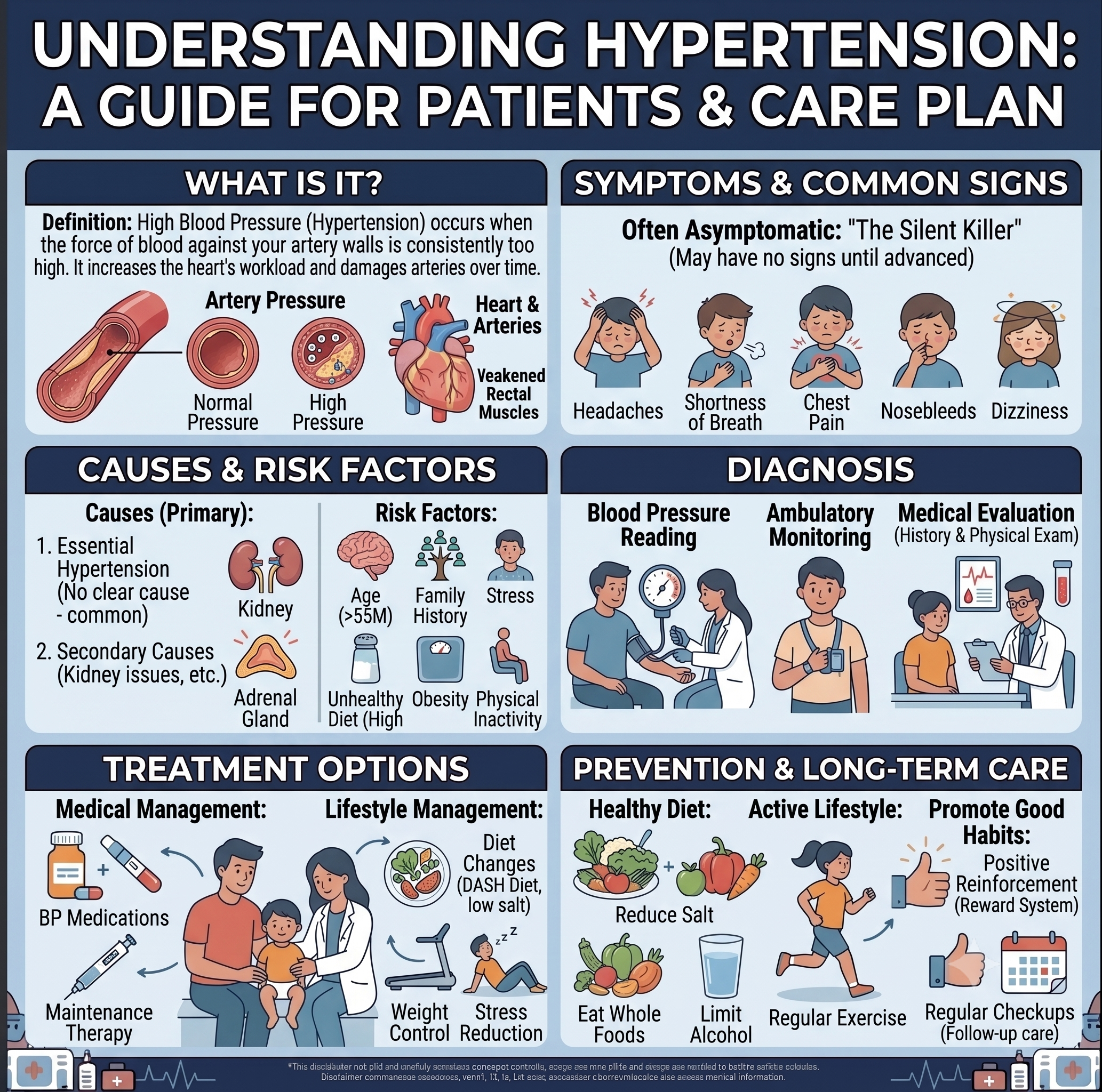
High blood pressure, or hypertension, occurs when blood pushes too hard against artery walls. Your heart works harder to pump blood. It's measured by two numbers: systolic (heart beats) and diastolic (heart rests). Affecting up to 40% of adults, it’s a leading reason for medication. While often without a clear cause (primary hypertension) due to genetics and lifestyle (age, obesity, diet, alcohol, inactivity), some cases have specific causes (secondary hypertension), like kidney disease or certain medications.
Understanding the Condition
Understanding High Blood Pressure (Hypertension)
Understanding the Condition
Common Symptoms
Often Silent: High blood pressure usually shows no symptoms, earning it the name "silent killer."
Medical Emergency (Hypertensive Crisis): A sudden, very high reading (180/120 mm Hg or more) with symptoms like chest pain, severe headache, confusion, vision changes, speech difficulty, one-sided weakness, or shortness of breath is a hypertensive crisis and requires immediate emergency care.
Consultation Guide
Which Specialist to Meet
A general practitioner (primary care doctor) is usually the first point of contact. They may refer you to specialists like a cardiologist (heart specialist) or a nephrologist (kidney specialist) if your high blood pressure is severe, difficult to control, or linked to other organ issues.
Preparations Before Your Visit
Before your visit, keep a record of any home blood pressure readings you've taken. Avoid caffeine, alcohol, and smoking for at least 30 minutes before your appointment. Wear loose-fitting clothing so the blood pressure cuff can be placed on your bare arm. Be ready to discuss your medical history, current medications (including over-the-counter drugs, supplements, and herbal remedies), lifestyle habits, and any symptoms you've experienced.
Book a doctor visit near me
Consultation Guide
High blood pressure, or hypertension, occurs when blood pushes too hard against artery walls. Your heart works harder to pump blood. It's measured by two numbers: systolic (heart beats) and diastolic (heart rests). Affecting up to 40% of adults, it’s a leading reason for medication. While often without a clear cause (primary hypertension) due to genetics and lifestyle (age, obesity, diet, alcohol, inactivity), some cases have specific causes (secondary hypertension), like kidney disease or certain medications.
Severe Signs: Extremely high pressure might cause shortness of breath, blurred vision, or headaches.
Address Stress & Anxiety: Develop long-term coping strategies for stress and anxiety, as these can cause temporary blood pressure spikes and lead to unhealthy habits.
Understand Daily Patterns: Be aware that blood pressure naturally fluctuates throughout the day and can be affected by factors like cold weather. Discuss any irregular patterns with your healthcare team.
Diagnostic Procedures
A routine test measuring arterial pressure as your heart pumps blood. It's crucial for screening and diagnosis. A cuff inflates around your arm, then slowly deflates while two numbers (systolic/top and diastolic/bottom) are recorded. Diagnosis typically involves several readings over multiple visits.
What to Expect
You'll sit quietly, feet flat, back supported, arm resting on a surface at heart level. A cuff will tighten around your bare upper arm. The squeeze is brief. A healthcare professional records the readings, and for diagnosis, they'll usually check on different occasions.
Ambulatory Blood Pressure Monitoring (24-hour monitoring)
A portable device worn for 24 hours automatically records blood pressure during daily activities and sleep. This captures fluctuations missed in a clinic, helping identify "white coat" (high in clinic) or "masked" (high at home) hypertension.
What to Expect
A small monitor and cuff are fitted to your arm. You wear it for a full day, keeping a simple activity log. The cuff will inflate periodically, day and night. You must keep it dry (avoid showering) and ensure the cuff is in the correct position. After 24 hours, you return the device for analysis.
Treatment Options
Medications
Diuretics (Water Pills): Help kidneys remove excess salt and water, reducing blood volume and lowering blood pressure. (Duration: Long-term, as prescribed)
Angiotensin-Converting Enzyme (ACE) Inhibitors: Block a body chemical that constricts blood vessels, allowing them to relax and widen. (Duration: Long-term, as prescribed)
Angiotensin II Receptor Blockers (ARBs): Similar to ACE inhibitors, they block the action of a blood vessel-constricting chemical. (Duration: Long-term, as prescribed)
Beta Blockers: Reduce heart rate and the force of heartbeats, also helping to widen blood vessels. (Duration: Long-term, as prescribed)
Calcium Channel Blockers: Relax blood vessels by blocking calcium entry into heart and artery cells; some also slow heart rate. (Duration: Long-term, as prescribed)
Alpha Blockers: Relax muscles in the walls of smaller arteries and veins, improving blood flow. (Duration: Long-term, as prescribed)
Vasodilators: Directly relax blood vessel wall muscles to ease blood flow and reduce pressure. (Duration: Long-term, as prescribed)
Therapies
Device-Guided Slow Breathing: Utilizes electronic aids or exercises to teach slower, deeper breathing for stress reduction and potential blood pressure lowering. (Duration: Typically 15 minutes daily, 3-4 days per week; effects may be seen within weeks)
Avoid Blood Pressure-Raising Substances: Be mindful of over-the-counter drugs (like decongestants, NSAIDs) and supplements that can raise blood pressure or interfere with medications; always discuss with your doctor.
Treatment Adherence: If prescribed, take blood pressure medications exactly as directed and do not adjust doses without consulting your medical team.
Open Communication: Discuss all health concerns, including sexual health, with your care team to find appropriate solutions and support.
Prevention & Long-Term Wellbeing
Lifestyle Modifications (Home Remedies)
Healthy Eating: Adopt diets rich in whole grains, fruits, vegetables, and low-fat dairy (e.g., DASH). Limit sodium (<1,500 mg/day ideal) and increase potassium. (Duration: Ongoing)
Regular Exercise: Aim for at least 150 minutes per week of moderate or 75 minutes per week of vigorous aerobic activity. (Duration: Ongoing; effects typically seen in 1-3 months)
Weight Management: Losing excess weight, even small amounts, significantly lowers blood pressure. (Duration: Ongoing)
Limit Alcohol: Adhere to recommended limits (up to one drink per day for women, two per day for men). (Duration: Ongoing)
Stress Management: Practice relaxation techniques or mindfulness to reduce stress. (Duration: Ongoing)
Adequate Sleep: Aim for 7-9 hours of quality sleep nightly. (Duration: Ongoing)
Consistent Monitoring
Home Blood Pressure Checks: Regularly monitor blood pressure at home using an accurate, properly sized cuff and share readings with your doctor.
Professional Check-ups: Maintain regular doctor visits for ongoing blood pressure monitoring and overall health assessment.
Sustained Healthy Lifestyle
Diet & Exercise: Maintain a balanced diet (low sodium, high potassium, whole grains) and regular physical activity to support long-term heart health.
Weight & Sleep Management: Aim for and maintain a healthy weight and prioritize 7-9 hours of quality sleep nightly.
Awareness & Management
Tags & Topics
Notice an error or need an update?
Help us keep medical information accurate. Report incorrect info or suggest an edit.

