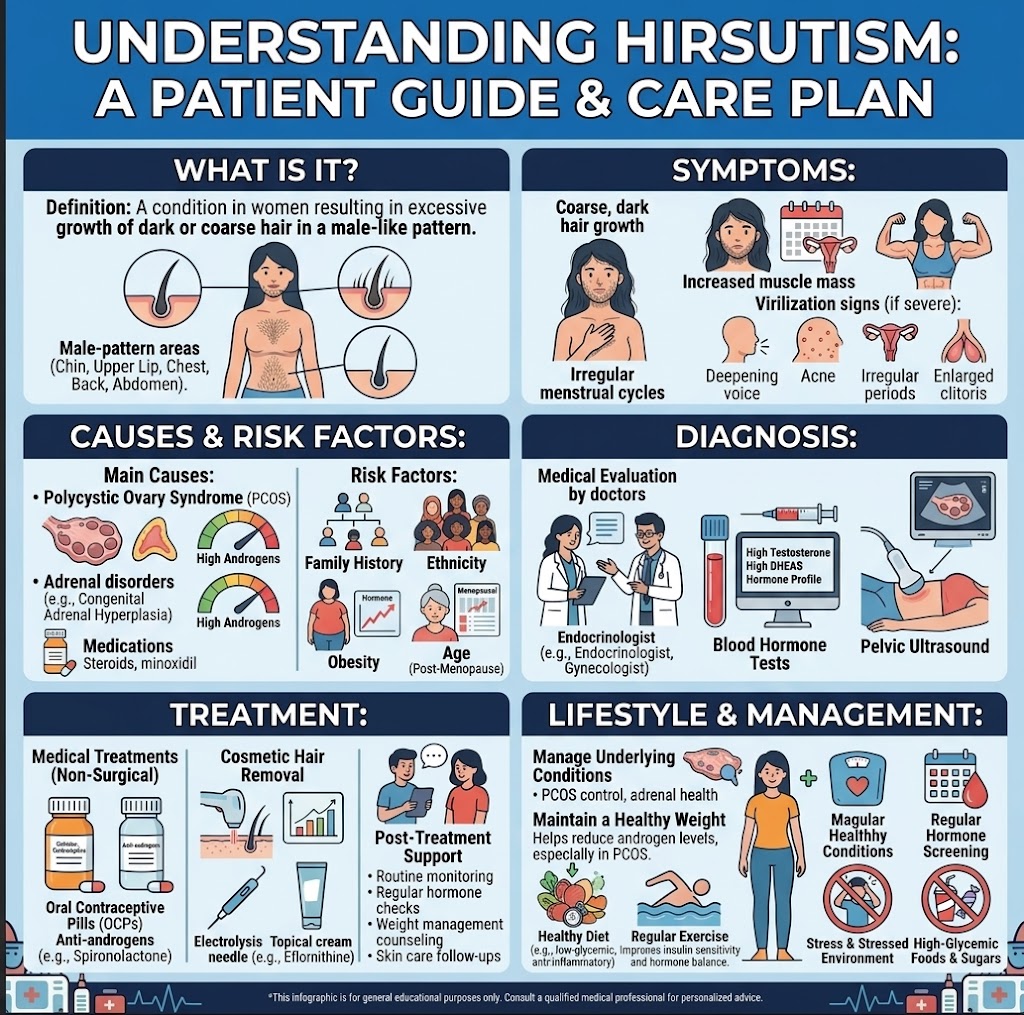
Hirsutism is a common condition in women characterized by the growth of dark, coarse hair in areas where hair usually doesn't appear, such as the face, chest, and back. This hair growth pattern is typically associated with male characteristics. Often, hirsutism occurs due to higher-than-normal levels of male hormones, known as androgens, with testosterone being the primary hormone involved. While excess hair growth is the main symptom, when androgen levels are significantly high, other changes, collectively called virilization, can also develop over time. Hirsutism can significantly impact a woman's self-esteem and quality of life, but various self-care methods and medical treatments are available to manage the condition.
Understanding the Condition
Hirsutism: Understanding Excessive Hair Growth in Women
Understanding the Condition
Hirsutism is a common condition in women characterized by the growth of dark, coarse hair in areas where hair usually doesn't appear, such as the face, chest, and back. This hair growth pattern is typically associated with male characteristics. Often, hirsutism occurs due to higher-than-normal levels of male hormones, known as androgens, with testosterone being the primary hormone involved. While excess hair growth is the main symptom, when androgen levels are significantly high, other changes, collectively called virilization, can also develop over time. Hirsutism can significantly impact a woman's self-esteem and quality of life, but various self-care methods and medical treatments are available to manage the condition.
Common Symptoms
Excess Hair Growth: The primary symptom of hirsutism is the appearance of stiff or dark body hair in a male-like pattern. This includes areas such as the upper lip, chin, sideburns, neck, chest, upper and lower back, abdomen, upper arms, and thighs. This hair is often noticeable around the mouth and chin.
Virilization Symptoms (with very high androgen levels): When hirsutism is caused by significantly elevated androgen levels, other symptoms can emerge over time in a process called virilization. These may include a deepening of the voice, male-pattern balding, acne, a decrease in breast size, and enlargement of the clitoris.
Consultation Guide
Which Specialist to Meet
If you notice excessive or rapidly growing coarse hair on your face or body, especially if accompanied by symptoms of virilization, it's important to consult with your healthcare team. You may be referred to an endocrinologist, a specialist who diagnoses and treats hormone disorders, or a dermatologist, a specialist in skin problems.
Preparations Before Your Visit
Before your visit, be prepared to discuss when you first noticed the hair growth, its progression, any other symptoms you're experiencing, and any medications or supplements you are taking. Your doctor may ask about your menstrual cycle and family history. Consider noting down any specific concerns or questions you have about your condition and treatment options.
Book a doctor visit near me
Your doctor will conduct a physical examination to assess the extent and pattern of your hair growth. They will also ask about your medical history, including your menstrual cycle, any other symptoms, and family history of similar conditions, to help identify potential underlying causes.
Maintain a Healthy Lifestyle: For many women with hirsutism, especially those with conditions like PCOS, maintaining a healthy weight through balanced nutrition and regular exercise can help regulate hormone levels and may improve symptoms. Discuss appropriate lifestyle changes with your healthcare provider.
Address Emotional and Psychological Impact: Hirsutism can significantly affect self-esteem and body image. Seeking support from family, friends, or a mental health professional can be beneficial. Connecting with support groups can also provide a sense of community and shared experience.
Consultation Guide
Oral Contraceptives (Birth Control Pills): These medications, containing estrogen and progestin, help reduce androgen production by the ovaries and block their effects. They are often the first-line medical treatment for hirsutism not caused by a tumor. (Duration: Noticeable improvement may take 6 to 12 months of consistent use.)
Tumor Removal (if applicable): If hirsutism is caused by an androgen-producing tumor in the ovaries or adrenal glands, surgical removal of the tumor is typically the definitive treatment. (Duration: Surgical recovery varies; hair growth may gradually diminish over months following surgery.)
Diagnostic Procedures
Physical Examination and Medical History
What to Expect
Blood tests are crucial for measuring hormone levels, particularly androgens like testosterone. These tests help determine if hirsutism is due to an imbalance in hormones and can also screen for underlying conditions like Polycystic Ovary Syndrome (PCOS) or adrenal gland disorders.
What to Expect
A small sample of blood will be drawn, typically from a vein in your arm. This is a routine procedure and usually takes only a few minutes. You may be asked to fast before the test, depending on what specific hormone levels are being measured.
An ultrasound uses sound waves to create images of internal body structures. In the context of hirsutism, it may be used to examine the ovaries or adrenal glands to check for cysts, tumors, or other abnormalities that could be causing hormone imbalances.
What to Expect
You will lie on an examination table. A gel will be applied to the skin over the area being examined (e.g., lower abdomen for ovaries). A small handheld device called a transducer will be moved over the gelled area, sending sound waves into your body. These sound waves bounce back and create images on a monitor. The procedure is generally painless, though you might feel slight pressure. For a pelvic ultrasound, you might be asked to have a full bladder, so you may need to drink several glasses of water beforehand.
CT Scan (Computerized Tomography Scan)
A CT scan uses specialized X-ray equipment and computer processing to create detailed cross-sectional images of your body. It can provide more detailed views of organs and tissues than a standard X-ray, helping to identify very small tumors or abnormalities in the adrenal glands or ovaries that might be producing excess hormones.
What to Expect
You will lie on a motorized table that slides into a large, donut-shaped machine. You'll need to remain very still during the scan. The CT scanner rotates around you, taking images from various angles. You may hear humming or clicking noises. In some cases, a contrast dye might be given intravenously or orally to enhance the images. The procedure is typically painless and usually takes between 10 to 30 minutes, depending on the area being scanned. You'll communicate with the technician through an intercom.
Treatment Options
Self-Care and Hair Removal Methods
Shaving: A quick and common method to remove hair at the skin's surface. It offers temporary results. (Duration: Requires daily or frequent application.)
Plucking/Tweezing: Removes individual hairs from the root. Best for small areas or stray hairs. (Duration: Results last a few days to a few weeks, depending on hair growth cycle.)
Waxing: Applies warm wax to the skin, then quickly removes it, pulling multiple hairs from the root. (Duration: Results typically last 2 to 6 weeks.)
Depilatory Creams: Chemical creams that dissolve hair at the skin's surface. Follow product instructions carefully to avoid skin irritation. (Duration: Results last a few days to a week.)
Medications
Anti-androgen Medications: These medications block androgen receptors in the body, preventing male hormones from stimulating hair growth. They are often prescribed in combination with oral contraceptives. (Duration: Significant results typically appear after 6 to 12 months of regular use.)
Laser Hair Removal: A procedure that uses concentrated light beams to damage hair follicles, inhibiting or delaying future hair growth. It works best on individuals with light skin and dark hair, though advances allow for treatment on various skin types. It's not usually a permanent solution. (Duration: Requires multiple initial treatment sessions (typically 4 to 6 sessions, spaced 4 to 6 weeks apart), with potential maintenance treatments needed periodically.)
Surgical Procedures
Consistent Treatment Adherence: Hirsutism often requires ongoing management. Consistently following your prescribed treatment plan, whether it involves medication or regular hair removal procedures, is crucial for achieving and maintaining results. Be patient, as medical treatments can take several months to show noticeable improvement.
Regular Medical Follow-ups: Schedule regular check-ups with your doctor or specialist to monitor your condition, assess treatment effectiveness, and adjust your plan as needed. This ensures ongoing care and early detection of any new developments.
Sun Protection After Hair Removal: If undergoing laser hair removal, protect treated skin from sun exposure to minimize the risk of pigment changes and other side effects. Use broad-spectrum sunscreen and protective clothing.
Prevention & Long-Term Wellbeing
During a physical examination, the doctor will observe the areas of your body affected by excess hair. They may use a standardized scoring system to quantify the amount and location of hair. You will answer questions about your health, lifestyle, and any changes you've noticed over time.
Managing Hirsutism and Long-Term Wellbeing
Tags & Topics
Notice an error or need an update?
Help us keep medical information accurate. Report incorrect info or suggest an edit.


