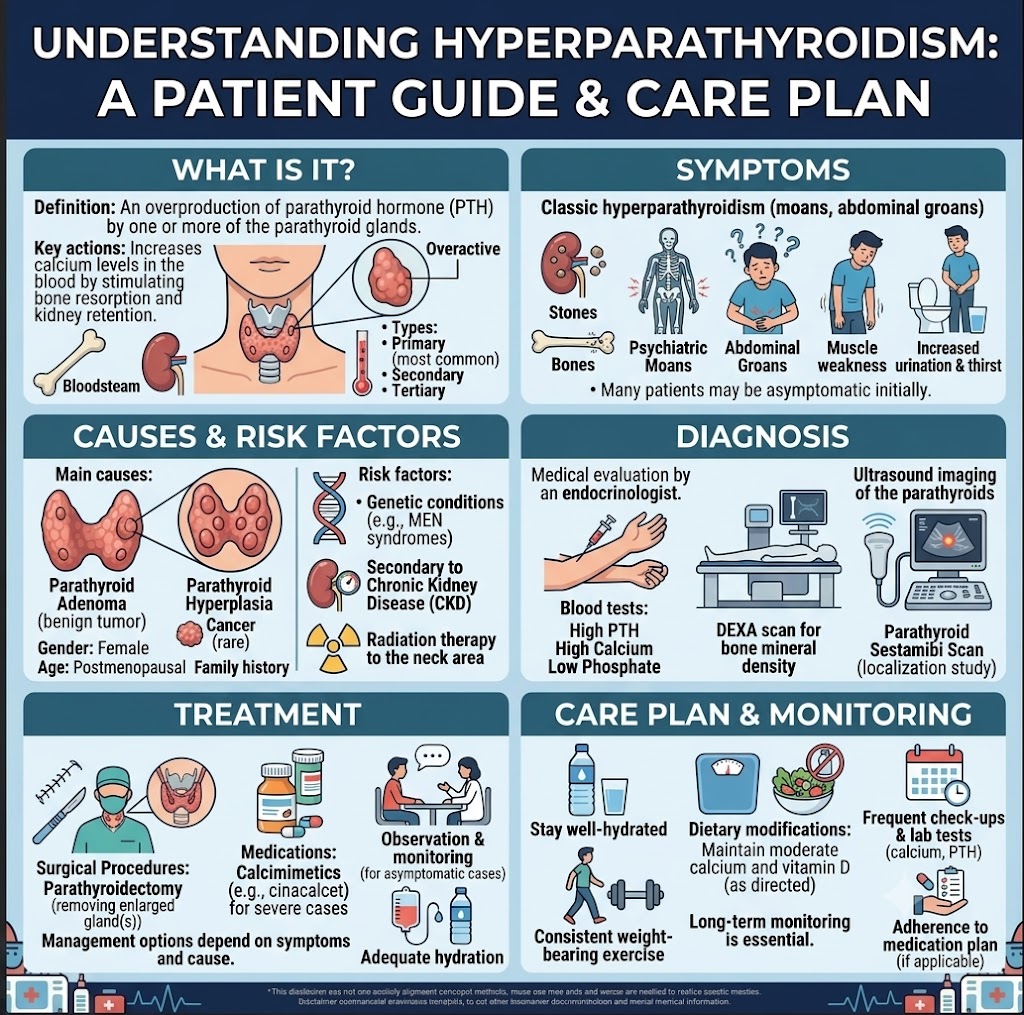
Hyperparathyroidism occurs when the body produces too much parathyroid hormone. This hormone is made by four tiny glands, each about the size of a grain of rice, located behind the thyroid gland at the base of the neck. Parathyroid hormone plays a crucial role in regulating calcium and phosphorus levels in the blood and tissues, which are vital for healthy nerves, muscles, and bones. There are two main types: Primary hyperparathyroidism, where one or more parathyroid glands become overactive, leading to excessively high calcium levels. Secondary hyperparathyroidism happens when another health problem, such as kidney disease or low vitamin D, causes low calcium, prompting the parathyroid glands to overwork to compensate.
Understanding the Condition
Hyperparathyroidism: Understanding Overactive Parathyroid Glands
Understanding the Condition
Common Symptoms
Achy bones and joints: Persistent aches and pains in bones and joints.
Bone loss (osteoporosis): Weakening of bones, making them more fragile and prone to fractures.
Kidney stones: Formation of hard deposits in the kidneys due to excess calcium.
Frequent urination: Needing to urinate more often than usual, especially at night.
Stomach pain: Discomfort or pain in the abdominal area.
Nausea, vomiting, loss of appetite: Feeling sick to your stomach, throwing up, and reduced desire to eat.
Tiredness and weakness: Feeling unusually fatigued or lacking physical strength.
Depression and memory problems: Changes in mood, feelings of sadness, or difficulty with memory and concentration.
Muscle weakness: Reduced strength in muscles, making daily activities difficult.
Increased thirst: Feeling unusually thirsty and drinking more fluids.
Consultation Guide
Which Specialist to Meet
If you experience symptoms of hyperparathyroidism, consult an endocrinologist, a doctor specializing in hormones. For cases related to kidney disease, a nephrologist (kidney specialist) may also be involved. A surgeon specializing in endocrine procedures might be needed if surgery is a consideration.
Preparations Before Your Visit
Before your visit, gather your medical history, including any existing conditions, current medications (prescription and over-the-counter), vitamins, and supplements. Make a list of all your symptoms and when they began. Be prepared to discuss your diet and family medical history. You may be asked to fast before blood tests.
Book a doctor visit near me
Symptom Vigilance: Be attentive to any new or worsening symptoms, such as increased fatigue, bone pain, or changes in urination patterns, and report them to your healthcare provider promptly.
Consultation Guide
Hyperparathyroidism occurs when the body produces too much parathyroid hormone. This hormone is made by four tiny glands, each about the size of a grain of rice, located behind the thyroid gland at the base of the neck. Parathyroid hormone plays a crucial role in regulating calcium and phosphorus levels in the blood and tissues, which are vital for healthy nerves, muscles, and bones. There are two main types: Primary hyperparathyroidism, where one or more parathyroid glands become overactive, leading to excessively high calcium levels. Secondary hyperparathyroidism happens when another health problem, such as kidney disease or low vitamin D, causes low calcium, prompting the parathyroid glands to overwork to compensate.
A healthcare professional will draw a small blood sample, usually from a vein in your arm. This quick procedure typically causes only a brief pinch. You might need to fast for a certain period before the test, depending on the specific measurements required.
A fast, painless imaging test that uses radiation to create images of internal body structures, particularly bones. It can help identify bone abnormalities or fractures caused by weakened bones from hyperparathyroidism.
This test records the electrical signals of your heart. High calcium levels can sometimes impact heart rhythm and function, making an ECG useful for checking for any heart abnormalities caused by hyperparathyroidism.
Regular Medical Check-ups: Routine physical examinations and blood tests can help detect early changes in calcium levels, especially if you have known risk factors for hyperparathyroidism.
Diagnostic Procedures
These tests measure levels of parathyroid hormone (PTH), calcium, phosphorus, and alkaline phosphatase (ALP) in your blood. High PTH and calcium levels are key indicators of hyperparathyroidism. Elevated ALP can suggest bone issues.
What to Expect
A test of your urine to detect disorders like kidney disease or urinary tract infections, which can be linked to hyperparathyroidism or its complications, such as kidney stones. It examines the urine's appearance, concentration, and content.
What to Expect
You will provide a urine sample, often a 'clean-catch' midstream sample, in a sterile cup. This is a quick, non-invasive procedure performed privately in a restroom.
Bone Density Test (DEXA Scan)
This X-ray-based test measures how much calcium and other minerals are present in specific bone segments (commonly spine, hip, or forearm). It assesses for osteoporosis, a condition of weak, fragile bones that can result from long-term high calcium levels due to hyperparathyroidism.
What to Expect
You will lie still on a padded table while a mechanical arm passes over your body, scanning your bones with low-dose X-rays. The test is painless, takes 10-20 minutes, and requires you to remain still. You typically remain clothed, but metal objects like jewelry must be removed.
What to Expect
You will be positioned on an X-ray table or against a surface, and a technician will operate the machine. You might be asked to hold your breath briefly. The procedure is very quick, usually a few minutes, and you won't feel anything during the X-ray.
Electrocardiogram (ECG or EKG)
What to Expect
You will lie down while small, sticky patches (electrodes) are placed on your chest, arms, and legs. These connect to a machine that records your heart’s electrical activity. The test is painless, takes about 5-10 minutes, and requires you to lie still.
Ongoing Blood Tests: Regular monitoring of calcium, parathyroid hormone, and vitamin D levels is essential, both after surgery and if the condition is being managed without surgery.
Periodic Bone Density Scans: Undergo periodic bone density tests to assess bone health and monitor for the development or progression of osteoporosis.
Treatment Options
Medications
Bone-Strengthening Medications: These medications help strengthen bones and reduce the release of calcium from bones into the bloodstream. (Duration: Long-term, typically years, as prescribed by your doctor)
Calcium-Lowering Medications: These medications work by mimicking calcium in the body, which can trick the parathyroid glands into producing less parathyroid hormone. (Duration: Ongoing, as long as hyperparathyroidism persists and other treatments are not suitable)
Surgical Procedures
Parathyroidectomy (Gland Removal Surgery): This is the most common and often curative treatment for primary hyperparathyroidism. The surgeon removes one or more overactive parathyroid glands or a non-cancerous growth (adenoma) affecting a gland. (Duration: Recovery usually takes a few weeks; the treatment is typically permanent and curative for primary hyperparathyroidism.)
Prevention & Long-Term Wellbeing
Lifestyle Adjustments and Home Remedies
Stay Hydrated: Drink ample water throughout the day to help prevent kidney stone formation. (Duration: Ongoing)
Regular Exercise: Engage in weight-bearing exercises to help maintain bone strength and density. (Duration: Ongoing)
Dietary Management: Avoid excessive intake of calcium or vitamin D supplements unless specifically advised by your doctor, especially if blood calcium levels are already high. (Duration: Ongoing)
Prevention and Long-Term Monitoring
Maintain Adequate Vitamin D: Ensure sufficient vitamin D through diet, sensible sun exposure, or supplements (under medical guidance) to prevent deficiencies that can lead to secondary hyperparathyroidism.
Monitor Kidney Health: For individuals with kidney disease, diligent management of kidney function and related mineral imbalances is crucial to prevent or manage secondary hyperparathyroidism.
Kidney Stone Prevention Strategies: Continue to drink plenty of fluids and follow any specific dietary recommendations from your doctor to reduce the risk of kidney stone formation or recurrence.
Healthy Lifestyle Choices: Maintain a balanced diet rich in essential nutrients, engage in regular physical activity, and avoid smoking and excessive alcohol consumption to support overall health and bone strength.
Tags & Topics
Notice an error or need an update?
Help us keep medical information accurate. Report incorrect info or suggest an edit.


