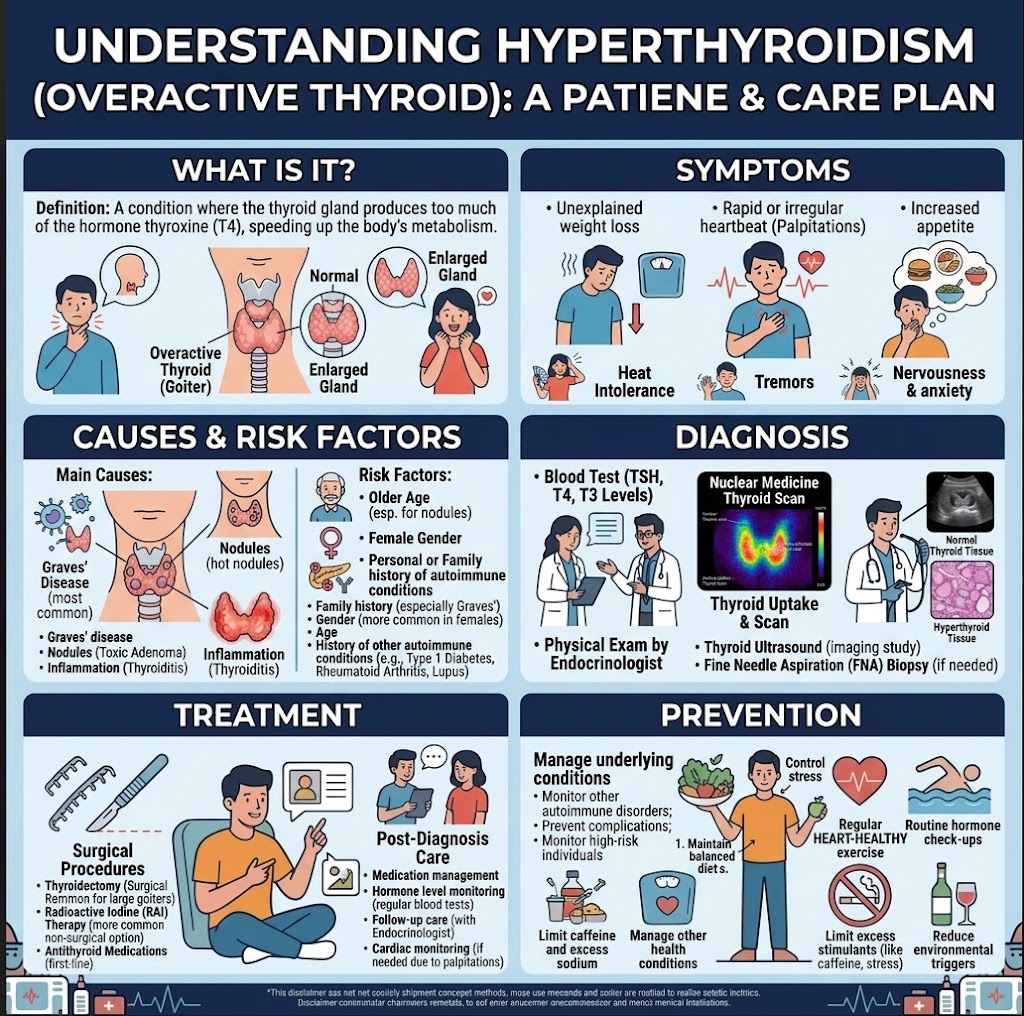
Hyperthyroidism, also known as an overactive thyroid, occurs when your thyroid gland produces too much thyroid hormone. This excess hormone speeds up your body's metabolism, leading to a wide range of symptoms such as unexpected weight loss, hand tremors, and a rapid or irregular heartbeat. While symptoms can sometimes resemble other health issues, making diagnosis challenging, various effective treatments are available to manage the condition and slow hormone production, including medications, radioactive iodine therapy, or surgery.
Understanding the Condition
Hyperthyroidism: Understanding an Overactive Thyroid
Understanding the Condition
Hyperthyroidism, also known as an overactive thyroid, occurs when your thyroid gland produces too much thyroid hormone. This excess hormone speeds up your body's metabolism, leading to a wide range of symptoms such as unexpected weight loss, hand tremors, and a rapid or irregular heartbeat. While symptoms can sometimes resemble other health issues, making diagnosis challenging, various effective treatments are available to manage the condition and slow hormone production, including medications, radioactive iodine therapy, or surgery.
Common Symptoms
Unexplained Weight Loss: Losing weight without trying, even if you are eating normally or more than usual.
Fast or Irregular Heartbeat: Experiencing a rapid heart rate (tachycardia), an uneven heart rhythm (arrhythmia), or a pounding sensation in your chest (heart palpitations).
Increased Hunger: Feeling more hungry than usual.
Nervousness, Anxiety, and Irritability: Feeling unusually anxious, restless, easily annoyed, or on edge.
Tremors: Noticeable trembling, often a fine shaking in your hands and fingers.
Changes in Menstrual Cycles: Irregularities or changes in a woman's monthly period.
Increased Sensitivity to Heat: Feeling uncomfortably warm, even in cool environments, and sweating more than usual.
Changes in Bowel Patterns: Experiencing more frequent bowel movements, sometimes diarrhea.
Before your appointment, prepare a list of all your symptoms, including when they started and how often they occur. Bring a complete list of any medications, vitamins, or supplements you are currently taking. Be ready to discuss your medical history, including any family history of thyroid conditions, and write down any questions you have for the doctor.
Book a doctor visit near me
Beta-Blockers: These medications help manage the uncomfortable symptoms of hyperthyroidism, such as a rapid heart rate, tremors, and nervousness, but they do not affect thyroid hormone production directly. (Duration: Typically used short-term to relieve symptoms until other treatments begin to control hormone levels. Some may use them for longer periods as needed for symptom control.)
Lifestyle Adjustments: Adopt a healthy lifestyle including a balanced diet, regular exercise, and stress-reduction techniques (like meditation or yoga). While not a cure, these can help manage symptoms and improve overall wellbeing.
Eye Care for Thyroid Eye Disease: If you develop thyroid eye disease, follow your doctor's recommendations for managing symptoms, which may include artificial tears, specific eye drops, or specialized protective eyewear. Smoking cessation is crucial, as smoking can worsen this condition.
Bone Health Monitoring: Hyperthyroidism can weaken bones, increasing the risk of osteoporosis. Discuss bone density screenings and strategies to maintain bone health, such as adequate calcium and Vitamin D intake, with your doctor.
Addressing Mood Changes: Recognize that thyroid conditions can significantly impact mood, leading to anxiety or depression. If you experience persistent mood changes, talk to your doctor. Treatment for hyperthyroidism often improves these symptoms.
Consultation Guide
Enlarged Thyroid Gland (Goiter): A noticeable swelling at the base of your neck, caused by an enlarged thyroid gland.
Muscle Weakness: A general feeling of weakness in your muscles.
Sleep Problems: Difficulty falling asleep or staying asleep.
Skin and Hair Changes: Skin that feels warm and moist, thinning skin, or fine, brittle hair.
Consultation Guide
Which Specialist to Meet
This diagnostic test involves giving you a very small, safe dose of radioactive iodine (a radiopharmaceutical) to see how much iodine your thyroid gland absorbs and to visualize its activity. The amount of iodine uptake can help determine the cause of hyperthyroidism.
Diagnostic Procedures
If you suspect you have hyperthyroidism, start by consulting your primary care doctor. They can conduct initial tests and, if needed, refer you to an endocrinologist, a doctor specializing in hormone-related conditions and glands like the thyroid.
Preparations Before Your Visit
Blood Tests for Thyroid Hormones
These tests measure the levels of thyroid-stimulating hormone (TSH), thyroxine (T4), and triiodothyronine (T3) in your blood. High levels of T4 and T3, combined with low TSH, typically indicate an overactive thyroid.
What to Expect
A healthcare professional will draw a small sample of blood, usually from a vein in your arm. The process is quick, typically taking only a few minutes, and involves a brief pinch as the needle is inserted. You generally don't need to fast or prepare in any special way.
An ultrasound uses sound waves to create images of your thyroid gland. This helps your doctor examine its size, structure, and check for any nodules or growths within the gland.
What to Expect
You will lie on your back with your neck extended. A gel is applied to your neck, and a small handheld device called a transducer is moved over the area. This process is painless and typically takes 15-30 minutes. You may feel slight pressure from the transducer.
Radioiodine Uptake Scan (Thyroid Scan)
What to Expect
You will swallow a small capsule or liquid containing radioactive iodine. After a few hours (and sometimes again after 24 hours), you will lie on a table while a special camera scans your neck to measure the iodine uptake by your thyroid. This helps identify if the entire gland is overactive or if specific areas are responsible. The procedure is generally painless, though you may need to remain still for the imaging portions.
Treatment Options
Medications
Anti-thyroid Medications: These medicines work by reducing the amount of hormones your thyroid gland produces. They do not damage the thyroid but help control hormone levels. (Duration: Often taken for several months to a year or more. Some individuals may require long-term treatment.)
Radioactive Iodine Therapy: This treatment involves taking a capsule or liquid containing a higher dose of radioactive iodine. The thyroid gland absorbs the iodine, which then damages the overactive thyroid cells, causing the gland to shrink and produce less hormone. (Duration: Usually a single dose. Effects gradually develop over several weeks to months. Some individuals may require a second dose.)
Surgical Procedures
Thyroidectomy: This surgical procedure involves removing all or part of the thyroid gland. It is an option when other treatments are not suitable or effective, or in cases where there is a large goiter or suspected cancer. (Duration: A one-time surgical procedure. If the entire thyroid is removed, lifelong daily thyroid hormone replacement medication will be necessary.)
Regular Medical Follow-ups: Consistent visits with your doctor are essential to monitor thyroid hormone levels, adjust medication dosages, and assess for any long-term complications or recurrence of the condition.
Prevention & Long-Term Wellbeing
Prevention and Long-Term Management
Tags & Topics
Notice an error or need an update?
Help us keep medical information accurate. Report incorrect info or suggest an edit.


