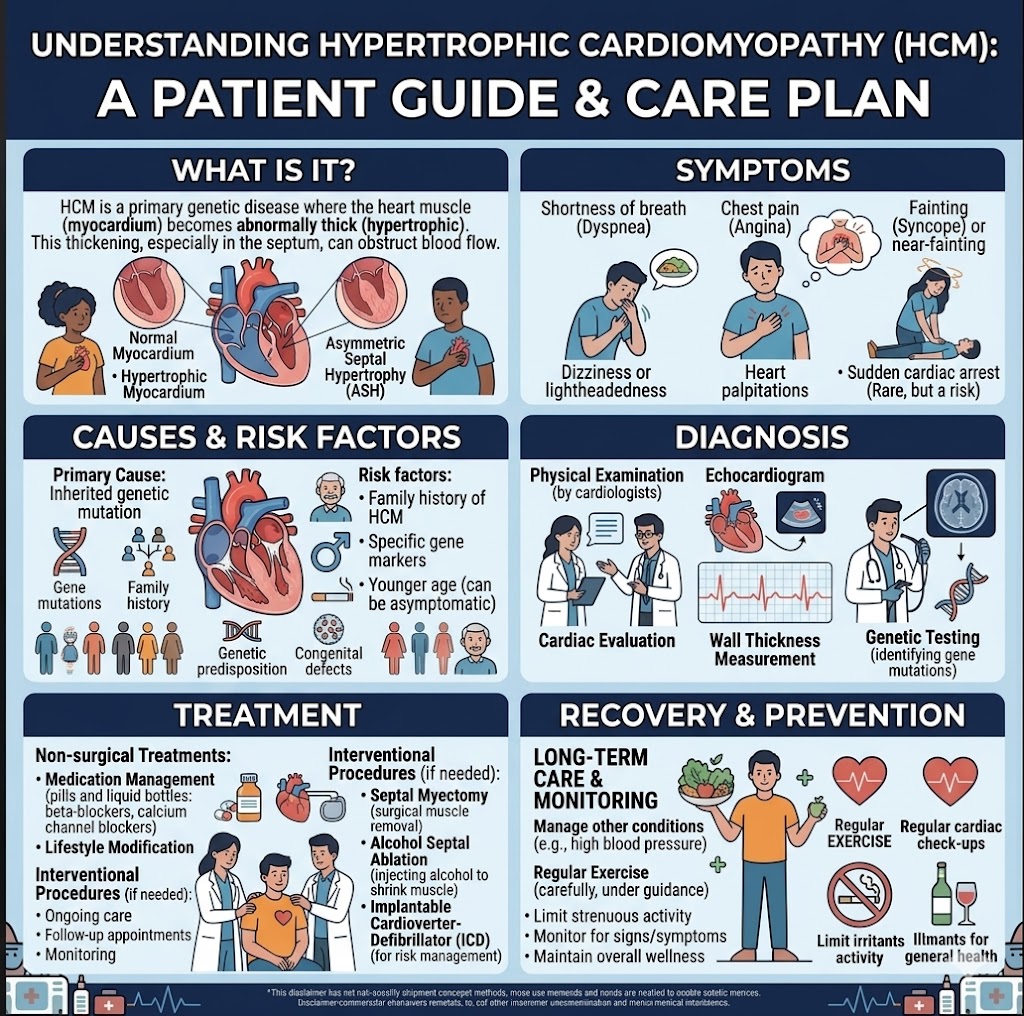
Hypertrophic cardiomyopathy (HCM) is a condition where the heart muscle, typically the main pumping chamber, becomes abnormally thick. This thickening makes it harder for the heart to effectively pump blood to the rest of the body. Many people with HCM have no symptoms and may not realize they have the condition. However, in some individuals, the thickened muscle can lead to serious symptoms like shortness of breath or chest pain. HCM can also affect the heart's electrical system, potentially causing dangerous irregular heartbeats or, in rare cases, sudden cardiac arrest. It is usually caused by changes in genes that are passed down through families.
Understanding the Condition
Hypertrophic Cardiomyopathy: Understanding a Thickened Heart Muscle
Understanding the Condition
Hypertrophic cardiomyopathy (HCM) is a condition where the heart muscle, typically the main pumping chamber, becomes abnormally thick. This thickening makes it harder for the heart to effectively pump blood to the rest of the body. Many people with HCM have no symptoms and may not realize they have the condition. However, in some individuals, the thickened muscle can lead to serious symptoms like shortness of breath or chest pain. HCM can also affect the heart's electrical system, potentially causing dangerous irregular heartbeats or, in rare cases, sudden cardiac arrest. It is usually caused by changes in genes that are passed down through families.
Common Symptoms
Chest Pain: Especially noticeable during physical activity or exercise.
Fainting: Temporary loss of consciousness, particularly during or shortly after exercise or other physical activity.
Palpitations: A sensation of fast, fluttering, or pounding heartbeats.
Shortness of Breath: Difficulty breathing, often worsening with exertion.
Consultation Guide
Which Specialist to Meet
If you experience any of these symptoms or have a family history of hypertrophic cardiomyopathy, it's important to consult a healthcare professional. You should first see your primary care doctor, who may then refer you to a heart specialist (cardiologist) or a genetic counselor for further evaluation.
Preparations Before Your Visit
Before your appointment, make a list of all your symptoms, including when they started and what makes them better or worse. Gather information about your family's medical history, especially any heart conditions. Bring a list of all medications, vitamins, and supplements you are currently taking. Prepare any questions you have for your doctor.
Book a doctor visit near me
Electrodes will be attached to your chest and connected to a small recording device that you can clip to your belt or wear in a pouch. You'll wear it continuously for the prescribed period, performing your usual activities. You might be asked to keep a diary of your activities and any symptoms you experience. You should avoid showering or bathing while wearing the monitor.
Cardiac Catheterization
A procedure involving inserting a thin, flexible tube (catheter) into a blood vessel, usually in the groin or wrist, and guiding it to the heart to gather detailed information about heart muscle, valves, and blood vessels.
Septal Myectomy: An open-heart surgery where a surgeon removes a portion of the thickened heart muscle wall (septum) between the heart's lower chambers. This helps to improve blood flow out of the heart and relieve symptoms. (Duration: A one-time surgery, followed by a recovery period.)
Regular Follow-ups: Maintain consistent appointments with a cardiologist to monitor your heart condition, manage symptoms, and adjust treatment as needed throughout your life.
Scheduled Echocardiogram Screenings: For individuals with a family history, regular heart ultrasounds (echocardiograms) are recommended, often starting around age 12, and continuing periodically through adulthood (e.g., every 1-3 years initially, then every 5 years, or as advised by your doctor).
Symptom Awareness: Be vigilant about any new or worsening symptoms such as chest pain, shortness of breath, fainting spells, or palpitations, and report them promptly to your healthcare provider.
Appropriate Physical Activity: Engage in physical activity as recommended by your healthcare provider. It's important to understand which types and intensities of exercise are safe for you, and to avoid activities that trigger symptoms or are considered high-risk.
Consultation Guide
Analysis of your DNA to identify specific gene changes that are known to cause hypertrophic cardiomyopathy.
Ablation Therapy: A minimally invasive procedure where doctors use catheters inserted into blood vessels and guided to the heart. Energy (such as heat or extreme cold) is delivered to create small scars in heart tissue, blocking abnormal electrical signals that cause irregular heartbeats. (Duration: A single procedure, though some individuals may require repeat procedures or follow-up.)
Implantable Cardioverter-Defibrillator (ICD): A small, battery-powered device surgically placed under the skin in the chest, with wires connected to the heart. It continuously monitors heart rhythm and delivers electric shocks if it detects dangerously fast or irregular heartbeats, restoring a normal rhythm. (Duration: The device battery typically lasts 5-10 years or more and then needs to be replaced in a minor surgical procedure.)
Pacemaker: A small device surgically implanted under the skin, usually near the collarbone, with wires leading to the heart. It sends electrical pulses to keep the heart beating at a regular and appropriate rate, particularly when the heart beats too slowly. (Duration: The device battery typically lasts 5-10 years or more and then needs to be replaced in a minor surgical procedure.)
Diagnostic Procedures
Electrocardiogram (ECG or EKG)
A quick, non-invasive test that records the electrical signals of your heart to check its rhythm and electrical activity.
What to Expect
Small, sticky patches called electrodes will be placed on your chest, and sometimes on your arms or legs. These patches are connected by wires to a machine that records your heart's electrical activity. The test is painless and typically takes only a few minutes.
An ultrasound test that uses sound waves to create moving pictures of your heart. It shows the size and shape of your heart, how well your heart muscle and valves are working, and blood flow through the heart.
What to Expect
You will lie on an exam table. A gel will be applied to your chest, and a handheld device called a transducer will be moved over your chest. This device emits sound waves and captures their echoes to create images of your heart on a screen. The test is painless and generally takes 30-60 minutes.
A small, portable device worn for 1 to 2 days to continuously record your heart's rhythm during your daily activities. This helps detect irregular heartbeats that might not show up during a shorter ECG.
What to Expect
What to Expect
What to Expect
A small sample of your blood will be drawn, or a swab will be taken from the inside of your cheek. This sample is then sent to a lab for analysis. Results typically take several weeks. A genetic counselor can help you understand the test results and their implications for you and your family.
Early Detection and Screening: If you have a close family member with hypertrophic cardiomyopathy, discuss screening tests with your healthcare team. Early diagnosis is crucial for guiding treatment and preventing complications.
Genetic Counseling and Testing: Consider genetic testing if HCM runs in your family. A genetic counselor can help assess your risk, interpret results, and provide guidance for you and your relatives.
Treatment Options
You will be given a local anesthetic at the insertion site, and you may receive medication to help you relax. The catheter is then carefully threaded through your blood vessel to your heart. During the procedure, the doctor can measure pressures, inject dye to visualize blood flow, or even take a small tissue sample. You will typically be awake but sedated, and may feel some pressure but no sharp pain. The procedure can last from 30 minutes to several hours.
Medications
Heart Rate and Rhythm Control: Medications designed to slow your heart rate, allow the heart to relax more fully, reduce the force of the heart's contractions, and improve blood flow. Other medications may specifically target and control irregular heart rhythms. (Duration: Typically long-term, potentially lifelong.)
Blood Clot Prevention: For individuals with irregular heart rhythms like atrial fibrillation, medications are prescribed to reduce the risk of blood clots and prevent complications like stroke. (Duration: Long-term, potentially lifelong.)
Apical Myectomy: An open-heart surgery performed to remove thickened heart muscle specifically from near the very tip (apex) of the heart, addressing blockages or impaired function in that area. (Duration: A one-time surgery, followed by a recovery period.)
Prevention & Long-Term Wellbeing
Prevention
Long-Term Monitoring and Lifestyle
Heart-Healthy Lifestyle: Adopt a balanced, nutritious diet, maintain a healthy weight, manage blood pressure and cholesterol levels, and avoid smoking. These habits support overall heart health.
Tags & Topics
Notice an error or need an update?
Help us keep medical information accurate. Report incorrect info or suggest an edit.

