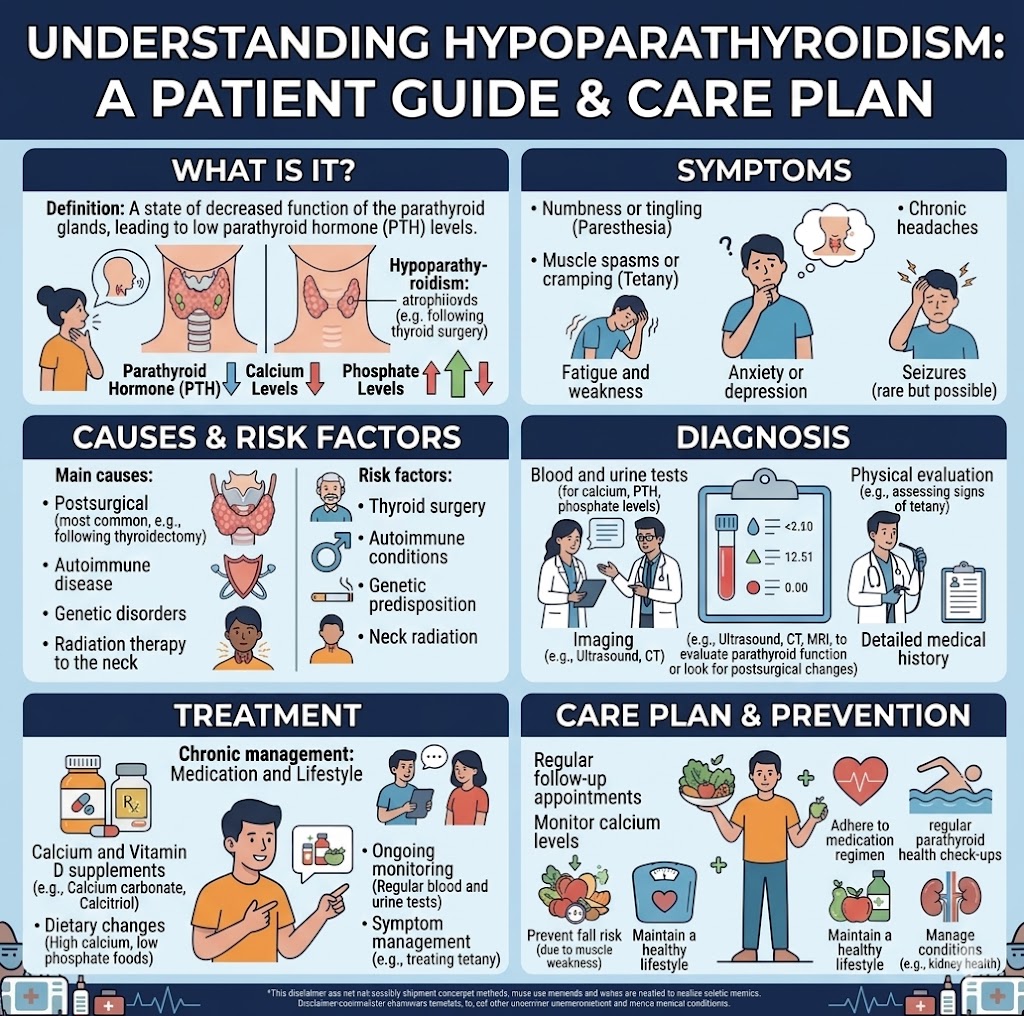
Hypoparathyroidism is a rare medical condition where the body does not produce enough parathyroid hormone (PTH). PTH is a crucial hormone responsible for maintaining the correct balance of two vital minerals in the body: calcium and phosphorus. When PTH levels are too low, it leads to unusually low levels of calcium in the blood (hypocalcemia) and abnormally high levels of phosphorus. The four small parathyroid glands, located in the neck near the thyroid gland, are responsible for making this hormone. Treatment typically involves supplements and medications to restore and maintain healthy calcium and phosphorus levels, often for life.
Understanding the Condition
Hypoparathyroidism: Understanding Low Parathyroid Hormone
Understanding the Condition
Common Symptoms
Tingling or Numbness: Often felt around the mouth, in the lips, fingers, and toes.
Muscle Cramps and Spasms (Tetany): Painful, uncontrolled muscle twitching or cramps, commonly affecting the hands, feet, legs, or abdomen.
Muscle Weakness and Fatigue: A general feeling of tiredness and reduced muscle strength.
Seizures: In severe cases of very low calcium, brain activity can be disrupted, leading to seizures.
Painful Menstrual Periods: Women may experience increased discomfort during menstruation.
Skin Changes: Dry, coarse skin.
Brittle Nails: Nails may become fragile and easily breakable.
Hair Changes: Coarse or thinning hair.
Mood Changes: Feelings of anxiety or depression.
Headaches: Frequent or severe headaches.
Consultation Guide
Which Specialist to Meet
To diagnose and manage hypoparathyroidism, you should consult with an endocrinologist, a specialist in hormone disorders. Your primary care physician can also play a key role in initial assessment and ongoing coordination of care. In some cases, depending on specific symptoms or complications, other specialists like a neurologist (for seizures), a cardiologist (for heart issues), or a nephrologist (for kidney function) may be involved.
Preparations Before Your Visit
Make a detailed list of all your symptoms, including when they started and how often they occur. List all medications, supplements, and vitamins you are currently taking. Provide your complete medical history, especially any recent surgeries, particularly those involving the neck or thyroid gland. Prepare a list of questions to ask your doctor.
Book a doctor visit near me
Calcium Supplements: Oral supplements provide extra calcium to raise blood levels and prevent symptoms. (Duration: Typically lifelong.)
Vitamin D Supplements: Specialized forms of vitamin D help the body absorb calcium more effectively from food and supplements. (Duration: Typically lifelong.)
Parathyroid Hormone Replacement Therapy: A synthetic (man-made) version of parathyroid hormone to replace what the body isn't producing, aiming to normalize mineral levels. (Duration: Administered daily, usually lifelong.)
Intravenous Calcium: For severe drops in blood calcium (hypocalcemic crisis) causing serious symptoms like seizures or severe muscle spasms, calcium is administered directly into a vein. (Duration: Short-term, acute treatment in a hospital setting until oral supplements can manage levels.)
Surgical Risk Awareness: If undergoing neck surgery (e.g., thyroidectomy), discuss potential parathyroid gland injury risk with your surgeon and monitor for low calcium symptoms post-operation.
Consultation Guide
Records the heart's electrical signals to check rhythm and function. Calcium imbalances can cause irregular heartbeats (arrhythmias), making this test vital for diagnosing potential heart complications.
Diagnostic Procedures
Measures levels of parathyroid hormone (PTH), calcium, and phosphorus. Low PTH, low calcium, and high phosphorus indicate the condition. Magnesium levels and kidney function may also be checked.
What to Expect
A healthcare professional draws blood, usually from an arm vein. Fasting may be required. Quick, with a brief pinch.
Bone Density Test (DEXA Scan)
Uses low-dose X-rays to measure bone mineral density, assessing for fragile bones (osteoporosis) or fracture risk, particularly in the spine, hip, or forearm. Monitors bone health affected by long-term calcium imbalances.
What to Expect
Lie on a padded table while a mechanical arm passes over. Painless, non-invasive, requires staying still for minutes. Inform doctor if pregnant.
Electrocardiogram (ECG or EKG)
What to Expect
Sticky patches (electrodes) on your chest and limbs connect to an ECG machine. Lie still for minutes while signals are recorded. Quick, painless.
Examines a urine sample to detect various disorders like kidney disease or infections. Helps assess kidney handling of calcium and phosphorus and check for complications.
What to Expect
Collect a urine sample in a sterile container, often a 'clean-catch' midstream sample. Simple, non-invasive, analyzed in a lab.
A quick, painless imaging test using radiation to create internal body pictures, particularly bones. Dense materials (bones) appear white. Used to examine bone structure for abnormalities.
What to Expect
Positioned on a table or against a plate, guided by a technologist. Requires staying still for seconds. Painless; a lead apron may be used for protection.
Regular Blood Tests: Frequent monitoring of calcium, phosphorus, and PTH levels is crucial to adjust treatment and ensure mineral balance.
Specialist Follow-Ups: Regular visits with an endocrinologist and primary care doctor are essential for ongoing management.
Bone Health Monitoring: Periodic bone density tests (DEXA scans) may be recommended to check for bone changes like osteoporosis.
Heart Health Monitoring: Regular electrocardiograms (ECGs) may be necessary to monitor heart rhythm, as calcium imbalances can affect heart function.
Treatment Options
Hypoparathyroidism is a rare medical condition where the body does not produce enough parathyroid hormone (PTH). PTH is a crucial hormone responsible for maintaining the correct balance of two vital minerals in the body: calcium and phosphorus. When PTH levels are too low, it leads to unusually low levels of calcium in the blood (hypocalcemia) and abnormally high levels of phosphorus. The four small parathyroid glands, located in the neck near the thyroid gland, are responsible for making this hormone. Treatment typically involves supplements and medications to restore and maintain healthy calcium and phosphorus levels, often for life.
Medications & Supplements
Prevention & Long-Term Wellbeing
Dietary Adjustments
High-Calcium, Low-Phosphorus Diet: Emphasizing foods naturally rich in calcium while limiting foods high in phosphorus helps manage mineral balance. This typically involves consulting a dietitian. (Duration: Ongoing, lifelong.)
Prevention
Lifestyle Management
Balanced Diet: Continue a diet rich in calcium and controlled in phosphorus, often with dietitian guidance.
Hydration: Maintain good hydration.
Regular Exercise: Engage in moderate, weight-bearing exercise (doctor-advised) to support bone health and overall well-being.
Stress Management: Practice stress-reducing techniques (mindfulness, meditation) to cope with managing a chronic condition.
Medical Alert Identification: Consider wearing or carrying a medical alert for emergencies.
Tags & Topics
Notice an error or need an update?
Help us keep medical information accurate. Report incorrect info or suggest an edit.


