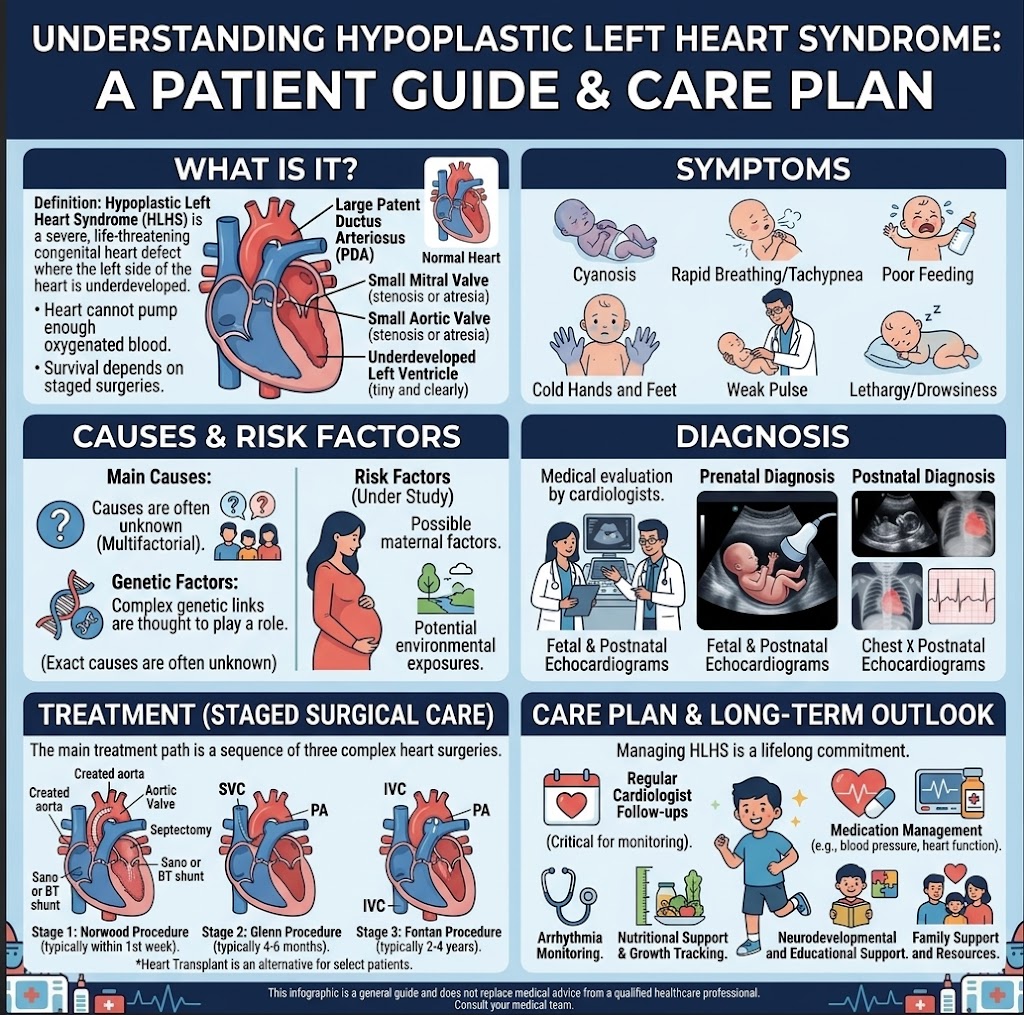
Hypoplastic Left Heart Syndrome (HLHS) is a rare and serious heart condition present at birth, meaning it's a congenital heart defect. In this condition, the left side of the heart, responsible for pumping oxygen-rich blood to the body, is severely underdeveloped and too small to function properly. This means the right side of the heart must do the work of both sides, pumping blood to the lungs and the rest of the body. Without treatment, babies with HLHS cannot survive. Treatment involves a series of complex heart surgeries, medications, or, in some cases, a heart transplant. Significant advancements in medical care have greatly improved the outlook for children born with HLHS, allowing many to live into adulthood.
Understanding the Condition
Hypoplastic Left Heart Syndrome: Understanding a Complex Heart Condition
Understanding the Condition
Common Symptoms
Blue or Gray Skin, Lips, or Fingernails: This is called cyanosis and indicates a lack of oxygen. It might be more noticeable or subtle depending on skin tone.
Rapid, Difficult Breathing: The heart is struggling to pump blood efficiently, leading to respiratory distress.
Poor Feeding: Babies may be too weak or tired to feed adequately.
Cold Hands and Feet: Poor circulation due to the heart's inability to pump blood effectively.
Weak Pulse: Reflects the reduced pumping capability of the heart.
Unusual Drowsiness or Inactivity: Babies may be unusually sleepy or less responsive than expected.
Before your visit, prepare a detailed list of questions and concerns. Gather any relevant medical records, especially family history of heart conditions. Be ready to describe any symptoms you've observed in your child, or discuss your personal medical history if you are seeking preconception counseling. Understanding what to expect during the visit and potential diagnostic tests can also be helpful.
Book a doctor visit near me
Diagnostic Procedures
An echocardiogram is a safe and non-invasive test that uses sound waves to create moving pictures of the heart. These pictures show the heart's structure, how its chambers and valves are working, and how blood flows through it. For HLHS, it can clearly show the underdeveloped left side of the heart, including the small left ventricle, aorta, and heart valves. It can also assess how well the right side is compensating. In some cases, HLHS may be detected before birth via a prenatal ultrasound that shows a fetal echocardiogram.
What to Expect
For a baby, the procedure is usually done while they are calm, sometimes with a mild sedative if needed. You will lie on an examination table, and a gel will be applied to your chest (or the baby's chest). A small handheld device called a transducer will be gently moved across the chest, sending and receiving sound waves. These waves bounce off the heart and create images on a monitor. The test is painless and typically takes about 30 to 60 minutes. Sensors may also be attached to the chest or limbs to monitor heart rhythm during the test.
Lifelong Specialized Cardiac Care: Individuals with HLHS, even after successful surgeries, require lifelong monitoring by a cardiologist specializing in congenital heart disease. Regular check-ups, imaging tests, and assessments are crucial to manage potential complications, detect problems early, and optimize heart function.
Monitoring for Developmental Progress: Close monitoring of a child's growth and development is important, as HLHS can sometimes be associated with developmental delays or learning challenges. Early intervention therapies can be beneficial.
Treatment Options
Hypoplastic Left Heart Syndrome (HLHS) is a rare and serious heart condition present at birth, meaning it's a congenital heart defect. In this condition, the left side of the heart, responsible for pumping oxygen-rich blood to the body, is severely underdeveloped and too small to function properly. This means the right side of the heart must do the work of both sides, pumping blood to the lungs and the rest of the body. Without treatment, babies with HLHS cannot survive. Treatment involves a series of complex heart surgeries, medications, or, in some cases, a heart transplant. Significant advancements in medical care have greatly improved the outlook for children born with HLHS, allowing many to live into adulthood.
Signs of Shock (without treatment): Without immediate medical care, a baby with HLHS can go into shock, characterized by cool, clammy and pale skin with blue or gray lips, a weak and rapid pulse, irregular breathing (either slow and shallow or very rapid), and dull, staring eyes.
Consultation Guide
Which Specialist to Meet
For a child, you will primarily need to consult a pediatric cardiologist, a doctor specializing in children's heart conditions. If you are an adult with a heart condition considering pregnancy, or if there's a family history of HLHS, a genetic counselor and an adult congenital heart specialist can provide crucial guidance.
Preparations Before Your Visit
Medications
Prostaglandin Infusion: This medication is given intravenously (into a vein) shortly after birth to keep certain blood vessels open that would normally close. Specifically, it keeps the ductus arteriosus open, allowing the right side of the heart to continue pumping blood to the body, bypassing the underdeveloped left side. This is a temporary measure to stabilize the baby until surgical treatment can be performed. (Duration: Typically administered continuously for a few days or weeks until the first surgery.)
Surgical Procedures
Staged Reconstructive Surgery (e.g., Norwood, Glenn, Fontan procedures): This involves a series of complex open-heart operations performed over several years to re-route blood flow and allow the single functioning right ventricle to pump blood to both the lungs and the body. The Norwood procedure (first surgery, within the first week of life) reconstructs the aorta. The Glenn procedure (second surgery, 4-6 months of age) redirects upper body blood to the lungs. The Fontan procedure (third surgery, 2-5 years of age) redirects lower body blood to the lungs, completing the separation of blood flow. (Duration: Each surgery takes several hours, followed by a hospital stay of several weeks. The entire staged process spans several years of the child's life.)
Heart Transplant: In cases where the staged surgeries are not feasible or fail to adequately manage the condition, a heart transplant may be considered. This involves replacing the child's heart with a healthy donor heart. (Duration: A heart transplant is a major surgery with a recovery period of several weeks in the hospital and lifelong medication to prevent rejection of the new heart.)
Prevention & Long-Term Wellbeing
Prevention
Genetic Counseling: While HLHS cannot be directly prevented, if you or a family member has a congenital heart condition, or if you have had a child with HLHS, discussing family planning with a genetic counselor and a heart specialist can help assess risks for future pregnancies and explore available options.
Long-Term Monitoring
Lifestyle Adjustments
Activity Management: Individuals with HLHS may experience easier fatigue during physical activity compared to their peers. A cardiologist can provide guidance on safe levels of exercise and activity, balancing the need for physical fitness with protecting the heart.
Nutritional Support: Ensuring adequate nutrition is vital for growth and recovery, especially in babies and young children who may have feeding difficulties. A nutritionist may be consulted.
Emotional and Social Support
Family and Peer Support: Living with a complex chronic condition like HLHS can be challenging for both the child and their family. Seeking support from family, support groups, or mental health professionals can help cope with the emotional and social aspects of the condition.
Tags & Topics
Notice an error or need an update?
Help us keep medical information accurate. Report incorrect info or suggest an edit.

