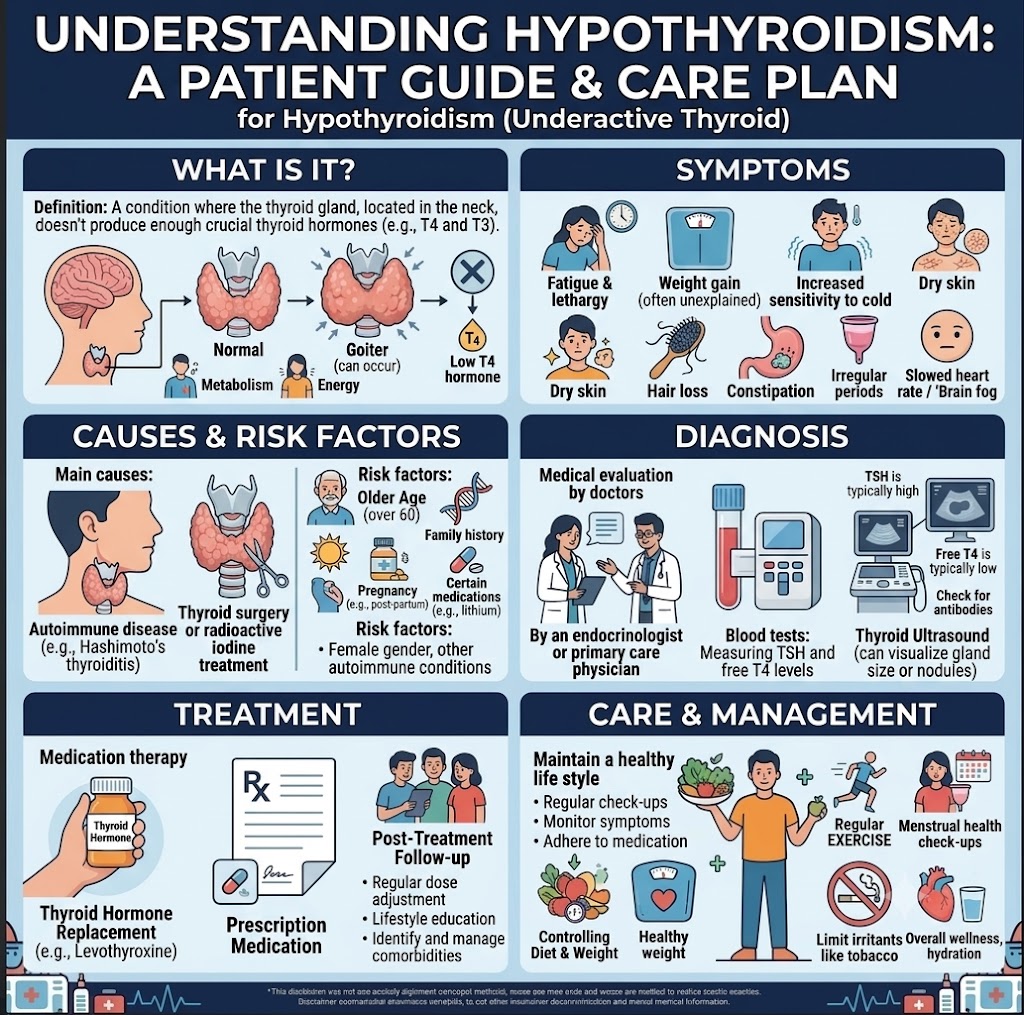
Hypothyroidism, also known as an underactive thyroid, occurs when your thyroid gland doesn't produce enough thyroid hormone. This small, butterfly-shaped gland located at the base of your neck plays a vital role in regulating your body's metabolism, energy levels, and overall functions. In its early stages, symptoms might be subtle or unnoticeable, but if left untreated, hypothyroidism can lead to more serious health issues such as high cholesterol and heart problems. Diagnosis typically involves simple blood tests, and treatment with thyroid hormone replacement medication is usually straightforward, safe, and effective once the correct dosage is determined with your healthcare provider.
Understanding the Condition
Understanding Hypothyroidism (Underactive Thyroid)
Understanding the Condition
Hypothyroidism, also known as an underactive thyroid, occurs when your thyroid gland doesn't produce enough thyroid hormone. This small, butterfly-shaped gland located at the base of your neck plays a vital role in regulating your body's metabolism, energy levels, and overall functions. In its early stages, symptoms might be subtle or unnoticeable, but if left untreated, hypothyroidism can lead to more serious health issues such as high cholesterol and heart problems. Diagnosis typically involves simple blood tests, and treatment with thyroid hormone replacement medication is usually straightforward, safe, and effective once the correct dosage is determined with your healthcare provider.
Common Symptoms
Fatigue: Persistent tiredness or lack of energy, even after rest.
Increased Sensitivity to Cold: Feeling colder than others, especially in mild temperatures.
Constipation: Difficulty having regular bowel movements.
Before your appointment, prepare a list of all your symptoms, including when they started and how they affect your daily life. Gather information about your medical history, any other health conditions you have, and all medications, vitamins, and supplements you are currently taking. Also, write down any questions you have for your doctor.
Book a doctor visit near me
Thyroid Hormone Replacement: This involves taking a daily oral medication that is a synthetic version of the thyroid hormone your body naturally produces. The goal is to restore normal hormone levels, which helps to relieve symptoms and prevent complications. The dosage is carefully adjusted over time based on blood test results and your symptoms. (Duration: Lifelong daily treatment.)
Symptom Relief for Joint and Muscle Pain: For aches, stiffness, and discomfort in joints and muscles, over-the-counter pain relievers can offer temporary relief. However, the most effective way to address these symptoms is by achieving optimal thyroid hormone levels through proper medication management. If pain persists despite adequate treatment, other causes should be investigated by your doctor. (Duration: As advised)
Consistent Medical Follow-Up: Regular blood tests (typically TSH levels) are essential to ensure your thyroid hormone levels remain within the healthy range. Your doctor will use these results to adjust your medication dosage as needed, which helps to effectively manage symptoms and prevent potential complications.
Adopting a Healthy Lifestyle: Engage in regular, moderate physical activity, maintain a balanced and nutritious diet, and prioritize getting adequate, restful sleep. These habits support overall health, boost energy levels, and can help manage symptoms like fatigue and weight fluctuations associated with hypothyroidism.
Managing Stress: Incorporate stress-reducing techniques into your daily routine, such as meditation, yoga, deep breathing exercises, or engaging in hobbies you enjoy. Chronic stress can sometimes impact hormonal balance and overall well-being, so effective stress management is beneficial.
Consultation Guide
If your doctor suspects an autoimmune condition like Hashimoto's disease (the most common cause of hypothyroidism), they may order blood tests to check for specific antibodies that indicate your immune system is attacking your thyroid gland.
Balanced Nutrition and Careful Supplement Use: While no specific diet cures hypothyroidism, eating a balanced, healthy diet is important for overall well-being. It is crucial to be aware of how certain foods (like soy in large amounts), supplements (such as calcium, iron, and biotin), and excessive fiber can affect the absorption of your thyroid medication. These should generally be consumed or taken several hours apart from your thyroid medicine. Avoid taking unnecessary iodine supplements unless specifically advised by your doctor, as too much iodine can potentially worsen or cause thyroid issues. (Duration: As advised)
Diagnostic Procedures
You should start by consulting your primary care doctor, who can diagnose and manage hypothyroidism. If your condition is complex or difficult to manage, or if there are underlying issues, your doctor may refer you to an endocrinologist, a specialist in hormone-related conditions.
Preparations Before Your Visit
Thyroid-Stimulating Hormone (TSH) Test
This is the most common and often the first test used to diagnose hypothyroidism. It measures the level of Thyroid-Stimulating Hormone (TSH) in your blood. TSH is produced by the pituitary gland and tells your thyroid to make hormones. If your thyroid isn't making enough hormones, your pituitary gland will produce more TSH to try and stimulate it, leading to higher TSH levels.
What to Expect
A healthcare professional will draw a small sample of blood, usually from a vein in your arm. This is a quick procedure and might involve a brief pinch or sting. You typically don't need to fast for this test, but always follow any specific instructions from your doctor.
This test measures the level of thyroxine (T4), the main hormone produced by your thyroid gland. Low levels of T4, especially when combined with high TSH, confirm a diagnosis of hypothyroidism. Sometimes, a 'free T4' test is performed, which measures the amount of T4 that is available to your body's tissues.
What to Expect
Similar to the TSH test, a blood sample will be taken from your arm. This is a common and quick procedure. Fasting is usually not required unless specified by your doctor.
Thyroid Antibody Tests
What to Expect
Another simple blood draw from your arm. It's a quick process with minimal discomfort.
Alkaline Phosphatase (ALP) Blood Test
While not a direct test for thyroid function, the ALP test measures an enzyme found primarily in the liver and bones. Hypothyroidism can sometimes affect liver function or bone health, so this test might be included as part of a broader health check or liver panel to assess overall well-being and identify any related complications.
What to Expect
A small blood sample will be drawn from your arm by a healthcare professional. The process is quick, usually taking only a few minutes, and you may feel a slight prick. You might be asked to fast for a few hours before this test, so follow your doctor's instructions.
Early Detection in Infants: Most states require newborn screening for hypothyroidism. Early diagnosis and prompt treatment in infants are critical for preventing serious physical and mental developmental problems, ensuring the best chances for typical growth and development.
Treatment Options
Understanding Medication and Supplement Interactions: Be vigilant about how other medications, supplements (like calcium, iron, biotin), and high-fiber foods can interfere with the absorption of your thyroid hormone medicine. Always take your thyroid medication on an empty stomach and several hours apart from these other items. Discuss all your medications and supplements with your healthcare provider to ensure optimal treatment effectiveness.
Special Considerations for Pregnancy: If you are pregnant or planning to become pregnant, close monitoring and careful management of hypothyroidism are crucial. Untreated hypothyroidism during pregnancy can lead to risks for both the mother (such as preeclampsia) and the developing baby (including birth defects and developmental problems). Regular check-ups and dosage adjustments are vital throughout pregnancy.
Prevention & Long-Term Wellbeing
Weight Gain: Unexplained increase in body weight, often despite no changes in diet or activity.
Puffy Face: Swelling or puffiness in the face.
Hoarse Voice: A rough, raspy, or deeper voice.
Coarse Hair and Dry Skin: Dry, rough, or flaky skin, and hair that feels brittle or coarse.
Muscle Weakness: A lack of strength in your muscles.
Muscle Aches, Tenderness, and Stiffness: Pain, soreness, and tightness in your muscles and joints.
Heavy or Irregular Menstrual Cycles: Periods that are longer, heavier, or unpredictable.
Thinning Hair: Hair loss from the scalp and sometimes the outer part of the eyebrows.
Slowed Heart Rate (Bradycardia): A heart rate that is slower than normal.
Depression: Persistent feelings of sadness, low mood, or loss of interest.
Memory Problems: Difficulty remembering things, concentrating, or feeling mentally foggy.
Swelling Around the Eyes: Puffiness or swelling in the area surrounding the eyes (may occur in severe cases).
- Consultation Guide
Which Specialist to Meet
Lifestyle and Dietary Management
Long-Term Monitoring and Management
Tags & Topics
Notice an error or need an update?
Help us keep medical information accurate. Report incorrect info or suggest an edit.


