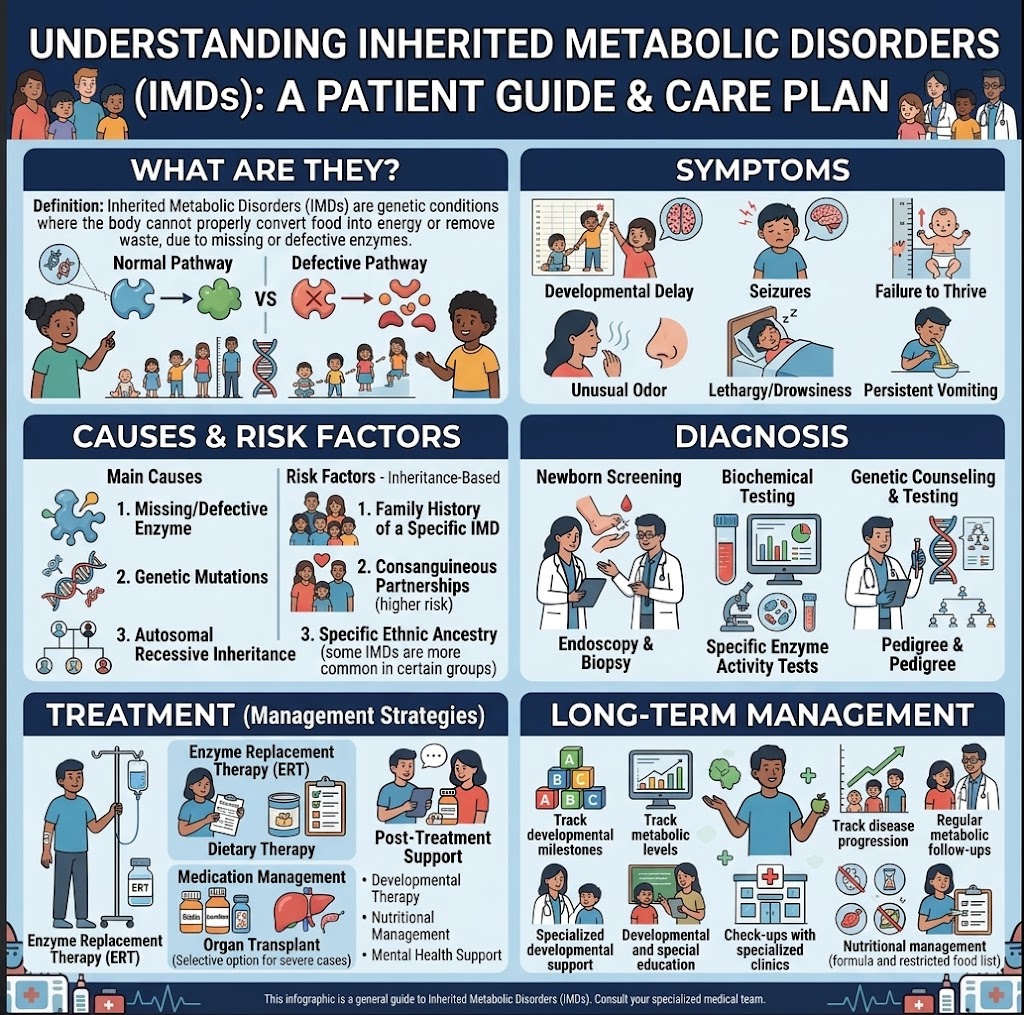
Inherited metabolic disorders are genetic conditions that disrupt how your body converts food into energy and eliminates waste. This conversion process, called metabolism, relies on specialized proteins called enzymes. When a genetic mutation causes an enzyme to be missing or malfunction, toxic substances can build up, or vital substances may run low, resulting in multi-organ complications.
Understanding the Condition
Understanding Inherited Metabolic Disorders
Understanding the Condition
Common Symptoms
Developmental Delays and Regression: Slow physical or intellectual growth, or a sudden loss of previously acquired developmental milestones, such as crawling or speaking.
Neurological Issues: Seizures, extreme lethargy, poor muscle tone (floppiness), muscle rigidity, or stroke-like episodes.
Abnormal Odors in Bodily Fluids: Urine, sweat, or breath that has an unusual, distinct smell, such as a sweet, musty, or maple syrup-like odor.
Bring a complete family medical history covering at least three generations, a detailed timeline of physical and developmental symptoms, previous pediatric growth charts, newborn screening results, and a 3-day diary of everything your child eats and drinks.
Book a doctor visit near me
A rapid preventive screening performed shortly after birth to identify serious genetic and metabolic conditions before clinical symptoms appear.
Consultation Guide
Inherited metabolic disorders are genetic conditions that disrupt how your body converts food into energy and eliminates waste. This conversion process, called metabolism, relies on specialized proteins called enzymes. When a genetic mutation causes an enzyme to be missing or malfunction, toxic substances can build up, or vital substances may run low, resulting in multi-organ complications.
Enlarged Organs: Swelling of the liver or spleen (hepatosplenomegaly), which can cause abdominal distension, discomfort, and altered digestion.
Severe Fatigue and Exercise Intolerance: Extreme tiredness, muscle pain, or weakness, particularly during fasting, illness, or physical exertion.
Consultation Guide
Which Specialist to Meet
Diagnostic Procedures
What to Expect
A healthcare provider will perform a quick heel prick on the baby to collect a few drops of blood onto a special paper card. The baby may feel a brief pinch and cry momentarily, but the procedure is safe and completed within minutes.
Targeted Genetic Testing
DNA sequencing of blood or saliva samples to pinpoint the exact gene mutations causing metabolic dysfunction, helping to confirm a diagnosis.
What to Expect
A standard blood draw from a vein in your arm or a simple cheek (buccal) swab. The sample is sent to a specialized laboratory, and analysis can take several weeks to complete.
Urine and Blood Biochemical Panels
Tests that measure the precise concentrations of amino acids, organic acids, and other chemical compounds in bodily fluids to detect abnormal metabolic blockages.
What to Expect
For the blood panel, a standard blood draw is performed. For the urine panel, you will need to collect a clean-catch urine sample, which may occasionally require a 24-hour collection process using a sterile container.
Periodic Biomarker Monitoring: Routine blood and urine tests to track levels of specific metabolites, allowing your medical team to adjust diet and medications proactively.
Developmental and Neurological Support: Consistent physical, occupational, and speech therapy evaluations to support cognitive and motor development and address delays early.
Treatment Options
Substrate Reduction Therapy: Oral medications that slow down the body's natural production of specific substances, preventing toxic accumulations before they can form. (Duration: Lifelong daily therapy)
Surgical Procedures
Organ or Bone Marrow Transplantation: A liver or bone marrow transplant to replace damaged tissues with healthy cells that naturally produce the functional enzymes. (Duration: A single major surgical event, followed by lifelong immunosuppressive therapy.)
Prevention & Long-Term Wellbeing
You should meet with a medical geneticist, a metabolic specialist (metabolic geneticist), and a registered dietitian who specializes in inherited metabolic disorders.
Preparations Before Your Visit
Dietary Management
Medical Nutrition Therapy: Meticulously restricting specific nutrients (such as protein, fats, or complex sugars) that the body cannot break down, while supplementing with specialized, metabolic-safe formulas. (Duration: Lifelong)
Enzyme Replacement Therapy (ERT): Intravenous infusions of a synthetic, functional enzyme directly into the bloodstream to perform the work of the missing or malfunctioning enzyme. (Duration: Lifelong, typically administered weekly or bi-weekly.)
Prevention and Crisis Management
Emergency Protocol Planning: Work with your specialist to create an emergency letter detailing safe intravenous fluid protocols (such as high-concentration dextrose infusions) to use at any hospital during periods of acute illness or fasting.
Strict Diet and Feeding Schedules: Avoid prolonged fasting and adhere strictly to prescribed metabolic formulas to prevent the body from breaking down its own tissues for energy, which triggers metabolic crises.
Long-Term Monitoring
Tags & Topics
Notice an error or need an update?
Help us keep medical information accurate. Report incorrect info or suggest an edit.


