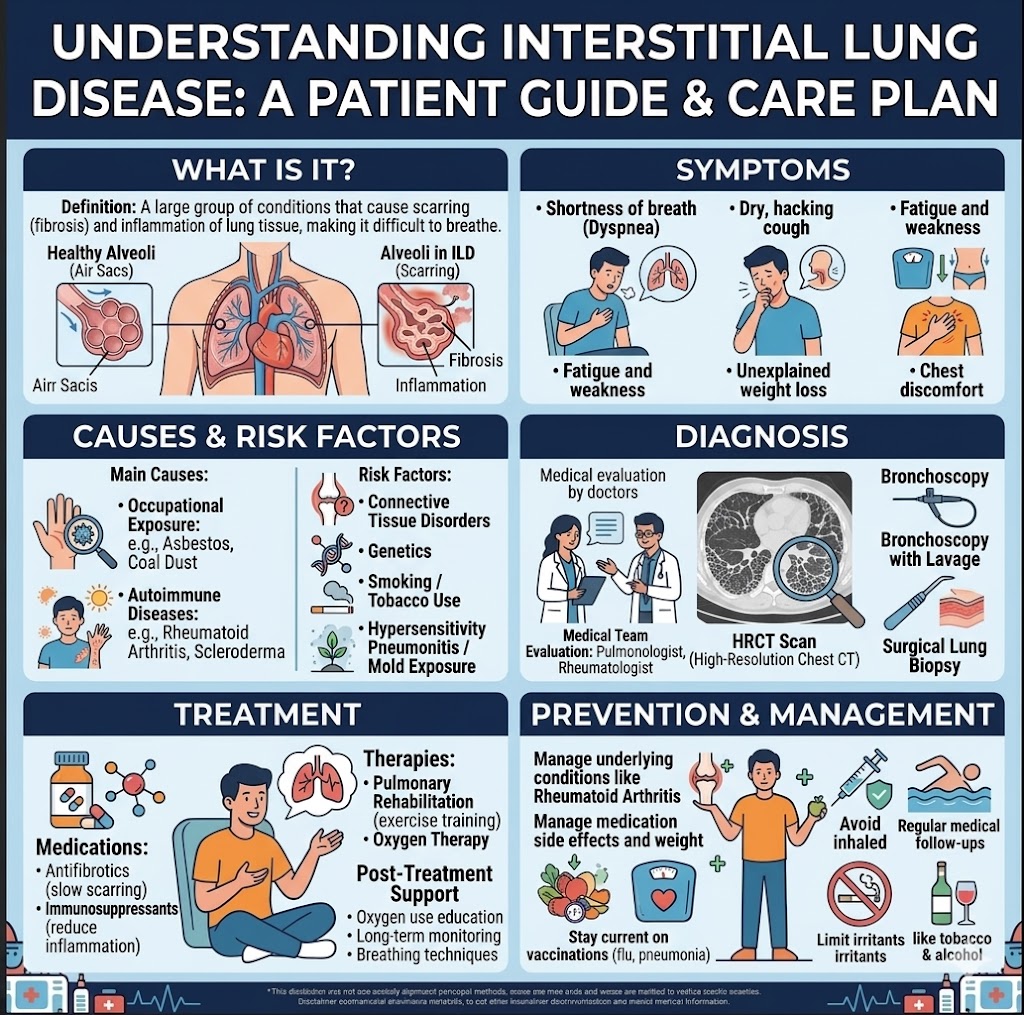
Interstitial lung disease (ILD) is a group of many lung conditions that primarily cause inflammation and progressive scarring of lung tissue. This scarring makes the lung tissue thicken and stiffen, hindering the lungs' ability to expand and take in enough air. Over time, this makes breathing difficult and reduces the oxygen reaching the bloodstream. Causes vary widely, from long-term exposure to harmful substances like asbestos, to autoimmune diseases like rheumatoid arthritis, though sometimes the cause remains unknown. ILD can progress slowly or quickly, and while existing scarring is often permanent, treatments aim to slow further damage, manage symptoms, and improve quality of life. For some, a lung transplant may be an option.
Understanding the Condition
Interstitial Lung Disease (ILD) Explained
Understanding the Condition
Interstitial lung disease (ILD) is a group of many lung conditions that primarily cause inflammation and progressive scarring of lung tissue. This scarring makes the lung tissue thicken and stiffen, hindering the lungs' ability to expand and take in enough air. Over time, this makes breathing difficult and reduces the oxygen reaching the bloodstream. Causes vary widely, from long-term exposure to harmful substances like asbestos, to autoimmune diseases like rheumatoid arthritis, though sometimes the cause remains unknown. ILD can progress slowly or quickly, and while existing scarring is often permanent, treatments aim to slow further damage, manage symptoms, and improve quality of life. For some, a lung transplant may be an option.
Common Symptoms
You should see a lung specialist (pulmonologist). If an autoimmune condition is suspected, a rheumatologist may also be involved. Early diagnosis is crucial, as lung damage can occur before symptoms are obvious.
Preparations Before Your Visit
Before your visit, gather your full medical history, a list of all current medications, and any questions you have. Be prepared to discuss your symptoms in detail, including onset and progression.
Book a doctor visit near me
Cough Management: Specific medications can be prescribed to reduce persistent, bothersome dry coughs. (Duration: As needed for symptom relief)
Oxygen Therapy: Supplemental oxygen, delivered via nasal prongs or mask, helps improve low blood oxygen levels, easing breathlessness and protecting vital organs. (Duration: As needed, potentially ongoing)
Pulmonary Rehabilitation: A supervised program including exercise, breathing techniques, and nutrition education to improve lung function, strength, and overall quality of life. (Duration: Several weeks to months, with ongoing home practice)
Stay Vaccinated: Regular vaccinations for flu, pneumonia, COVID-19, pertussis (whooping cough), and RSV are crucial to prevent respiratory infections, which can severely worsen ILD symptoms.
Regular Medical Follow-ups: Consistent visits with your pulmonologist are essential to monitor lung function, adjust treatments, and manage symptoms effectively.
Consultation Guide
Shortness of Breath: Feeling breathless, either when resting or, more commonly, when doing physical activities. This happens because the scarred lungs struggle to take in enough air and oxygen.
Dry Cough: A persistent, bothersome cough that does not produce mucus.
Consultation Guide
Which Specialist to Meet
You'll sit and breathe into a mouthpiece. You'll take a deep breath, then exhale hard and fast for several seconds, repeating a few times. It requires effort and might cause temporary lightheadedness. Follow doctor's instructions on medication before the test. Generally safe, but not for recent heart attack patients.
Immune-modulating Medications: For ILD linked to autoimmune conditions, these medications reduce the immune system's overactivity that causes lung inflammation and scarring. (Duration: Long-term, adjusted as needed)
Diagnostic Procedures
A procedure using a thin, flexible tube with a camera to look inside your airways and lungs, helping diagnose problems or collect tissue samples.
What to Expect
A CT scan uses specialized X-rays and computer processing to create detailed cross-sectional images ('slices') of your lungs, offering more detail than standard X-rays to help diagnose conditions.
What to Expect
You'll lie on a table that slides into a donut-shaped machine, requiring you to lie still and occasionally hold your breath. Sometimes, a special dye is injected to enhance images. The scan is painless and typically takes 10-30 minutes.
This test uses sound waves to create moving pictures of your heart, showing how blood flows and how chambers and valves work. It checks for heart conditions linked to lung disease, like high blood pressure in the lungs.
What to Expect
You'll lie on an exam table. Gel is applied to your chest, and a transducer device is moved across your skin, creating heart images on a monitor. It's painless and usually takes 30-60 minutes.
A common breathing test measuring how much air your lungs can hold, how much you exhale, and how quickly. It helps diagnose, monitor, and assess treatment effectiveness for lung conditions.
What to Expect
Treatment Options
You'll receive medication to relax and numb your throat. The doctor inserts the tube through your nose or mouth into your lungs. You might feel pressure. Small tissue or fluid samples may be taken for lab analysis. The procedure takes 30-60 minutes, followed by monitoring. A sore throat is possible for a day or two.
CT Scan (Computed Tomography Scan)
Medications
Anti-scarring Medications: These aim to slow the progression of lung scarring and preserve lung function, reducing how quickly the disease worsens. (Duration: Long-term, ongoing)
Lung Transplant: For severe, advanced ILD unresponsive to other treatments, this involves replacing one or both diseased lungs with healthy donor lungs. It can significantly improve health and quality of life for eligible patients. (Duration: One-time procedure, followed by lifelong anti-rejection medication and monitoring)
Discuss Risks with Your Doctor: If you have an autoimmune disease or are on medications known to increase ILD risk, talk to your doctor about monitoring and preventative strategies.
Long-Term Management and Support
Prevention & Long-Term Wellbeing
Prevention
Avoid Harmful Exposures: Minimize contact with workplace toxins like asbestos, coal dust, and silica, and environmental irritants such as bird proteins, molds, and certain bacteria. Use proper protective gear, like respirators, if exposure is unavoidable.
Quit Smoking and Avoid Secondhand Smoke: Smoking significantly increases the risk and can worsen several forms of ILD. Quitting smoking is one of the most impactful steps for lung health.
Maintain a Healthy Lifestyle: A balanced diet, regular light exercise (as tolerated and advised by your doctor), and adequate rest can help improve overall well-being and energy levels. Participating in pulmonary rehabilitation can also be highly beneficial.
Seek Emotional Support: Living with a chronic lung condition can be challenging. Support groups, counseling, or speaking with family and friends can provide valuable emotional support.
Tags & Topics
Notice an error or need an update?
Help us keep medical information accurate. Report incorrect info or suggest an edit.


